Women Bikers in Goa: Breaking Stereotypes on High-Capacity Motorcycles
For decades, big motorcycles were widely perceived as a male domain—heavy machines associated with strength, speed, and endurance on long highways. However, this traditional notion is rapidly evolving. In Goa, a growing number of women are embracing higher-capacity bikes, discovering not just a mode of transport but a profound sense of confidence and independence along the way.
A Shift in Perception and Participation
Across the state, biking clubs are actively creating inclusive and safe environments where women receive training to handle larger motorcycles. These initiatives are gradually boosting female ridership numbers, as noted by Peter Fernandes of the Goa Motorcycle Club in North Goa. "We've observed a noticeable increase in women purchasing motorcycles, typically in the 200cc to 500cc range. For many, the appeal lies in freedom and self-assurance rather than sheer speed," he explains.
Personal Stories of Empowerment
Sayantika Adak, a business analyst from North Goa, turned to riding during a challenging period in her life. Motivated by the allure of the open road, she joined a biking club and now proudly owns a 350cc motorcycle, a birthday gift to herself. Her journey symbolizes how riding can be a therapeutic and empowering experience.

Sindhupriya Endla, 34, who runs a restaurant in Siolim, learned to ride as a direct challenge to societal expectations. Hailing from a village in Andhra Pradesh where women were often confined to domestic roles, she questioned the disparity in mobility. "Out of frustration, I decided to learn riding. There is nothing a woman can't do," she asserts. Today, she rides a Thunderbird 350, a shared gift with her husband.
The Deeper Meaning of Riding for Women
Vivek Venu, a riding trainer based in Porvorim associated with the club, believes motorcycling holds significant symbolic value for women. "Learning to ride is an act of independence. When women handle higher-cc bikes, they are commanding the machine, not being overpowered by it," he emphasizes. This perspective highlights how riding transcends mere transportation, becoming a metaphor for personal agency.
Progressive Skill Development
Most women riders start with smaller motorcycles and upgrade only after gaining experience. Fernandes recalls a rider from Ribandar who advanced from a 350cc Jawa Perak to a 750cc Kawasaki Vulcan and then to a 1300cc BMW GS within three years. "That's likely the largest bike we've seen on a Goa MC ride so far. Long-distance travel is a common aspiration, and bigger bikes offer enhanced comfort and stability for touring," he notes.
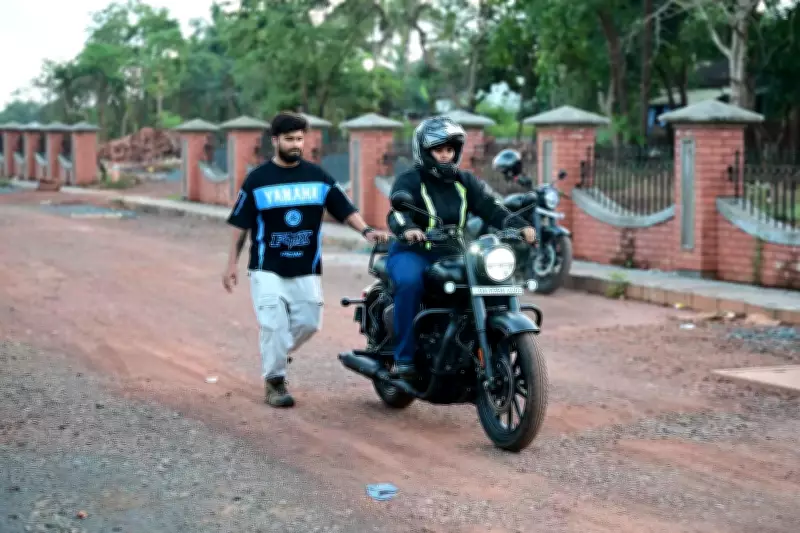
Trainer Zuber Khan from Mapusa emphasizes that lessons focus on both technical proficiency and confidence-building. "We begin by explaining the bike's components, balance, and handling. Our riders span all age groups, from women in their 20s to even one above 50," he says.
Community and Shared Experiences
Maha Saleh, who relocated to Nachinola from Dubai a year and a half ago, started riding after encouragement from her husband. "We began with electric bicycles to ride together. Eventually, he suggested trying a motorcycle, and I agreed," she shares. She now rides a Hunter Vorland Field Hunter 350.
Sayantika recalls learning to ride while accompanying her 11-year-old son, aiming to instill confidence in him as well. "Riding was my true passion, and the club I joined with Peter felt safe and judgment-free—essential for any beginner," she reflects. Beyond riding, she acquired skills like basic maintenance and oil changes, further solidifying her independence.
This movement in Goa illustrates a broader cultural shift, where women are not only breaking gender barriers but also fostering a supportive community through shared riding experiences.