Beyond the Tiger: How India's Safari Lodges Are Redefining Luxury Dining
In the heart of Kanha National Park in Madhya Pradesh, the golden hour typically showcases the majestic tiger. However, as the safari vehicles return and dust settles at the Kanha Earth Lodge, a different kind of magic unfolds beneath a sprawling mahua tree. Here, dinner is served, and it breaks away from the predictable north Indian or continental fare. Guests are treated to grilled chicken with a pineapple glaze, a refreshing lentil salad, and expertly pan-seared fish. The culinary journey culminates with a distinctive mahua ice cream, marking a clear departure from conventional lodge dining.
A Taste of the Terrain: Sourcing from Soil and Village
This eco-luxury retreat, which borders Kanha's buffer zone, maintains its own organic garden teeming with vegetables, fruits, and herbs. An on-site butterfly garden even yields edible flowers. Any additional produce is sourced from the nearest village, Sarekha, located just 3 kilometers away. "We want our guests to truly taste the land and the season. They can witness their vegetables being harvested mere hours before dinner or even stroll to the garden to pick their own salad greens," explains Ark Bagchi, executive chef of Pugdundee Safaris, which operates several resorts including Kanha Earth Lodge.
For decades, food at safari lodges was often judged by the sheer size of a buffet, frequently laden with rich gravies and generic international dishes. This paradigm is undergoing a significant transformation. Instead of depending on long-haul supply chains, lodges are now cultivating their own organic kitchen gardens, ensuring a daily harvest of fresh herbs and greens. For other ingredients, they are forging partnerships with local farmers, acting as guaranteed buyers for indigenous grains and seasonal produce, thereby supporting regional agriculture.

Culinary Storytelling from Maharashtra to Gujarat
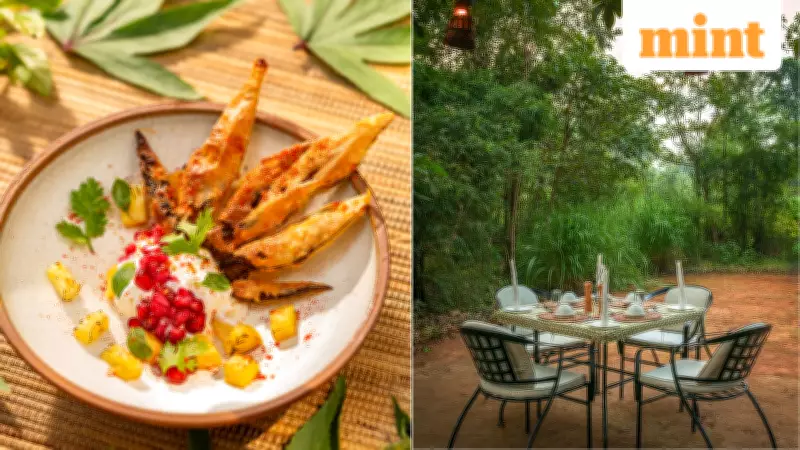
At Tipai, a luxury retreat on the fringes of the Tipeshwar Wildlife Sanctuary in Maharashtra, Chef Amninder Sandhu presents a showstopper: raan (the hind leg of goat or lamb) slow-cooked for eight hours in an underground pit until the meat is fall-off-the-bone tender. The ambadi chaat, crafted from roselle leaves freshly plucked from the on-site garden, is flash-fried and paired with a charred pineapple sorbet, pomegranate dust, and tamarind pearls—a zesty, complex creation designed for the afternoon heat. A palate cleanser of fresh marigold flower sorbet follows. "Marigolds grow abundantly around us. We infuse them gently to highlight their grassiness and an almost honeyed floral note," says Sandhu, whose menu also features innovative items like puranpoli profiteroles as part of a seven-course degustation. "There is a growing expectation of storytelling: guests want to understand the origin of their food, who grows it, and how it connects to the region."
Meanwhile, at Aramness Gir in Gujarat, the signature matla chicken matches the drama of the Sasan Gir wilderness. A whole chicken is stuffed with greens, wrapped in banana leaves, and tucked into an overturned terracotta pot set ablaze. "Originally a shikaar dish, this technique survived even after hunting was banned because it is exceptionally effective. Villagers around Gir still prefer this traditional method for cooking meat," elaborates Chef Vikas Das. The dish becomes a sensory event the moment the pot is cracked open.
The rest of the menu at Aramness Gir is equally inventive. Flatbreads are layered with greens from the kitchen garden and a soft-cooked egg, while French toast is stuffed with cheese and a house-made mango chutney. A vast 30,000 sq. ft organic garden supplies most of the produce, with everything else sourced from within a 50-kilometer radius, primarily from farmers in Talala taluka. The surrounding mango orchard plays a significant role when in season.

Innovation Across India's Wilderness Retreats
The culinary excitement extends to Brij Sone Bagh, a luxury retreat on the edge of the Bandhavgarh Tiger Reserve in Madhya Pradesh. Here, indigenous millets like kodo and kutki are elevated into textured risottos and paellas, while red amaranth leaves are innovatively incorporated into falafels.
This spirit of hyper-local cuisine continues at the Rhino & River Wildlife Retreat & Spa in Pobitora, Assam, the home of the one-horned rhinoceros. The kitchen draws from the lush bounty of the Brahmaputra valley. A standout dish is a black rice salad, where the nutty grain is tossed with fermented bamboo shoots and dressed with bhoot jolokia and bamboo brine. "Guests are often intrigued by its complexity and simultaneously surprised by how light and vibrant it feels," says menu consultant Kashmiri Barkakati Nath. Guests are also encouraged to join foraging trips to pick wild edible greens, which chefs then stir-fry or pound into chutneys, wrap in banana leaves, and roast over an open fire.
Led by the Seasons: Improvisation in the Bush
Maintaining high culinary standards in remote bush locations demands constant improvisation and innovation. Unlike city restaurants, these retreats operate where produce can be scanty and supplies erratic. This necessity makes preservation techniques like pickling, fermenting, and drying essential for extending ingredient availability. It also requires a flexible approach to tradition. For instance, a classic shrikhand might transition from strawberry to pineapple to mango as seasons change. If eggplant is unavailable for bharta, the kitchen applies the same smoky roasting and tempering techniques to gourds.
"When figs ripen, we make anjeer barfi instead of the usual mohanthal. When chikoo arrives, we prepare halwa. Fresh turmeric becomes haldi ki sabzi, a dish possible only during the winter months when turmeric is harvested. We don't approximate these dishes year-round; we patiently wait for the right season," shares Chef Das.
The challenge is not merely logistical; it also involves managing diner expectations. "Sometimes, expectations are shaped by luxury resorts that offer imported ingredients," notes Chef Sandhu. The dining setting itself adds to the atmospheric experience. At Tipai, dinner is laid out in a grove of palash trees, while Aramness Gir invites guests to low tables nestled in a lush orchard, accompanied by the comforting crackle of a campfire.
The kitchens at India's safari lodges have finally caught up with the thrill of wildlife sightings. These meticulously crafted meals ensure that the most memorable encounter of the day now occurs not only in the depths of the jungle but also beautifully presented at the dining table, offering a true taste of India's diverse terrains.