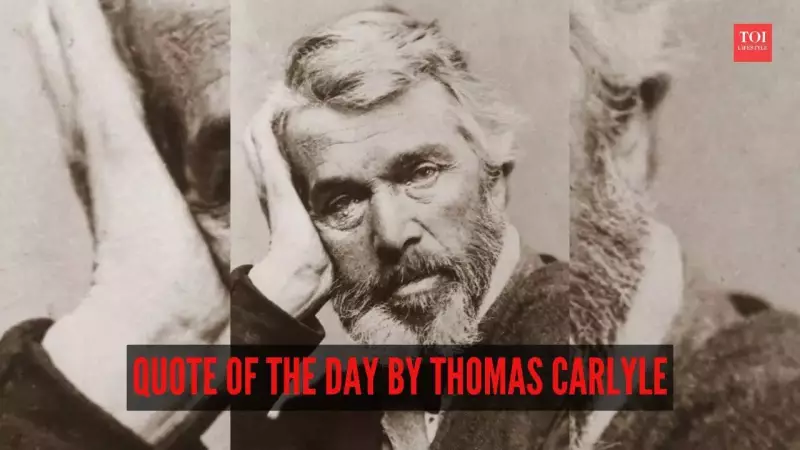
Thomas Carlyle emerged as one of the most profound and influential thinkers of the nineteenth century, leaving an indelible mark on literature, philosophy, and social commentary. Born in Scotland in 1795, Carlyle navigated an era characterized by sweeping social changes and the rapid advancements of the Industrial Revolution. His intellectual legacy is distinguished by a remarkable blend of keen intellect, moral earnestness, and a distinctive writing style that challenged conventional norms.
The Core of Carlyle's Philosophy
At the heart of Carlyle's work was a deep concern for the spiritual and moral well-being of society. In contrast to the growing emphasis on comfort and material convenience during his time, he passionately advocated for the cultivation of duty, discipline, and inner strength. Carlyle believed that a life of true substance was built not on external achievements but on these foundational virtues.
Redefining Greatness and Success
Carlyle's perspective on greatness was revolutionary. He argued that real significance lies in character rather than in wealth, social position, or superficial success. He openly criticized the societal fixation on material possessions, urging individuals to instead foster sincerity, bravery, and tenacity. This viewpoint often placed him at odds with popular opinion, yet it inspired many to prioritize effort over ease and purpose over fleeting pleasure.

His ideas profoundly influenced discussions on human resilience, leadership, and perseverance, offering a counter-narrative to the materialistic trends of his age.
Notable Literary Contributions
Thomas Carlyle's literary output includes several seminal works that continue to be studied and admired. Among his most famous publications are:
- Sartor Resartus: A satirical and philosophical novel that explores themes of identity and societal values.
- The French Revolution: A History: A detailed historical account that blends narrative with critical analysis.
- On Heroes, Hero-Worship, and the Heroic in History: A series of lectures examining the role of influential figures in shaping historical events.
Through these works, Carlyle delved into complex themes such as moral responsibility, the impact of great individuals on history, and the importance of persistent effort. His writing uniquely combined elements of history, philosophy, and social critique, creating a rich tapestry of thought that resonated with readers then and now.
The Enduring Quote on Perseverance
One of Carlyle's most widely attributed quotes encapsulates his philosophy: “Permanence, perseverance and persistence in spite of all obstacles, discouragements, and impossibilities: It is this, that in all things distinguishes the strong soul from the weak.”
Decoding the Meaning
This powerful statement emphasizes that true strength is not demonstrated through sporadic bursts of activity but through unwavering consistency and determination. Carlyle breaks down the components as follows:
- Permanence: Refers to the steadfast adherence to one's convictions and principles over time.
- Perseverance: Involves the continuous pursuit of goals despite challenges and delays.
- Persistence: Denotes the resilience to resist defeat even when faced with seemingly insurmountable odds.
Carlyle acknowledges that failure and discouragement are inevitable parts of life. However, he argues that it is one's response to these adversities that defines their character. The distinction between a "strong soul" and a "weak" one is not based on physical prowess or intellectual capacity but on mental toughness and moral fiber. While the strong persist through obstacles, the weak may retreat at the first sign of difficulty.
Relevance in the Modern World
Thomas Carlyle's insights remain strikingly applicable today. In a contemporary society that often celebrates rapid success and immediate gratification, his teachings serve as a vital reminder that enduring achievement is rooted in resilience and sustained effort. By valuing permanence, perseverance, and persistence, individuals can develop the inner fortitude needed to navigate uncertain and challenging times.

Ultimately, Carlyle's philosophy underscores that inner strength is not an innate trait or a matter of luck. Instead, it is forged through deliberate hard work and the courage to continue forward even when the path ahead appears daunting. His legacy encourages us to look beyond material gains and cultivate a deeper, more meaningful existence based on character and perseverance.