10 Most Mispronounced Food Words and Their Correct Pronunciation
Food travels across borders with remarkable speed, often arriving long before its proper pronunciation does. We confidently order sushi, enjoy lattes, spread pesto on toast, and debate croissants with passion, frequently unaware that we are subtly altering centuries of linguistic heritage. This is not a matter of ignorance but rather cultural adaptation. Words naturally evolve as they enter new cultures, and kitchens tend to be forgiving environments where meaning often trumps perfect articulation.
However, there is a distinct satisfaction in knowing how a dish was originally meant to be pronounced. This knowledge is not about showing off at dinner parties but about appreciating the origins of the food and the people who perfected it long before it appeared on delivery apps. Here is a comprehensive guide to ten famously mispronounced food words, complete with their traditional pronunciations.
Bruschetta
This beloved Italian appetizer has been widely transformed into "broo-shetta" on menus around the world. The authentic Italian pronunciation is "broo-SKET-ta." In Italian, the combination "sch" before an "e" or "i" produces a hard "sk" sound. Once you grasp this rule, the correct pronunciation suddenly becomes intuitive and obvious.

Quinoa
This protein-rich grain, technically a seed, has sparked years of pronunciation confusion. Is it "kwin-oh-ah," "keen-wah," or "kin-noah"? The closest approximation to its original Andean pronunciation is "KEEN-wah." It consists of just two syllables, making it clean and straightforward to say.
Gnocchi
These soft Italian dumplings, typically made from potato, flour, and egg, are often mispronounced as "guh-nock-ee." In Italian, the "gn" creates a soft "ny" sound, resulting in the proper pronunciation of "NYOK-ee." This gentle, rounded sound is surprisingly pleasing once you master it.
Acai
The Brazilian berry entered global wellness culture surrounded by an aura of mystery and frequent mispronunciation. It is neither "ah-kai" nor "a-sigh." The correct Portuguese pronunciation is "ah-sigh-EE," with three syllables and the emphasis placed on the final one.
Pesto
This short, sharp sauce is often unnecessarily complicated in pronunciation. Many English speakers elongate it into "pay-sto." In Italian, it is closer to "PES-to," with a softer "e" similar to the vowel sound in "bed." It is a simple, no-fuss term that reflects the straightforward nature of its basil and garlic ingredients.
Pho
This iconic Vietnamese noodle soup appears as though it should rhyme with "go," but that assumption is misleading. The most common and accurate pronunciation is "fuh," spoken quickly and lightly. This single-syllable word is as comforting and uncomplicated as the broth it represents.
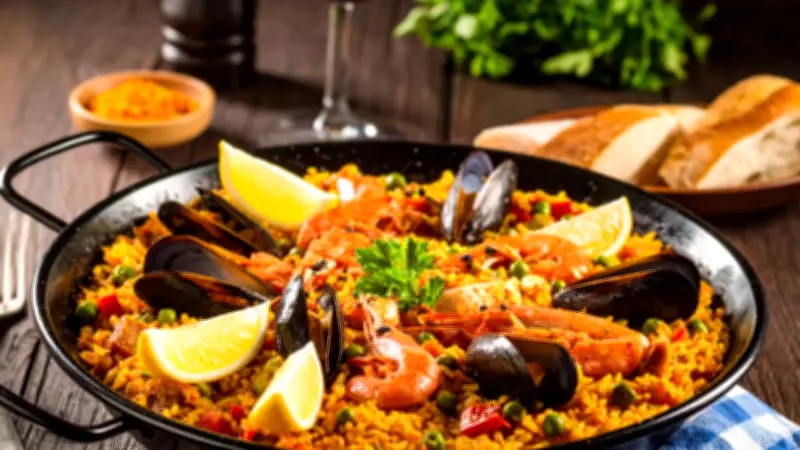
Paella
Spanish dishes frequently suffer from Anglicized vowel sounds, and paella is no exception. It is often pronounced as "pie-ella," but in Spain, it sounds more like "pa-EL-ya," with a subtle "y" sound in the middle and the stress firmly on the second syllable.
Mascarpone
Tiramisu would not exist without this creamy Italian cheese, yet its name is routinely twisted into "mars-ca-pone." The authentic Italian version is "mas-car-POH-neh," featuring a gentle ending and no "r" sound following the first syllable.
Sriracha
This popular chili sauce has become so mainstream that its pronunciation now varies by region. Many say "sir-rah-cha" or "see-rah-cha." The Thai-influenced pronunciation is closer to "see-RAH-cha," with the emphasis in the middle and a clear, clean opening sound.
Croissant
One of the world's most frequently mispronounced breakfast pastries, the croissant often becomes "kruh-sant" or "kwah-sant" in English conversations. In French, the pronunciation is softer and more concise: "krwah-sahn." The final "t" is silent, and the middle syllable is barely audible, mirroring the airy, buttery, and understated quality of the pastry itself.

Mastering these pronunciations not only enhances your culinary vocabulary but also deepens your appreciation for the rich cultural histories behind these beloved foods. Whether you are ordering at a restaurant or discussing recipes with friends, using the correct terms adds an extra layer of respect for the traditions that brought these dishes to your table.