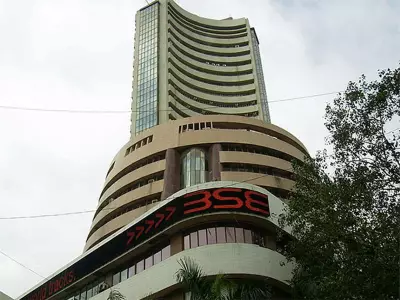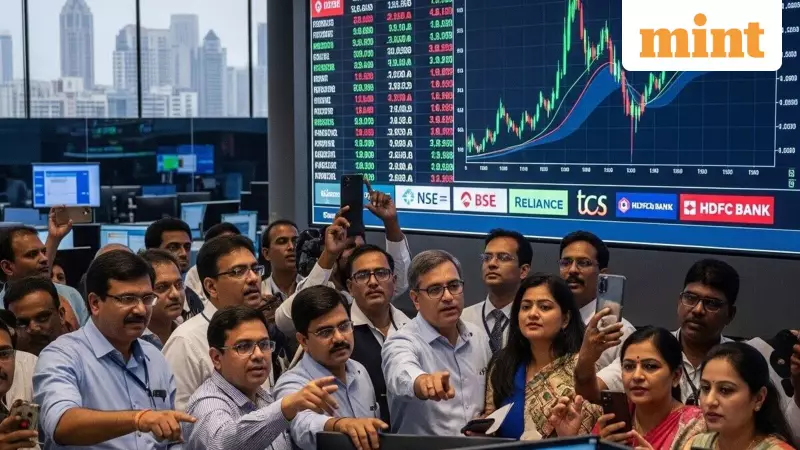
With the Indian stock market experiencing persistent volatility despite the landmark India-EU free trade agreement, investor attention has decisively shifted toward the upcoming mega-event: the Union Budget 2026. Finance Minister Nirmala Sitharaman is scheduled to present the Budget on February 1, following the presentation of the Economic Survey of India on Thursday. The Budget session of Parliament commenced on Wednesday, January 28, setting the stage for critical fiscal announcements.
Navigating Market Sentiment Ahead of the Budget
Currently, market sentiment is being dominated by a confluence of factors including mixed third-quarter earnings reports, sustained selling by foreign institutional investors (FIIs), and ongoing geopolitical uncertainties. Amid this backdrop, the Union Budget emerges as a potent and influential factor for the domestic equity landscape. Investors and traders are actively engaged in speculating and formulating their trading and investment strategies specifically for Budget day, seeking to capitalize on potential policy shifts.
Expert Insights: A Focus on Fundamentals and Selective Exposure
Financial experts widely anticipate that the Union Budget 2026 will maintain a dual focus on fostering economic growth and ensuring fiscal consolidation. However, analysts caution that the Budget may not introduce strong, immediate measures to boost consumer consumption. Consequently, policy announcements alone might not trigger a sharp, sustained upward movement in the market unless accompanied by significant tax relief provisions for individuals or corporations.

Pankaj Pandey, Head of Research at ICICI Securities, highlighted specific areas that could alter market dynamics. "Announcements concerning the housing sector, particularly those related to affordable housing initiatives, along with taxation relief for Foreign Portfolio Investors (FPIs), possess the potential to significantly improve overall market sentiment," he stated.
The market is currently exhibiting pronounced stock-specific behavior, heavily influenced by the ongoing Q3 results season. For long-term investors, experts advise a cautious stance in the immediate pre-Budget period.
VK Vijayakumar, Chief Investment Strategist at Geojit Financial Services, elaborated on this perspective. "The present environment resembles a stock-picker's market, which is inherently more suitable for active traders. Given the existing lack of clarity on key macroeconomic issues, especially concerning the India-US trade deal, long-term investors would be prudent to remain on the sidelines for the time being," Vijayakumar explained.
He further suggested that investors willing to assume selective risk could concentrate their exposure on domestic-centric sectors. "Sectors such as defence and capital goods are less reliant on global trade fluctuations and stand to benefit directly from domestic policy support and anticipated government capital expenditure," Vijayakumar added.
Strategic Entry Points and Potential Triggers
Ajit Mishra, Senior Vice President of Research at Religare Broking Ltd., offered a nuanced view on investment timing. He suggested that investors could consider selective buying opportunities in equities. "The Budget presentation could potentially offer more attractive entry levels for investors if the announcements lead to market disappointment, especially since expectations for major, sweeping reforms are currently quite muted. The absence of a pre-Budget rally underscores this tempered outlook," Mishra noted.
However, he was quick to identify potential positive catalysts. "Should the Budget deliver positive surprises, such as specific relief measures for market participants—including a potential reduction in the Securities Transaction Tax (STT) or favorable adjustments to Long-Term Capital Gains (LTCG) taxation—it could serve as a strong positive trigger for market momentum," Mishra clarified.

The market is also anticipating selective sectoral support, particularly for industries that have faced significant pressure, such as textiles and various export-oriented sectors. Mishra believes that developments like the finalized EU-India trade agreement, coupled with targeted budgetary support, could act as short-term catalysts for these segments. Nevertheless, he tempered expectations for a broad-based market rally. "Corporate earnings, which have been mixed this quarter, remain the primary focus. Therefore, a selective and discerning investment approach is currently the most suitable strategy," Mishra concluded.
Sectoral Expectations and Beneficiary Stocks
Brokerage firm Motilal Oswal Financial Services Ltd. anticipates a continued emphasis on higher capital expenditure (capex) across several key sectors. These include defence, infrastructure development, affordable housing, power, and capital goods. The firm speculates that a higher allocation to the Pradhan Mantri Awas Yojana (PMAY) scheme and an overall increase in government capex could provide a boost to select cement companies.
Furthermore, specific budgetary measures could benefit other financial segments. Potential announcements such as a reduction in LTCG tax, the reintroduction of indexation benefits for debt mutual funds, no further increase in STT, along with a widening of income tax slabs and a higher standard deduction, are viewed as potentially positive for Asset Management Companies (AMCs), Registrar and Transfer Agents (RTAs), and wealth management firms.
Based on its analysis, Motilal Oswal has identified a range of key stocks and sectors that could benefit if market expectations materialize in the Budget. The list includes companies across various industries:
- Engineering & Capital Goods: Larsen & Toubro (L&T), ABB India, Siemens India, Hitachi Energy India, Siemens Energy, KEC International.
- Defence: Bharat Electronics Ltd (BEL), Bharat Dynamics Ltd (BDL), Hindustan Aeronautics Ltd (HAL).
- Cement: Ultratech Cement, JK Cement.
- Cables & Electricals: Polycab India, KEI Industries, Crompton Greaves Consumer Electricals.
- Consumer & Others: Titan Company, PN Gadgil Jewellers, Niva Bupa Health Insurance.
- Financial Intermediaries: Various AMCs, RTAs, most Housing Finance Companies (HFCs), Microfinance Institutions (MFIs).
- Infrastructure & Energy: Multiple infrastructure players, Indraprastha Gas Ltd (IGL), Mahanagar Gas Ltd, Gujarat Gas, Petronet LNG, GAIL (India) Ltd.
- Renewable Energy & Power: Waaree Energies, Premier Energies, NTPC Ltd, Tata Power, Acme Solar, NTPC Green Energy Ltd.
- Real Estate: Brigade Enterprises, Prestige Estates Projects, Sobha Ltd, Macrotech Developers (Lodha), Godrej Properties.
Disclaimer: This article is intended for educational and informational purposes only. The views, opinions, and recommendations expressed herein are those of individual analysts or broking firms and do not necessarily reflect the stance of Mint. Market conditions are subject to rapid change, and individual circumstances vary. Investors are strongly advised to consult with certified financial experts or advisors before making any investment decisions.