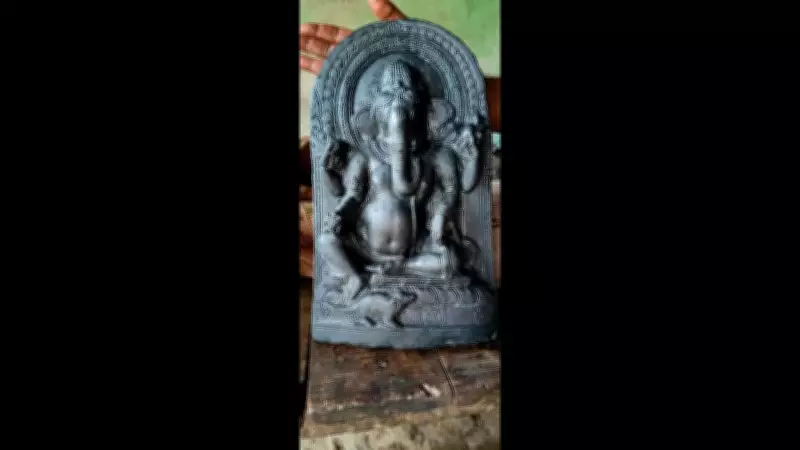
Rare 8th Century Ganesha Idol Discovered in Bihar Field Sparks Preservation Calls
In a significant archaeological discovery, a rare idol of Lord Ganesha from the Pala period (8th-9th century AD) has been unearthed during agricultural work at Simri Bakhtiyarpur village in Saharsa district, Bihar. The find has prompted urgent calls from cultural heritage experts for proper museum preservation to protect this valuable artifact.
Experts Advocate for Secure Museum Housing
Former regional director of the Archaeological Survey of India (ASI), Phani Kant Mishra, along with Shiv Kumar Mishra, state co-convener of the Indian National Trust for Art and Cultural Heritage (Intach), have formally urged the Bihar state culture department to transfer the idol to a secure museum environment. Currently, the precious artifact is being kept in a local temple, which experts warn provides inadequate protection from an archaeological perspective.
The discovery occurred when local farmer Sita Ram Yadav was ploughing his field and encountered the idol at approximately two feet below the surface. According to local activist Amit Anand, the find site is situated near the historic Baba Mateshwar Nath temple, adding to the location's archaeological significance.

Detailed Description of the Ancient Artifact
Phani Kant Mishra provided comprehensive details about the remarkable statue. The idol is crafted from black schist, a soft metamorphic rock commonly used in ancient Indian sculpture. It features four arms, a distinctive pot belly characteristic of Ganesha iconography, and is seated gracefully on a lotus pedestal. Intriguingly, a mouse is carved at the base of the pedestal, completing the traditional representation of Lord Ganesha's vehicle.
The former ASI director noted that the statue appears to have been detached from a temple complex long ago and subsequently discarded in the agricultural field. Based on stylistic analysis and material composition, he confidently dates the artifact to the 8th century AD, placing it firmly within the influential Pala period of Indian art and architecture.
Historical Context and Previous Discoveries
This discovery is not an isolated incident in the region. Approximately a decade ago, a 2.5-foot-tall Shivling idol from the 8th century AD was discovered during excavation work near a public health centre at Mahishi, located just 300 meters north of the famous Ugratara temple complex in Saharsa district. Mahishi village, historically associated with the scholar Mandan Mishra, lies merely 10 kilometers from the current discovery site at Simri Bakhtiyarpur.
Local villagers have reported additional discoveries of rare idols from this locality over time, suggesting the area may contain a rich, yet undocumented, archaeological landscape. The consistent pattern of findings indicates that this region of Bihar holds substantial untapped historical significance.
Broader Implications for Mithila Region Heritage
Phani Kant Mishra emphasized that the entire Mithila region possesses remarkable archaeological wealth, with numerous rare and valuable idols from ancient periods awaiting proper documentation and preservation. He highlighted the critical need for systematic efforts by concerned authorities to protect these cultural treasures for future generations.
The expert welcomed recent government initiatives, particularly the fresh excavations planned at the Balirajgarh complex in Madhubani district. He expressed confidence that such archaeological endeavors would substantially reveal the rich cultural heritage of this historically important region, potentially uncovering additional artifacts that could reshape our understanding of ancient Indian civilization in eastern India.
The discovery underscores the ongoing tension between accidental archaeological finds during routine agricultural activities and the professional preservation requirements for such culturally significant artifacts. As development and farming continue across India's historical landscapes, experts stress the importance of establishing robust mechanisms to identify, document, and properly conserve these invaluable pieces of national heritage.