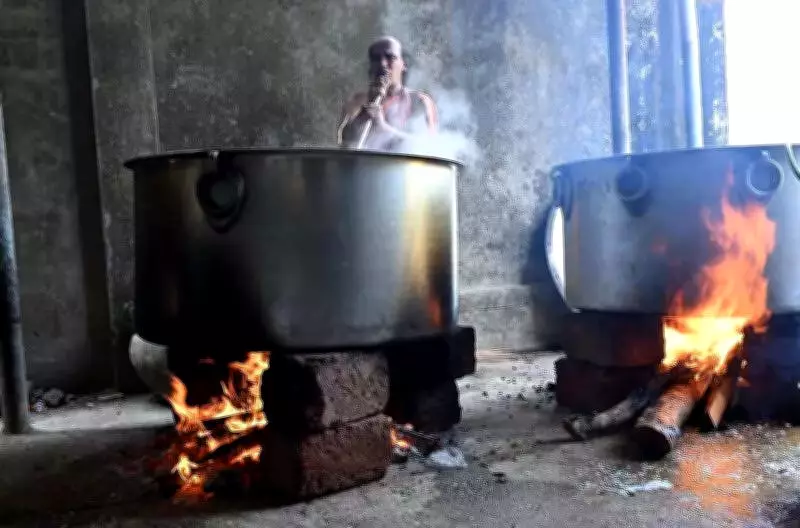
Mangaluru Temple Adapts to LPG Shortage with Traditional Firewood Cooking
In response to a severe LPG supply disruption, the historic Kadri Sri Manjunatha Temple in Mangaluru has made a significant operational shift, temporarily reverting to firewood for cooking meals for devotees. This change, implemented on Thursday, ensures the daily anna prasada (food offering) continues without interruption despite the ongoing cylinder shortage.
Supply Disruption Forces Immediate Action
Temple trustee Dilraj Alva revealed to TOI that the institution began experiencing LPG supply issues from Wednesday, prompting urgent discussions among the managing committee. "To ensure the daily anna prasada continued uninterrupted, the managing committee decided to revert to firewood," Alva stated, emphasizing the priority of serving devotees.
The temple, which typically relies on LPG cylinders for its kitchen operations, faced procurement challenges that threatened its daily food service. "For the time being, we arranged firewood. We will observe the situation for a week," Alva explained, highlighting the temporary nature of this measure while assessing the broader supply crisis.

Scale of Operations and Contingency Planning
The Kadri Sri Manjunatha Temple serves meals to approximately 2,000 devotees daily, with numbers swelling to over 3,500 from Saturday to Monday. Under normal circumstances, the kitchen requires:
- Four 19-kg LPG cylinders per day on weekdays
- Six cylinders during weekends to accommodate increased demand
The regular menu includes traditional South Indian dishes such as rice, pickle, saaru (rasam), gassi (curry), and payasa (sweet pudding). However, the management is actively preparing contingency plans should the LPG shortage persist beyond the initial week.
"We will wait for a week and review the situation. If the crisis persists, we may have to simplify the menu and serve only rice, saaru and pickle," Alva cautioned, indicating potential menu adjustments to maintain service continuity.
Commitment to Devotee Service Amid Challenges
The temple's decision underscores its dedication to minimizing hardship for devotees. "The temple management felt that devotees should not be put to hardship because of the shortage," Alva affirmed, reflecting the institution's community-focused approach.
This adaptation to firewood cooking not only addresses immediate logistical challenges but also connects to traditional culinary practices, albeit driven by necessity rather than choice. The situation highlights how essential services, even in religious institutions, are impacted by broader supply chain disruptions, requiring innovative and timely responses to ensure uninterrupted operations.