Ancient Fire Traces Illuminate China's Deep Historical Roots
Archaeological discoveries, ranging from ancient fossils to meticulously crafted pottery, serve as remarkable windows into our distant past. These findings provide invaluable, previously unknown information about early human societies and their humble beginnings. Recent excavations have uncovered compelling evidence that paints a vivid picture of humanity's deep historical roots in China, potentially reshaping our understanding of one of the world's oldest continuous civilizations.
Salawusu Site Reveals 50,000-Year-Old Human Activity
At the Salawusu archaeological site in Inner Mongolia, researchers have made groundbreaking discoveries that date back approximately 50,000 years. According to Chen Fuyou from the Chinese Academy of Sciences, excavations have uncovered over 400 animal fossils, 80 stone tools, and most significantly, traces of ancient fire usage. These findings offer tangible evidence of human presence and technological capability during the Paleolithic era in northern China.
The distinctive, finely manufactured stone tools exhibit a consistent technological tradition that persisted across millennia in northern China, Chen explained. This continuity demonstrates the steady evolution and adaptation of East Asian populations over vast stretches of time. The discovery of fire traces from this period is particularly significant, as it suggests early humans had mastered this crucial technology, which would have provided warmth, protection, and enhanced food preparation capabilities.

High-Altitude Adaptation and Early Urban Development
Further evidence of human resilience comes from archaeological sites located at astonishing altitudes of 4,300 meters on the Qinghai-Tibet Plateau edge. These discoveries indicate that early human populations successfully adapted to harsh, oxygen-poor environments, showcasing remarkable physiological and cultural flexibility. This high-altitude adaptation represents a significant chapter in human evolutionary history.
China's comprehensive twenty-year archaeology project has revolutionized our understanding of civilization's beginnings in the region. Rather than relying solely on traditional markers like written records or grand urban structures, researchers now examine the rise of early states through multiple lenses. The unique discovery of the Erlitou site in Henan Province, widely associated with China's legendary Xia Dynasty (approximately 2070–1600 B.C.), represents what many consider the nation's earliest known grid-planned capital layout.
Remarkable Artifacts and Cultural Synthesis
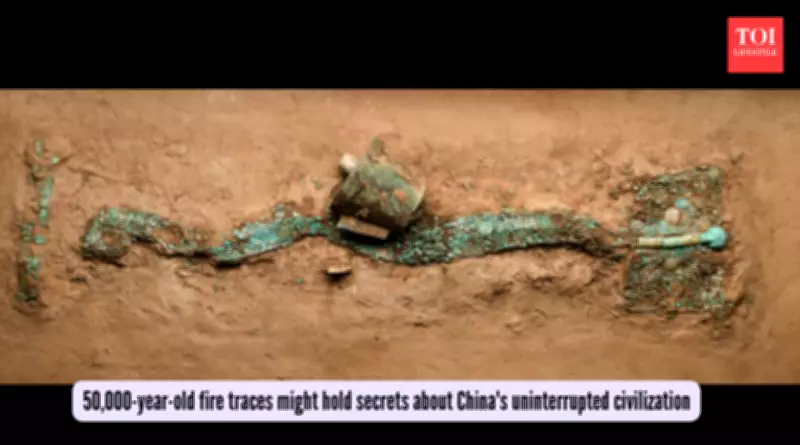
Other significant discoveries include ritual complexes at Niuheliang in Liaoning Province and exquisite pottery from Taosi in Shanxi Province. These findings help researchers better understand the early urban beginnings and cultural developments across different regions of ancient China. Among the most stunning treasures is a magnificent turquoise dragon artifact from Erlitou, measuring over 70 centimeters in length and crafted from more than 2,000 meticulously fitted pieces. This extraordinary creation stands as a powerful emblem of Xia Dynasty creativity and artistic sophistication.
The Xixia Imperial Tombs in Ningxia, recognized as a UNESCO World Heritage site from the Xixia Dynasty (1038-1227), beautifully demonstrate cultural synthesis. These structures combine Han Chinese architectural elements, Buddhist influences, and unique ethnic characteristics, creating a distinctive cultural expression. According to China.org, French scholar Romain Lefebvre, a Xixia expert, notes how this reflects the pluralistic yet unified nature of Chinese civilization throughout history.
Civilizational Integration and Heritage Preservation
Archaeologist Wang Wei from the Chinese Academy of Social Sciences provides additional perspective on this historical trajectory. Throughout the course of Chinese civilization, the movement from diversity to unity has consistently reflected the central theme of civilizational integration alongside political unification, Wang observes. This pattern of integration while maintaining regional characteristics has been a defining feature of China's long historical development.

China has established an impressive framework for safeguarding its archaeological heritage, protecting millions of years of history across approximately 150 major archaeological sites, 65 national parks, and over 240 on-site museums. International forums like the Liangzhu Forum and Nishan Forum on World Civilizations bring together scholars from around the globe to discuss heritage protection strategies and explore timeless philosophical questions about human civilization.
At the third Liangzhu Forum, Tim Winter, research cluster leader of Inter-Asian Engagements at Singapore's Asia Research Institute, noted an important shift in perspective. It's clear that China is now genuinely considering civilizational heritage in broader terms—exploring how regions, religions, and people with diverse cultural backgrounds can interact in more tolerant and respectful ways, Winter wrote. This evolving approach to heritage reflects growing global recognition of China's profound historical contributions and the universal value of preserving our shared human past.