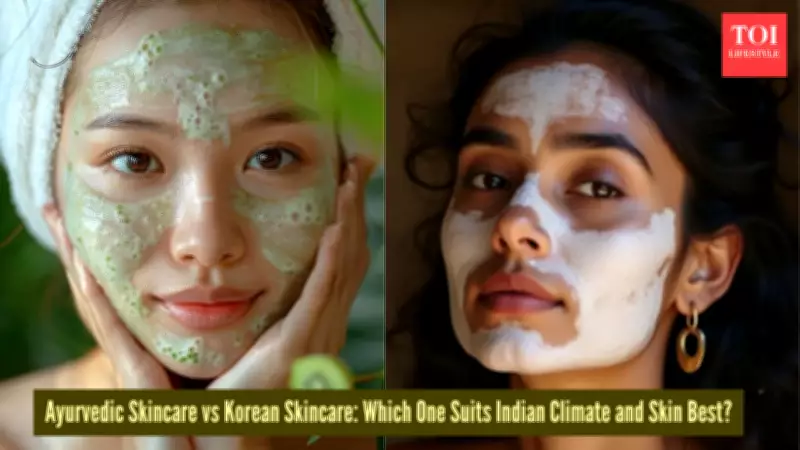
Korean Skincare vs Ayurvedic Skincare: Which Is Better for Indian Skin?
TOI Lifestyle Desk / ETimes.in / Feb 3, 2026, 14:01 IST
In India, the beauty landscape has long been dominated by the ancient wisdom of Ayurveda, where natural ingredients have been trusted for generations to address skincare and haircare needs. However, in recent years, the rise of Korean skincare has introduced a new wave of enthusiasm, with many Indian women embracing its innovative formulations. This article delves into the comparison between Korean and Ayurvedic skincare, examining which practices are most effective for Indian skin types in 2026.
Understanding the Core Differences
Before diving into the specifics, it is essential to grasp the fundamental distinctions between these two skincare philosophies. Ayurvedic skincare is deeply rooted in holistic traditions, while Korean skincare emphasizes modern science and multi-step routines. Both offer unique benefits, but their approaches cater to different aspects of skin health, making it crucial to understand how they align with the needs of Indian skin.

What Is Ayurvedic Skincare?
Ayurvedic skincare, often referred to as Indian skincare, originates from the ancient system of Ayurveda. This approach focuses on natural oils, herbs, and holistic remedies to promote skin wellness. Key ingredients include neem, sandalwood, turmeric, and rose water, which are revered for their healing properties. Ayurvedic practices not only involve topical treatments but also emphasize a balanced diet and a healthy lifestyle. The strength of Ayurvedic skincare lies in its ability to target common Indian skin issues such as acne, tanning, and pigmentation through age-old, skin-nourishing ingredients.
What Is Korean Skincare?
Korean skincare is renowned for its lightweight formulations, innovative ingredients, and elaborate multi-step routines. It prioritizes hydration and the maintenance of a healthy skin barrier. Popular ingredients in Korean skincare include fermented extracts, gentle exfoliants, rice water, hyaluronic acid, and snail mucin. A significant advantage of this approach is its focus on intense hydration and sun protection, which effectively combat problems like dullness, pigmentation, and tanning, making it appealing for those seeking a modern skincare regimen.
How Does Indian Skin Function?
Indian skin often faces challenges due to intense heat, pollution, and varying climatic conditions. These factors necessitate robust hydration and protection strategies. The most effective approach for Indian skin involves combining the science-driven hydration principles of Korean skincare with the natural, healing properties of Ayurvedic remedies. This hybrid method can address issues such as pigmentation, acne, and dullness, creating a balanced routine that promotes glowing and healthy skin.
So, What Is Better for Indian Skin?
The truth is, Indian skin benefits from a blend of both Korean and Ayurvedic skincare. For hydration, barrier repair, and sun protection, Korean skincare offers advanced solutions. Meanwhile, Ayurvedic skincare excels in treating pigmentation, acne, and providing natural healing. Adopting a hybrid approach ensures that you address the specific concerns of Indian skin while leveraging modern innovations to improve skin texture and overall health. In 2026, this balanced strategy is key to achieving optimal results for desi skin types.