Judiciary's Intervention in NCERT Textbook Sparks Campus Debate on Free Enquiry
The formidable power of the Indian judiciary was recently deployed to defend the nation's court system against allegations of calumny found within a Standard VIII NCERT textbook. This judicial action has ignited a significant debate across India's educational campuses, raising critical questions about the boundaries of academic freedom and the role of institutions in shaping intellectual discourse.
Defending Judicial Integrity Through Educational Materials
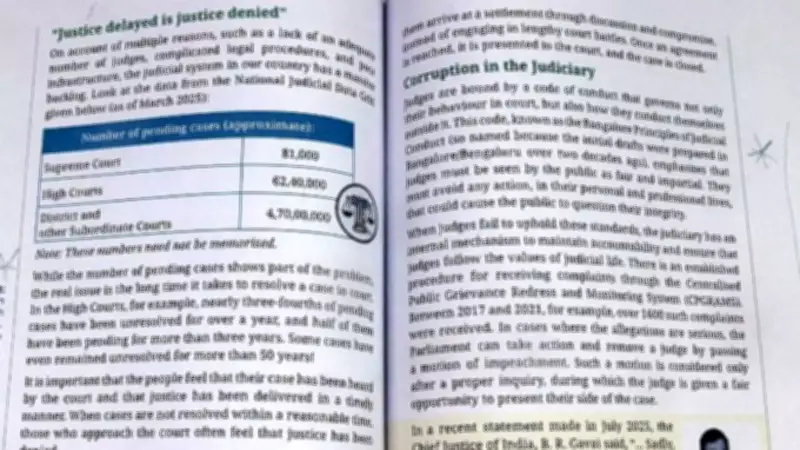
When the judiciary stepped in to address what it perceived as defamatory content in the NCERT textbook, it was asserting a fundamental principle of maintaining institutional integrity. The textbook in question, designed for eighth-grade students, contained passages that judicial authorities found objectionable and potentially damaging to the reputation of India's court system.
This intervention represents more than just a correction of educational material—it symbolizes the ongoing tension between preserving national institutions and fostering critical thinking in academic environments. The judiciary's move has been interpreted by various stakeholders as both a necessary defense of constitutional authority and a potential limitation on academic expression.

The Campus Response to Judicial Oversight
Across universities and colleges throughout India, this incident has sparked intense discussions among faculty members, students, and academic administrators. Many are questioning how such judicial interventions might impact:
- The traditional autonomy of educational institutions
- The freedom of academic enquiry and research
- The development of critical thinking skills among students
- The balance between institutional protection and intellectual freedom
Academic circles are particularly concerned about what this precedent might mean for future textbook content and curriculum development. Some educators argue that while protecting institutional integrity is important, it must not come at the cost of stifling legitimate academic critique and historical analysis.
Broader Implications for Indian Education
This controversy extends beyond the specific textbook content to touch upon fundamental questions about India's educational philosophy. The incident raises important considerations about:
- Curriculum Development: How should educational materials balance factual accuracy with institutional respect?
- Academic Freedom: What constitutes appropriate boundaries for critical examination of national institutions?
- Judicial Role: When and how should the judiciary intervene in educational matters?
- Student Development: How can students develop critical thinking skills while respecting institutional frameworks?
The debate has highlighted the complex relationship between educational institutions, judicial authorities, and the broader goal of fostering an environment conducive to free enquiry and intellectual growth.
Looking Forward: Balancing Protection and Progress
As this discussion continues to unfold across India's academic landscape, stakeholders are calling for a nuanced approach that respects both institutional integrity and academic freedom. Many suggest that transparent dialogue between educational authorities, judicial bodies, and academic communities could help establish clearer guidelines for future interactions.
The NCERT textbook controversy serves as a reminder of the delicate balance required in educational systems that seek to both preserve national values and encourage intellectual exploration. How India navigates this balance will significantly influence the future of academic freedom and institutional relationships within the country's educational framework.