Jharkhand Migrant Workers Face Dire Conditions in Dubai Amid Alleged Exploitation
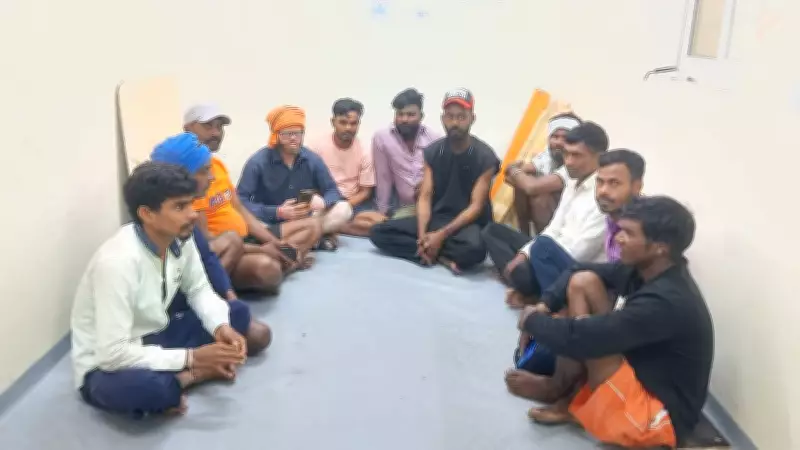
In a distressing development, fourteen migrant workers hailing from the Giridih, Hazaribagh, and Bokaro districts of Jharkhand find themselves stranded in Dubai, grappling with severe hardships. These laborers have been subjected to alleged wage theft, passport confiscation, and threats of eviction, painting a grim picture of their overseas employment ordeal.
Video Appeal Highlights Desperate Plight
The workers have circulated a video detailing their dire circumstances, which include immense difficulties in securing basic necessities like food and accommodation. This visual account has prompted social activist Sikandar Ali to call for immediate government intervention to address the crisis.
Contract Disputes and Broken Promises
Deepak Kumar, a 32-year-old transmission line worker from Hazaribagh employed by Indian company EMC Electromechanical Co LLC in Dubai, revealed that all fourteen workers had initially agreed to a monthly wage of 1,600 dirhams each. "We were contacted through a man who previously worked with the company for many years. He worked as a contractor with the company and convinced us to move to Dubai," Kumar stated. However, he lamented that they now receive barely 1,000 dirhams, far below the promised amount.

Ghanshyam Mahato, the recruitment agent involved, defended the deductions, claiming that workers were informed in advance about air ticket costs being subtracted from their salaries. He asserted that the basic salary was being paid, with deductions made to recover ticket expenses initially covered by the company.
Workers Counter Allegations of Misinformation
Daleshwar Mahto, a worker from Bokaro, strongly disputed Mahato's claims. He emphasized that before departure, it was clearly agreed that all expenses—including flight tickets, food, accommodation, and visas—would be borne by the company without any salary deductions. "After reaching here, no agreement was done at all, and around 1000 dirhams are being deducted every month from each worker's salary," Mahto alleged.
He further revealed that 50 dirhams were being deducted for accommodation despite prior assurances of no room rent charges. More alarmingly, Mahto claimed that the camp supervisor demanded 5,000 dirhams and threatened eviction if the amount was not paid. "He came again last night and threatened us. When we said we would not work and wanted to return home, our passports were not given back," he added, noting that no supervisor or company representative intervened despite repeated complaints.
Struggles for Basic Survival
According to Mahto, the camp supervisor justified the demands by stating the company was running at a loss. "We came here to earn, not to give our money to them. Right now, we are borrowing food from local shops and eating. We will not work unless we are paid," he declared, highlighting their precarious situation.
Another worker, Rajesh Kumar, shared that they were contacted by the agent and interviewed online via WhatsApp using the contractor's phone, with all terms discussed verbally. "The company manager told us on the call that once we come, everything will be taken care of. But after coming here, the situation has completely changed. We now want to return," he expressed.
Company and Official Responses
An HR official of Dubai-based EMC, Manjunath Nagvi, countered the workers' claims, stating that the workers were unwilling to work and that their salaries had been paid. He mentioned they were insisting on returning, adding that the company had invested in two-year visas for them and that "it was not possible to send them back within a month."
When contacted, Shikha Lakra, Head of the State Migrant Workers Control Room under the Labour Department, indicated that the department had just received the complaint and would verify it before taking further action. This response underscores the need for swift and thorough investigation into the allegations.

Broader Implications for Migrant Labor
This incident sheds light on the vulnerabilities faced by Indian migrant workers abroad, particularly in regions like the Middle East. The lack of written agreements, verbal promises, and sudden changes in terms highlight systemic issues in overseas employment practices. It calls for enhanced regulatory oversight and better protection mechanisms for workers seeking livelihoods in foreign countries.
The plight of these fourteen Jharkhand workers serves as a stark reminder of the risks associated with international labor migration and the urgent need for robust support systems to safeguard their rights and well-being.