Canada Firmly Rejects China Free Trade Agreement Amid US Pressure
Canadian Prime Minister Mark Carney has explicitly stated that Ottawa has "no intention" of pursuing a free trade agreement with China, directly pushing back against claims of a strategic drift towards Beijing. This declaration comes just one day after former US President Donald Trump issued sweeping tariff threats against Canadian goods, escalating transatlantic trade tensions.
Trump's Tariff Warning and Carney's Response
Carney's remarks were delivered in response to Trump's warning that Canada could face "100 per cent tariffs if it makes a deal with China." Speaking to reporters on Sunday local time, the Canadian leader emphasized that Canada remains bound by its commitments under the Canada–United States–Mexico Agreement (CUSMA), which restricts free trade agreements with non-market economies without prior notification.
"We have commitments under CUSMA not to pursue free trade agreements with non-market economies without prior notification. We have no intention of doing that with China or any other non-market economy," Carney stated firmly. He clarified that recent engagements with Beijing were limited to resolving specific tariff disputes that developed over the past couple of years, rather than negotiating broader market access or a comprehensive trade pact.

Trump's Escalating Rhetoric and US Concerns
Trump had issued a sharp warning on Saturday, accusing China of undermining Canada's economy and cautioning Ottawa against becoming a conduit for Chinese goods entering the United States. In posts on Truth Social, he wrote: "China will eat Canada alive, completely devour it, including the destruction of their businesses, social fabric, and general way of life." While his initial posts targeted Canada, his tone later softened slightly, with subsequent messages focusing more directly on China and expressing a desire to see Canada "SURVIVE AND THRIVE!"
US Treasury Secretary Scott Bessent further clarified the administration's concerns, stating that the primary worry centers on the possibility of Chinese goods entering the US market via Canada. "We can't let Canada become an opening that the Chinese pour their cheap goods into the US," Bessent emphasized during an appearance on ABC's This Week. He also questioned Carney's approach ahead of a planned renegotiation of CUSMA this summer, suggesting the Canadian leader might be "trying to virtue-signal to his globalist friends at Davos."
Background of Trade Tensions and Recent Developments
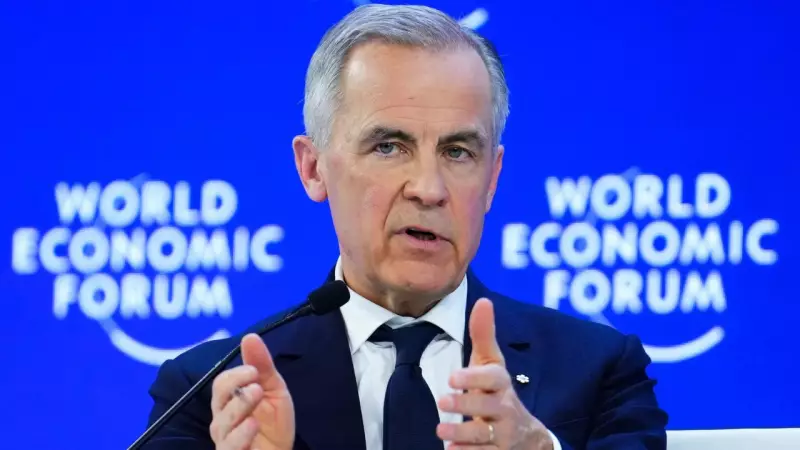
Trade tensions have been simmering since Carney's speech at the World Economic Forum in Davos last week, where he criticized "American hegemony" and "great powers" for using economic integration as "weapons." Trump later responded by reminding Carney that "Canada lives because of the United States."
Canada's latest position follows months of retaliatory trade measures:
- In 2024, Ottawa imposed a 100% tariff on Chinese electric vehicles and 25% tariffs on steel and aluminium, mirroring US actions.
- China responded with duties on Canadian exports including canola oil, pork, and seafood.
- Earlier this month, Canada adjusted its policy during a visit to China, agreeing to lower tariffs on a capped number of Chinese electric vehicles in exchange for reduced Chinese tariffs on Canadian agricultural products.
Under this arrangement, up to 49,000 Chinese EVs will enter Canada annually at a 6.1% tariff, increasing to about 70,000 over five years. Carney described this cap as representing roughly 3% of Canada's annual vehicle sales and characterized the move as a stabilization measure rather than a shift in trade strategy. He added that China is expected to begin investing in Canada's auto sector within three years.
Strategic Implications and Future Outlook
The current standoff highlights the delicate balancing act Canada faces between its economic interests with China and its deep-rooted trade relationship with the United States. Carney's firm rejection of a China free trade deal appears designed to reassure Washington while maintaining limited bilateral engagements with Beijing on specific issues.

As the summer renegotiation of CUSMA approaches, observers will be watching closely to see how these tensions evolve and whether Trump's tariff threats materialize into concrete policy actions. The situation underscores how trade policy has become increasingly intertwined with geopolitical considerations in North America.