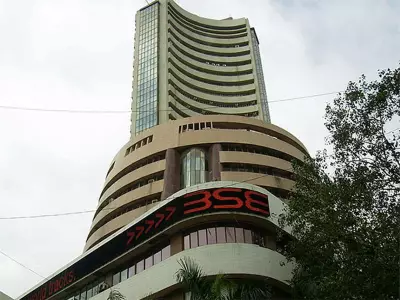
Budget 2026 Sparks Market Carnage: Sensex Plunges 1,500 Points in Historic Rout
In a dramatic Budget day collapse, Indian equity markets witnessed their most severe single-day decline in recent history as the Union Budget 2026-27 proposals triggered panic selling across Dalal Street. The benchmark Sensex plummeted by nearly 1,500 points—marking its largest points loss ever on a Budget day—to close at 80,773 points, while the broader Nifty tumbled 495 points (2%) to settle at 24,825 points.
Market Carnage Wipes Rs 9.4 Lakh Crore in Wealth
The unprecedented sell-off erased a staggering Rs 9.4 lakh crore from the Bombay Stock Exchange's market capitalization, representing the most substantial Budget day wealth destruction in the exchange's history. The trading session was characterized by extreme volatility, with the Sensex initially rallying over 400 points as Finance Minister Nirmala Sitharaman began her speech, only to collapse approximately 1,100 points following the announcement of increased securities transaction tax (STT) on derivatives.
The market partially recovered during mid-session trading, reducing losses to about 600 points before another wave of selling pressure pushed the Sensex below the psychologically significant 81,000 mark for the first time in four months. Market analysts attributed the exaggerated reaction to thin trading volumes, as most institutional players remained absent from the markets on Sunday.

STT Hike Targets Derivatives Speculation
The primary trigger for the market meltdown was the government's decision to substantially increase securities transaction tax on equity derivatives trading, effective April 1, 2026. The revised rates will see STT on futures trading surge from 0.02% to 0.05%, while options premium and exercise of options will attract 15 basis points instead of the previous 10 and 12.5 basis points respectively.
This regulatory move effectively more than doubles the statutory costs associated with futures and options trading, representing a significant policy intervention aimed at curbing excessive speculation in the derivatives segment. The decision follows a Securities and Exchange Board of India (SEBI) survey revealing that 91% of retail investors incurred losses in the F&O market, with average annual losses exceeding Rs 1 lakh per investor.
Brokerage Stocks Bear the Brunt
The STT hike announcement triggered a sector-specific sell-off, with brokerage firms and financial services companies experiencing particularly severe declines. Angel One shares crashed nearly 9%, while BSE Limited plummeted 8.1%. Billionbrains Garage Ventures, which operates the popular Groww trading platform, lost 5.1%, and Nuvama Wealth Management declined 7.3% as investors anticipated reduced trading volumes and profitability in the derivatives segment.
Among Sensex constituents, 26 of the 30 stocks closed in negative territory, with Reliance Industries, State Bank of India, and ICICI Bank contributing most significantly to the index's decline. Only buying interest in software services giants Infosys and Tata Consultancy Services provided some cushion against the broader market slide. Overall market breadth remained heavily negative, with 2,444 stocks declining compared to 1,699 advancing counters.
Mixed Reactions from Market Participants
Market professionals expressed divided opinions about the Budget's impact and the market's reaction. Taher Badshah, President and Chief Investment Officer at Invesco Mutual Fund, characterized the market response as "a bit overdone" while acknowledging the unexpected nature of the STT hike decision.
"I think markets should settle down in 2-3 days," Badshah predicted, adding that the Budget largely followed the government's established fiscal trajectory of recent years. He noted that the revenue and expenditure targets for fiscal year 2026-27 appeared achievable, though he expressed some concern about the projected 10% nominal GDP growth rate potentially being optimistic if inflation normalizes during the year.

GST Relief for Foreign Portfolio Investors
Amid the market turmoil, the Budget contained one significant positive development for international investors. The government proposed eliminating the 18% Goods and Services Tax charged on brokerage fees paid by foreign portfolio investors in India. This change involves omitting clause (b) of sub-section (8) of section 13 of the Integrated Goods and Services Tax Act, 2017.
According to the Budget documents, this amendment will ensure that "the place of supply for 'intermediary services' will be determined as per the default provision under section 13(2) of the IGST Act." This regulatory simplification is expected to enhance India's attractiveness as an investment destination for global capital.
Broader Market Context and Outlook
The dramatic Budget day sell-off occurred against a backdrop of heightened global market volatility driven by geopolitical uncertainties. While the immediate market reaction appeared severe, many analysts suggested that the fundamental impact of the STT hike might be less dramatic than initially perceived, particularly for long-term investors and institutional participants.
The coming days will reveal whether the market stabilizes as predicted or whether additional factors contribute to continued volatility. Market participants will closely monitor institutional response when trading resumes with full participation, as well as any clarifications or modifications to the Budget proposals during parliamentary discussions.