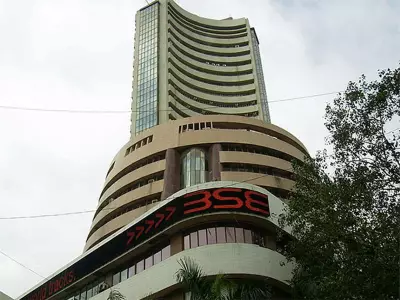
Union Budget 2026-27: A Cautious Yet Reform-Oriented Blueprint for Stock Market Investors
The Union Budget for the fiscal year 2026-27, presented by Finance Minister Nirmala Sitharaman, presents a nuanced blend of cautious regulatory measures and progressive reforms aimed at reshaping India's stock market ecosystem. While the budget introduces stricter norms for derivatives trading, it simultaneously opens new avenues for foreign Indian investors, reflecting a balanced approach to fostering sustainable growth and curbing excessive speculation.
Securities Transaction Tax Hike: A Strategic Move to Curb F&O Frenzy
In a significant policy shift, the government has proposed a substantial increase in the Securities Transaction Tax on futures and options trades. This move is explicitly designed to discourage rampant speculation in the derivatives segment, where regulatory data indicates that a majority of individual traders consistently incur losses. The revised STT rates see futures taxed at 0.05 percent, up from 0.02 percent, while options premium and exercise of options will now attract a tax of 0.15 percent, compared to the previous rates of 0.1 percent and 0.125 percent, respectively.
Market analysts interpret this hike as a clear signal from policymakers to prioritize market stability over short-term revenue gains. Vishal Kampani, Vice Chairman and Managing Director at JM Financial Ltd, emphasized that "the measured increase in STT on futures and options reflects a clear intent to curb excessive speculation, fostering a more stable market and encouraging sustainable participation from long-term retail and institutional investors."

Archit Gupta, Founder and CEO of ClearTax, provided further context, noting that "the Budget’s hike in STT, by 150% on Futures and 50% on Options, sends a clear signal: the government wants to slow down excessive short-term trading." He highlighted that despite flat STT collections of around Rs 45,000 crore against a Rs 78,000 crore target, retail participation has evolved, with over 21 crore demat accounts and record SIP inflows exceeding Rs 31,000 crore in 2025, indicating a shift toward long-term investing.
Buyback Tax Overhaul: Protecting Minority Shareholders and Curbing Arbitrage
The budget also introduces a comprehensive overhaul of the taxation regime for share buybacks, aimed at protecting minority shareholders and eliminating tax arbitrage opportunities for promoters. Under the new framework, buybacks will be taxed as capital gains for all shareholders, replacing the previous structure that often resulted in uneven tax outcomes. However, to prevent misuse, promoters will face an additional buyback tax, raising the effective tax rate to 22 percent for corporate promoters and 30 percent for non-corporate promoters.
Finance Minister Sitharaman clarified that "change in taxation of buyback was brought in to address the improper use of buyback route by promoters." Experts believe this reform could make buybacks less attractive for promoter groups, potentially encouraging companies to redirect capital toward dividends, capital expenditure, or research and development.
For individual investors, the change offers a more favorable tax treatment. Roop Bhootra, Whole-time Director at Anand Rathi Share and Stock Brokers, explained that "the proposal benefits individual shareholders, as their tax burden would fall from the highest slab rate of 30 percent to capital gains tax rates — 20 percent for short-term and 12.5 percent for long-term gains." He noted, however, that the move may discourage corporate buybacks, prompting alternative capital deployment strategies.
Expanded NRI Access: Broadening India's Investor Base
In a market-friendly reform, the budget proposes to allow individual Persons Resident Outside India to invest in shares of listed Indian companies through the Portfolio Investment Scheme. The investment limit for an individual PROI will be raised to 10 percent from 5 percent, while the overall cap for all such investors will increase to 24 percent from the current 10 percent.

This expansion is expected to broaden India's investor base, enhance market liquidity, and attract more stable, long-term capital. By leveraging the understanding of domestic market dynamics among overseas Indians, the reform could reduce dependence on volatile institutional flows and support currency stability over time.
Market Reaction: Volatility Amid Policy Shifts
Stock markets reacted sharply to the budget announcements, with the Nifty50 falling below 25,000 and the BSE Sensex dropping over 1,600 points in early trading. The hike in STT on futures and options triggered aggressive selling in brokerage, exchange, and high-volume market stocks. By closing, the Sensex was down 1,546.84 points at 80,722.94, while the Nifty fell 495.20 points to settle at 24,825.45. Small- and mid-cap indices declined 2–3 percent, reflecting broad-based risk aversion.
Narendra Solanki, Head of Fundamental Research at Anand Rathi Share and Stock Brokers, attributed the reaction to "a knee-jerk response following the unexpected hike in STT on Futures and Options, as hopes of a reduction in capital gains tax had already been priced in."
Somil Mehta, Head of Retail Research at Mirae Asset Sharekhan, advised investors to "remain selective, focus on quality sectors with strong policy visibility, and avoid aggressive short-term bets." He highlighted positive sectors such as Railways, Electronics, Semiconductors, Pharma, Metals & Mining, and Data Centers, while emphasizing the importance of defensive allocation and long-term positioning to navigate post-budget volatility.
Overall, the Union Budget 2026-27 strikes a delicate balance between regulatory caution and progressive reforms, aiming to cultivate a more stable and inclusive stock market environment while addressing immediate concerns over speculative trading and promoter-led tax arbitrage.