

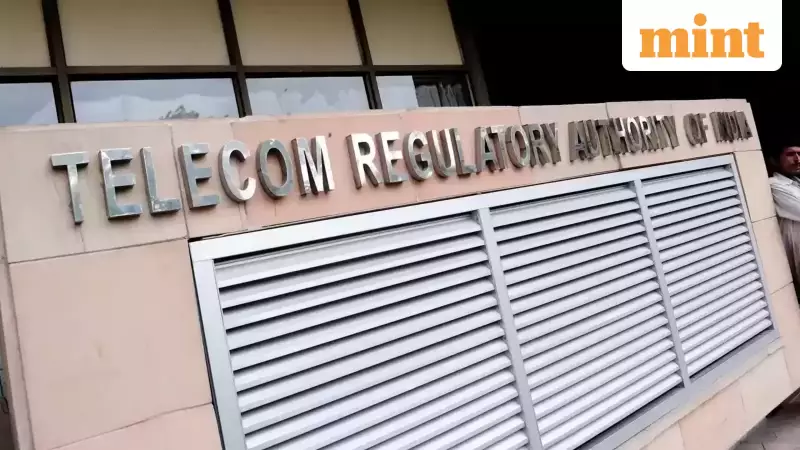
India's Telecom Regulator Faces Critical Spectrum Auction Decisions
The Telecom Regulatory Authority of India (TRAI) is navigating one of its most challenging regulatory scenarios as major stakeholders present conflicting views on the upcoming spectrum auction. The disagreements span critical issues including timing, pricing, and allocation of valuable radio waves that will shape India's digital future.
The 6 GHz Band: Central Point of Contention
The most significant debate revolves around the 6 GHz spectrum band, which holds immense potential for powering superfast Wi-Fi and future 5G/6G networks. Technology giants including Amazon, Apple, Broadcom, Cisco Systems, Meta Platforms, Hewlett Packard Enterprise, and Intel Corporation have jointly expressed concerns about auctioning this band prematurely.
In their collective submission to TRAI, these companies argued that technical and commercial readiness for IMT in the 6 GHz band is not yet established. They cited the example of Hong Kong's recent commercial auction for the upper 6 GHz band, which demonstrated weak market performance across multiple key metrics.

Bharti Airtel has aligned with Big Tech's position, stating that "the global ecosystem for this band, in terms of devices and network equipment, remains in its infancy". The Manufacturers' Association for Information Technology (MAIT) has similarly recommended deferring the auction until global standards mature.
However, Reliance Jio Infocomm Ltd, India's largest telecom operator by market share, has taken a completely opposite stance. Jio has urged the government to immediately auction the complete 1200 MHz quantity of spectrum in the 6 GHz band (from 5.925 to 7.125 GHz). The company emphasized that early auction would drive indigenous innovation and support India's ambitions for global 6G leadership.
Spectrum Pricing and Reserve Price Debate
The reserve price for spectrum has emerged as another major point of division among telecom operators. While most telecom companies have advocated for substantial reductions in base prices, Jio has surprisingly opposed any decrease in reserve prices for existing bands from their last auctioned levels.
Jio argued that reducing prices for bands already sold in previous auctions would erode the value of spectrum purchased by earlier buyers and create investor uncertainty. The company warned that such practices could lead to muted response in future auctions.
In contrast, Bharti Airtel has maintained that substantial reduction in spectrum reserve prices across all frequency bands is essential for realizing India's digital transformation agenda. Airtel pointed out that high reserve prices have historically resulted in spectrum remaining unsold or underutilized, thereby impeding network expansion and diminishing service quality.
According to Satya N. Gupta, former principal advisor at TRAI, the regulator must strike a delicate balance between affordability for users and the revenue-generating potential of spectrum. "Getting the spectrum is a major expense for operators. In case TRAI decides to lower the reserve price, then it will benefit not only the operators but the end users as well," Gupta noted.
Additional Points of Disagreement
The 600 MHz band has also become a subject of controversy between the two telecom giants. This band was first offered during the 2022 auction cycle but found no takers due to the nascent global ecosystem and limited device readiness. It was subsequently excluded from the 2024 auction.
Spectrum caps represent another area where operators hold opposing views. Jio has advocated for complete abolition of spectrum caps, calling them "artificial hindrances that have lost their relevance" given the current abundant spectrum supply and market maturity.
Airtel, however, has insisted that spectrum caps are crucial for maintaining competitive equilibrium and preventing monopoly. The company has requested TRAI to reduce the spectrum cap in some bands from 40% to 35%.

The recent auction trends show a significant shift in bidding behavior. In the June 2024 auction, only 141.40 MHz of airwaves worth ₹11,341 crore were sold from the total 10,522.35 MHz offered with a reserve price of ₹96,238.45 crore. This contrasts sharply with the 2022 auction before 5G launch, where operators acquired 51,236 MHz of spectrum worth over ₹1.5 trillion from the 72,098 MHz offered.
As TRAI evaluates these conflicting viewpoints, the regulator's decisions will significantly impact India's telecommunications landscape, influencing everything from network quality and service pricing to the country's position in the global race for 6G technology leadership.





