

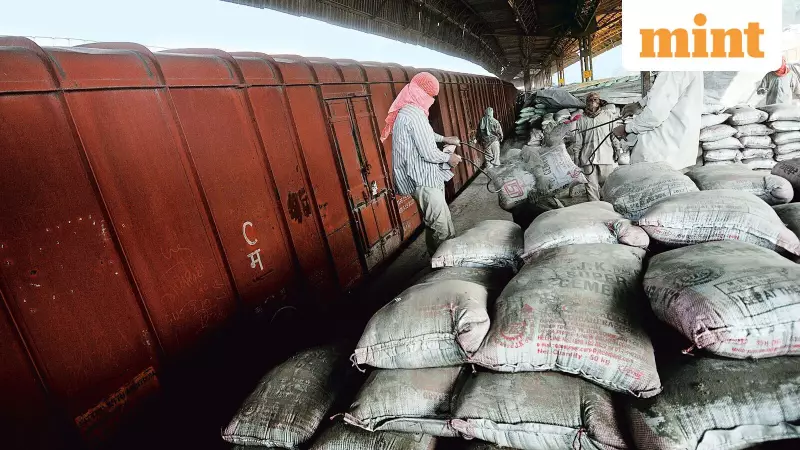
In a significant move to transform cement logistics across the country, Indian Railways has unveiled a comprehensive new policy designed to boost the movement of bulk cement. The initiative aims to substantially increase railways' modal share of this crucial construction commodity through strategic infrastructure development and tariff rationalization.
Revolutionary Pricing Structure
The cornerstone of the new policy is a simplified, flat-rate pricing model that promises to make rail transport more attractive for cement manufacturers. Railways will charge a consistent rate of ₹0.90 per tonne per kilometre when cement is transported using specialized tank containers developed by Container Corporation of India Ltd (Concor). This marks a significant departure from the previous complex haulage rate structure that involved multiple distance and weight slabs.
Railway Minister Ashwini Vaishnaw emphasized the policy's transformative potential during Tuesday's announcement. "The policy is a game-changer that will aid Railways in increasing its share in the multi-modal transport of key commodities. Cement is the first commodity to be included under this focused logistics solution by the transporter," he stated.

Nationwide Terminal Infrastructure Development
The policy includes ambitious plans to develop bulk cement handling terminals across India through public-private partnerships. These facilities will enable rapid and cost-efficient movement of cement from production centers to consumption hubs. The national transporter may repurpose underutilized assets such as goods sheds that handled no more than 12 rakes in the preceding 12 months, loop lines, and other similar infrastructure.
The locations for these bulk terminals will be identified in close consultation with cement manufacturers, ensuring optimal placement to serve industry needs. Potential bidders can propose transforming these underutilized assets into Gati Shakti Cargo Terminals specifically designed for cement handling.
Industry Applauds Progressive Measures
The cement industry has welcomed the new policy as a much-needed reform that addresses long-standing logistical challenges. Aparna Dutt Sharma, Secretary General of the Cement Manufacturers' Association, highlighted the policy's significance for infrastructure development. "Most bulk cement movement involves shorter leads, with transport distances of less than 300km, where earlier rates made it unviable for the industry to move cement through Railways," she explained.
Sharma added that this timely policy will ensure that the country's large infrastructure projects benefit from faster and more efficient movement of cement. The shift to actual tonnage-based pricing rather than complex slab systems particularly fulfills industry expectations.
Cement Sector Growth and Environmental Benefits
According to railway ministry data, cement production in India reached 450 million tonnes in 2024-25 and is projected to grow to 600 million tonnes by 2030. Bulk cement consumption currently represents 17% of total production but is expected to increase to 30% by 2030, driven by growing infrastructure demands.
Bulk cement consumption has already crossed 50% in metropolitan areas, reflecting the shifting preference toward more efficient delivery methods. Railways emphasized that transporting bulk cement from plants to terminals near consumption centers in specialized wagons is not only cost-effective but also environmentally friendly compared to traditional bagged cement transportation.
The total loading of cement by Railways stood at 87 million tonnes in 2024-25, with bagged cement accounting for 80 million tonnes and bulk cement comprising 7 million tonnes. Bulk cement carried by Railways currently represents approximately 10% of total cement movement, a share expected to grow significantly under the new policy framework.
The Gati Shakti Cargo Terminals initiative, part of the government's broader infrastructure modernization program, aims to develop new and upgrade existing rail cargo terminals nationwide to enhance logistics efficiency and multimodal connectivity. Minister Vaishnaw confirmed that more industries will be identified for similar reforms and focused policy measures in the future.






