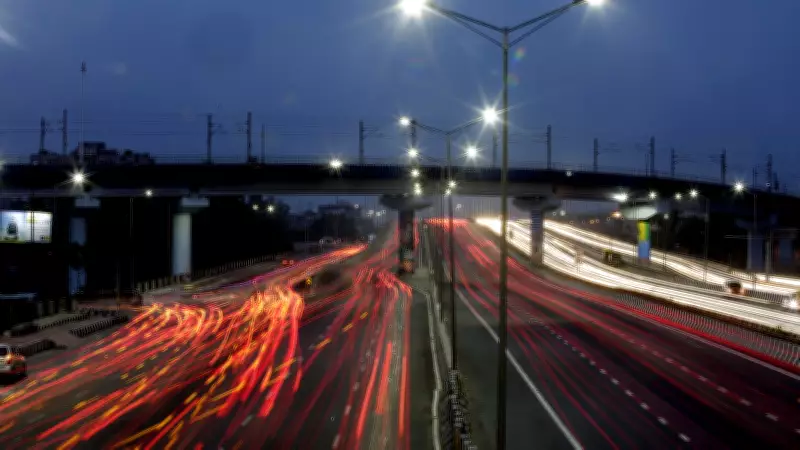
Railways and Highways Continue as Infrastructure Powerhouses in Union Budget 2026-27
In a significant boost to India's infrastructure development, Union Finance Minister Nirmala Sitharaman has announced a massive capital expenditure allocation of Rs 12.2 lakh crore for the financial year 2026-27. The transportation sector, particularly Railways and Road Transport & Highways, continues to receive the lion's share of this investment, reinforcing their position as primary drivers of the nation's connectivity push.
Dominant Share for Connectivity Infrastructure
The latest budget figures reveal that Railways and Highways together account for approximately 47% of the total capital expenditure allocation for FY27. Specifically, the Road Transport and Highways sector has been allocated Rs 2.94 lakh crore, while Railways receives Rs 2.78 lakh crore. When combined with Internal and Extra Budgetary Resources (IEBR) of Rs 15,000 crore, the total capital expenditure for Railways for FY27 stands at an impressive Rs 2.93 lakh crore.
This substantial allocation underscores the government's continued focus on strengthening India's transportation backbone, which has shown remarkable growth over the past decade. The length of National Highways has increased by 61% from 91,287 km in 2014 to 1.46 lakh km as of the present date. Similarly, National High-Speed Corridors have expanded dramatically from just 93 km in 2014 to 3,052 km today.

Strategic Railway Expansion and Modernization
Finance Minister Sitharaman announced several ambitious projects for the railway sector, including:
- Seven new high-speed rail corridors
- One East-West dedicated freight corridor
These initiatives are expected to significantly boost the Railways' push for the Bullet Train project and enhance its modal freight share compared to road transportation. India is currently developing its first high-speed rail corridor between Mumbai and Ahmedabad, where over 55% physical progress was achieved as of October 2025.
The capital outlay for Railways is being strategically deployed across multiple areas:
- New railway lines
- Doubling and multi-tracking projects
- Rolling stock augmentation
- Modern signaling systems
- Safety-related infrastructure works
As of March 2025, the rail network has expanded to 69,439 route kilometers, with a target to extend it further by 3,500 km during FY26. The average commissioning of railway network per year has more than doubled from 1,499 km during 2004-14 to 3,118 km in the 2014-24 period.
Sustained Capex Growth and Economic Impact
The government's infrastructure investment strategy has shown consistent growth momentum. Between FY19 and FY22, capital expenditure increased by 92% from Rs 3.07 lakh crore to Rs 5.92 lakh crore. This upward trajectory has been maintained, with the capex outlay for FY26 reaching Rs 11.21 lakh crore (later revised to Rs 10.96 lakh crore), of which Railways and Highways accounted for Rs 5.24 lakh crore.
For comparison, in FY25, the total capex for road transport and highways was Rs 2.85 lakh crore, while Railways received Rs 2.52 lakh crore, with overall central government capital expenditure standing at Rs 10.52 lakh crore during that period.
The Economic Survey for 2025-26 highlights the significant multiplier effects of infrastructure spending, noting that for every rupee spent on creating infrastructure, GDP increases by Rs 2.5 to Rs 3.5. The survey emphasizes that "infrastructure continues to be central to India's growth strategy, with public capital expenditure following a sustained upward trajectory since FY15 and gaining further momentum in recent years."

Supporting Initiatives and Future Outlook
While there were no direct announcements specifically for National Highways, the budget proposed a scheme for enhancement of Construction and Infrastructure Equipment (CIE). This initiative aims to strengthen domestic manufacturing of high-value and technologically-advanced construction equipment, ranging from lifts in multi-story buildings and fire-fighting equipment to tunnel-boring machinery for metro projects and high-altitude roads.
The budget allocation follows other key sectors, with Defence, Telecommunication, and Housing & Urban Affairs receiving significant attention after the transportation sector's massive allocation. This comprehensive approach to infrastructure development reflects the government's strategy to create strong multiplier effects across the economy while improving logistics efficiency and connectivity nationwide.
As India continues its infrastructure transformation, the sustained focus on Railways and Highways through substantial capital expenditure allocations demonstrates a clear commitment to building world-class transportation networks that will drive economic growth and development for years to come.