

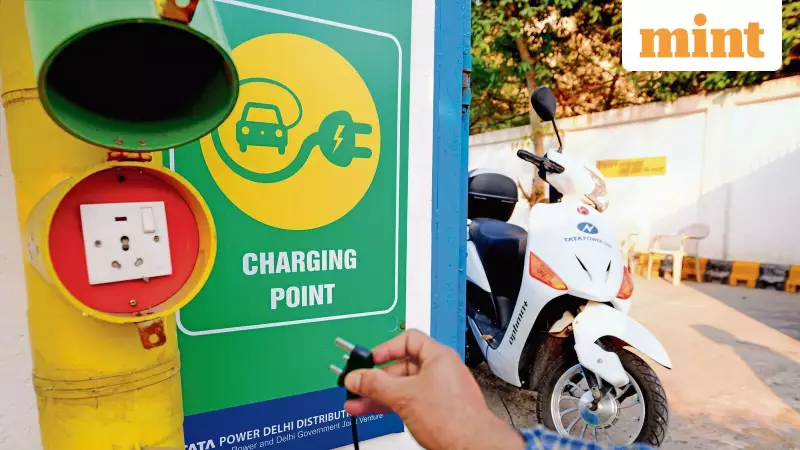
Electric Two-Wheeler Startups Challenge Traditional Auto Giants
India's electric vehicle revolution is reaching a crucial profitability milestone as new-age EV manufacturers Ola Electric and Ather Energy begin closing the financial gap with established internal combustion engine giants. According to recent quarterly earnings reports, both electric two-wheeler startups are demonstrating significant improvements in their unit economics, with gross margins approaching those of industry leaders Hero MotoCorp, TVS Motor Company, and Bajaj Auto.
The Gross Margin Convergence
The financial performance metrics reveal a fascinating trend in the evolving automotive landscape. Ola Electric achieved an impressive 30.7% gross margin during the July-September quarter, representing a substantial expansion of more than 11 percentage points compared to the same period last year. Meanwhile, Ather Energy also showed healthy progress with its gross margins climbing three percentage points to reach 22%.
These figures bring the EV startups remarkably close to the traditional automotive powerhouses, which typically report gross margins in the 29-34% range. The convergence indicates that electric vehicle manufacturers are rapidly overcoming initial cost challenges and establishing sustainable business models that can compete with century-old ICE technology.

Operating Margin Disparity Persists
While gross margins show promising alignment, the operating margin picture tells a different story. Ather Energy reported a negative 10% EBITDA margin during the July-September quarter, though Ola Electric marked a significant achievement by reporting its first positive operating margin of 0.3% in the same period.
This still places them considerably behind the legacy manufacturers, who consistently deliver operating margins between 14-18%. However, Ola Electric has set ambitious targets, projecting it will achieve 5% EBITDA margin and 40% gross margins by the January-March quarter, signaling confidence in their accelerating path to profitability.
Structural Advantages for EV-First Companies
Industry experts point to fundamental structural differences that explain the varying trajectories between new-age EV companies and traditional manufacturers. Harshvardhan Sharma, Group Head at Nomura Research Institute, explained that EV-focused companies benefit from ground-up electric platforms rather than adapting existing petrol architectures.
"This approach eliminates multi-powertrain overheads and creates a structurally leaner cost base," Sharma noted. He emphasized that while legacy players carry fixed ICE-related costs across tooling, compliance, and multi-SKU supply chains, electric vehicles still constitute only a small percentage of their overall volumes, typically in the low single digits.
Sharma added that dedicated EV manufacturers gain advantages through tightly focused product platforms, enabling faster scaling benefits across batteries, frames, software, and power electronics. The growing potential for software-led monetization represents another significant advantage for companies built around electric vehicle technology from inception.
Legacy Manufacturers' Cautious Approach
Traditional automotive companies have been more reserved in disclosing specific profitability metrics for their electric portfolios. Bajaj Auto informed investors that three of its four electric two-wheeler models are approaching breakeven, while TVS and Hero MotoCorp indicated they are moving closer to profitability without revealing exact numbers.
Tarun Mehta, Chief Executive of Ather Energy, emphasized the transparency of his company's financial reporting during an analyst call on November 11. He stated that Ather's numbers are "clean" and not mixed with incentives or cost structures from other business segments.
Mehta expressed optimism about EV business margins, suggesting that "the EV business should be able to command as much or even a little better gross margin than ICE portfolios because of the ability to upsell software and accessories."

Competitive Landscape and Market Dynamics
The competitive rhetoric has intensified as the market evolves. Ola Electric founder Bhavish Aggarwal commented during his company's earnings call that some competitors were "buying market share" without proper consideration for unit economics and profitability.
Aggarwal asserted that "our business model now, our product leadership is all structural. The gross margin reflects that and our operating margin also now reflects that," indicating confidence in Ola's sustainable growth strategy.
Traditional manufacturers, meanwhile, express satisfaction with their electric vehicle journey. K.N. Radhakrishnan, Director and CEO of TVS Motor Company, described the EV segment as a new category requiring investment with results expected in the coming years, while expressing extreme happiness with their progress in both two-wheeler and three-wheeler electric vehicles.
Three-Wheeler Segment Boosts Profitability
Bajaj Auto revealed an interesting dimension to the electric vehicle profitability equation. The company reported that its electric operating profit margin has reached double digits, primarily driven by the growing proportion of electric three-wheelers in its EV sales mix.
Dinesh Thapar, Chief Financial Officer at Bajaj Auto, highlighted the remarkable turnaround in their Chetak electric scooter models, noting that while they were "bleeding EBITDA" a year ago, they are now nearly EBITDA neutral on all three lead models.
Hero MotoCorp, India's largest two-wheeler manufacturer, maintains a strategic focus on building its electric brand Vida while leveraging benefits from production-linked incentives to create a more positive roadmap for its EV business.
The Road Ahead for India's EV Transformation
The converging gross margins between electric vehicle startups and traditional manufacturers signal a maturing market where business fundamentals are becoming as important as technological innovation. As both segments continue to refine their strategies and scale operations, the competition is likely to intensify, ultimately benefiting consumers through improved products and competitive pricing.
The differing approaches—ground-up EV platforms versus adapted ICE architectures—will continue to shape the profitability trajectories of these companies. However, the latest financial indicators suggest that India's electric two-wheeler revolution is entering a new phase where sustainable business models are taking precedence over pure growth metrics.





