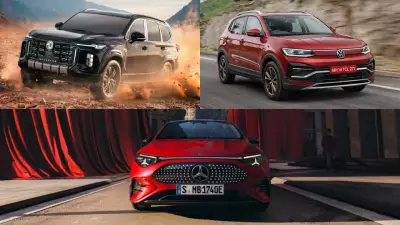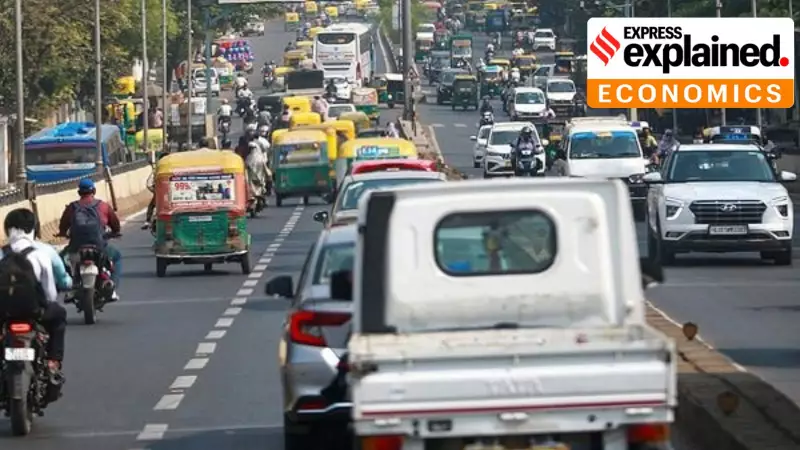
India's automotive industry is facing a significant division over proposed stricter fuel efficiency regulations, with manufacturers sharply divided on how the new rules should treat small cars versus larger vehicles. The government's plan to implement Phase 3 of Corporate Average Fuel Efficiency (CAFE) norms from FY28 has triggered intense debate among automakers about the future affordability of entry-level cars.
The Core Conflict: Weight-Based Formula Favors Heavier Vehicles
The proposed CAFE-3 framework maintains a weight-based calculation system that progressively tightens through FY32. However, the structure means lighter vehicles face substantially steeper improvement requirements compared to heavier SUVs and premium cars. This has created what industry experts call an "unequal burden" on budget-friendly models that already operate on thin profit margins.
Market leader Maruti Suzuki, with its extensive small car portfolio including Alto, Wagon R and Celerio, has voiced strong concerns about the proposed norms. Company chairman RC Bhargava emphasized that the original purpose of CAFE regulations was to make larger vehicles improve their fuel efficiency and reduce emissions, not to penalize affordable small cars.

Technical Breakdown: Why Small Cars Face Greater Challenges
The CAFE-3 efficiency formula follows the structure: [0.002 x (W – 1170) + c], measured in petrol-equivalent litres per 100 km. Here W represents average fleet weight, 1,170kg is the fixed weight constant, and 'c' decreases annually from 3.7264 in FY28 to 3.0139 in FY32, making targets progressively stricter.
Analysis reveals stark differences in requirements between vehicle categories. A light car weighing 740 kilograms would need to achieve 68 CO2 g/km in FY28, tightening to approximately 51 CO2 g/km by FY32 – representing a 25% increase in efficiency requirements. When compared to CAFE-2 targets, this same small car would need to become 48% more efficient overall.
Conversely, a heavier vehicle weighing 2,500 kg would only need to improve efficiency by 25% between CAFE-2 and FY32 CAFE-3 targets, despite being a bigger absolute pollutant. This discrepancy forms the heart of the industry conflict.
Industry Perspectives: Divided Views on Small Car Definition
Tata Motors has taken a contrasting position, expressing confidence in meeting the proposed norms. Shailesh Chandra, Managing Director and CEO of Tata Motors Passenger Vehicles, stated the company has "absolutely no concerns" about compliance. He opposed defining small cars based on weight, arguing that such arbitrary criteria could conflict with vehicle safety imperatives.
The Society of Indian Automobile Manufacturers (SIAM) revealed in its government representation that members hold "mixed views" on the subject. While Maruti and Renault advocate for increased reduction allowances for small cars, Mahindra and Tata maintain different positions.
An industry executive warned that the proposed changes might encourage manufacturers to adopt "brick in the boot" strategies – making larger vehicles since targets for heavy cars remain comparatively relaxed. This could potentially price out budget-conscious first-time buyers from the market.
Global Comparisons: How Other Markets Handle Small Cars
Nomura Research highlighted in a recent study that India should reform its CAFE framework to align with global best practices that incorporate protection mechanisms for small vehicles. The analysis compared several international approaches:
United States and China follow piecewise linear approaches that fix targets below certain vehicle footprints or curb weights, preventing indefinitely tightening requirements for smaller cars.
South Korea maintains constant fuel economy targets for cars below specific kerb weights and provides additional advantages to manufacturers based on small car sales ratios.
Japan employs a non-linear approach ensuring small lightweight cars avoid disproportionately higher targets.
European Union, which India often references for Bharat Stage regulations, uses a negative slope (-0.0144) meaning bigger cars have lower absolute CO₂ targets while smaller cars enjoy relaxed requirements.

The proposed norms also include transitioning from the Modified Indian Driving Cycle (MIDC) to the Worldwide Harmonised Light Vehicles Test Procedure (WLTP), adopted by the European Union in 2018. Mahindra has requested deferring this migration to WLTP, which provides more accurate real-world measurements.
As the debate continues, the automotive industry awaits final government decisions that could reshape India's car market and determine whether entry-level vehicles remain accessible to millions of first-time buyers.