

Budget Speech Evolution: How Vocabulary Reveals India's Shifting Economic Priorities Over a Decade
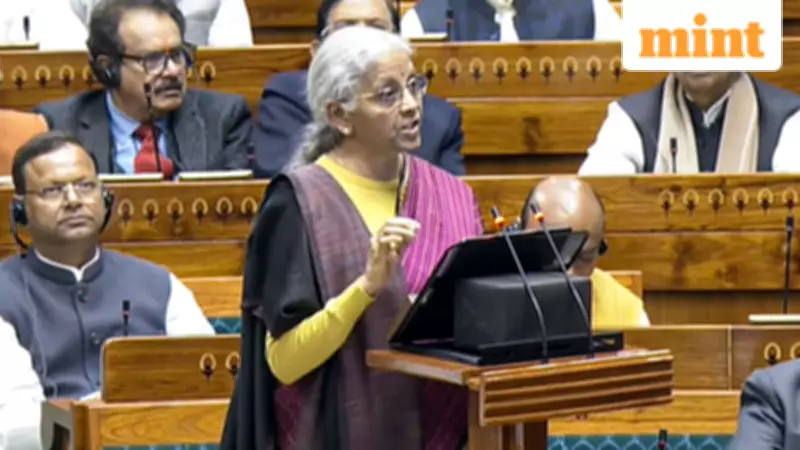
Finance Minister Nirmala Sitharaman delivered her ninth consecutive Union Budget speech on Sunday, presenting the Union Budget 2026-27 in the Lok Sabha in New Delhi. This speech comes at a time when global geo-economic upheavals continue to weigh on India's economic landscape. While each Budget speech naturally reflects the specific economic context of its moment, a fascinating pattern emerges when examining how the emphasis and vocabulary of these speeches have shifted over an extended period.
The Changing Lexicon of Governance
A detailed analysis of Budget speeches spanning the past decade reveals how the government's priorities have evolved in response to changing economic conditions and global dynamics. The latest Budget speech features a slew of words that have gained significant prominence, indicating clear directional shifts in policy focus.
Alongside "artificial intelligence," terms such as "export," "import," "trade," "health," and "medical" have featured with increasing frequency. This linguistic trend suggests that the government is not only keeping pace with rapidly evolving technology but is also actively responding to a shifting global landscape, renewed geo-economic tensions, and persistent health concerns that have gained prominence in recent years.

At the same time, familiar mainstays of Budget vocabulary continue to dominate the discourse. Words like "farmers," "tax," "states," and "development" remain consistently prominent, underscoring core policy priorities that persist even as new themes emerge on the national agenda.
Tracking the Rise and Fall of Key Terms
The analysis points to a sharp shift and considerable volatility in the prominence of some key terms over the past ten years. For this examination, words used in the same context within speeches were grouped together, with variations such as adverbs and plurals combined to provide accurate comparative data.
One notable trend is the gradual decline in references to poverty-related terminology, though this saw an unexpected uptick in the latest budget speech. Last year, only two such words were mentioned, continuing a pattern of low usage since a steep fall observed in 2019. However, poverty-related terms were mentioned seven times in the most recent budget. This contrasts sharply with 2016, when 22 words related to "poverty"—including "poor," "poverty," and "underprivileged"—appeared in the speech, followed by 13 instances in 2017.
Surprisingly, the usage of "digital" has declined in recent years after peaking at 35 mentions in 2024. In contrast, mentions of "artificial intelligence" surged to a record high this year, reflecting the growing emphasis on technological innovation. The usage of "reforms" was also notably high at 14 instances, up from just five in 2015, though lower than last year's peak of 28 mentions.
The Consistent Pillars of Budget Vocabulary
Over the past decade, certain terms have demonstrated remarkable consistency in Budget speeches, forming the foundational vocabulary of India's economic planning. "Tax," "development," and "schemes" have consistently dominated Budget terminology, appearing with predictable regularity across administrations and economic cycles.
Tax-related terms appear most frequently, with over 583 mentions across the ten-year period, followed by "schemes" at approximately 450 mentions. "Digital" represents a relatively recent entrant to this consistent vocabulary, mirroring the government's substantial push toward digitalization in recent years. Meanwhile, "infrastructure" also ranks among the top three frequently used terms, though mentions of both "digital" and "infrastructure" have declined in recent Budget speeches.
This comprehensive analysis of Budget speech vocabulary provides valuable insights into how India's economic priorities have transformed over a decade of significant global and domestic change. The evolving terminology reflects not just shifting policy emphasis but also the government's response to emerging challenges and opportunities in an increasingly complex economic environment.






