
Budget 2026: Fiscal Deficit Target Met Via Spending Cuts
India's revised estimates for 2025-26 show the fiscal deficit target of 4.4% of GDP likely met despite tax revenue shortfalls, achieved through expenditure cuts and higher non-tax revenues.

India's revised estimates for 2025-26 show the fiscal deficit target of 4.4% of GDP likely met despite tax revenue shortfalls, achieved through expenditure cuts and higher non-tax revenues.

Indian stock markets face pressure after Union Budget 2026-27's surprise STT hike on derivatives. Gold and silver rebound after historic fall, while USD/INR consolidates. Experts share Nifty, Bank Nifty outlook and stock picks.

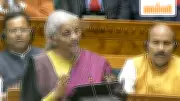
Finance Minister Nirmala Sitharaman details Budget 2026-27 measures including STT increase to curb speculation, customs duty cuts for manufacturing, and gradual fiscal deficit reduction to 4.3%.

Indian stock markets may open positively but face high volatility as investors digest Union Budget 2026 proposals, including STT hike on derivatives. Sensex and Nifty plunged in special session; key stocks like Hero MotoCorp, ITC, defence shares in spotli

An in-depth look at India's Budget 2026, highlighting fiscal discipline, manufacturing push, healthcare investment, and MSME support while examining risks in debt management and divestment targets.

Crude oil prices declined after Donald Trump indicated progress on an Iran agreement. In Mumbai, police arrested four suspects in the firing at Rohit Shetty's home, investigating gang links.

Union Budget 2026 announces operationalisation of National Waterway-5 in Odisha, a Rs 12,204-crore project connecting mineral-rich areas to major ports, promising economic growth and reduced logistics costs.
India's 2026-27 budget maintains capex-led growth with a ₹12.2 trillion allocation while shifting to medium-term debt reduction. Experts urge adaptability to prevent fiscal complacency amid potential demand shifts.

Indian stock market benchmarks Sensex and Nifty 50 are expected to open higher on Monday, stabilizing from Sunday's sharp Budget 2026-driven fall. Technical analysis reveals key support and resistance levels for traders.
Union Budget 2026-27 offers subtle concessions to US exporters while protecting India's agricultural interests. No major tariff relief for common items, but targeted duty cuts on almonds, walnuts, and tech inputs.

The India-EU Free Trade Agreement offers economic gains, security benefits, and pragmatic carve-outs while serving as a model for future negotiations in a fragmented global trade landscape.

India's Budget 2026 addresses global economic fragmentation with fiscal consolidation while pushing reforms in seven strategic sectors to attract FDI and sustain growth amid uncertainty.

The explosive growth in AI infrastructure is creating intense competition for metals like copper and aluminium, squeezing margins for automakers like Maruti Suzuki and Hyundai.

Analysis of Union Budget 2026 positioning India to navigate economic challenges through fiscal credibility, private investment, climate competitiveness, and urban development in a fragmented global order.

Nirmala Sitharaman's ninth budget emphasizes fiscal consolidation and capex growth but falls short on key reforms like disinvestment and subsidies, raising concerns over investor sentiment and domestic governance.

Gold and silver prices rebounded on Monday from a previous session crash, with US gold futures and silver rallying despite weak sentiment amid a firm dollar and Fed chair pick concerns.

Jammu and Kashmir traders express disappointment with Union Budget 2026, claiming the Rs 2,000 crore additional allocation fails to compensate tourism losses from Pahalgam attack and natural disasters.

Finance Minister Nirmala Sitharaman's Budget 2026 proposals offer significant relief to Nagpur's Mihan-SEZ, including concessional DTA sales, aviation duty exemptions, and lithium-ion incentives, boosting local manufacturing.

Nagpur receives major ₹5,000 crore allocation as a Growth Hub in Union Budget 2026-27, positioning it alongside Mumbai and Pune for economic transformation.

Union Budget 2026 continues subsidy-heavy approach despite slowing agriculture growth to 3.1%. Experts argue Viksit Bharat needs stronger rural economy through research investment, not just welfare measures.

The Union Budget 2026 introduces tech-driven customs reforms to reduce inspector raj at Indian ports, offering duty relief for exporters and easing trade amid global turbulence.

Gold and silver prices rebounded sharply on Monday after their steepest single-day fall since 1980. Experts analyze the drivers behind the historic volatility and provide outlooks for these precious metals.

Indian stock markets are expected to open higher on Monday, recovering from Sunday's sharp crash triggered by the Union Budget 2026's STT hike on F&O trading. Global cues remain mixed with Asian markets trading unevenly and US stocks ending lower.

Union Budget 2026-27 removes income tax exemption on disability pension for defence personnel retiring on superannuation, sparking outrage among veterans who call it unfair discrimination.

Industry bodies largely praised Union Budget 2026 as a pragmatic roadmap for manufacturing, MSMEs, tech, and healthcare, while highlighting urgent needs for small businesses like exit policies and import substitution.

Gold and silver prices experienced their worst decline in decades, highlighting risks in precious metals investing amid global economic uncertainty and shifting market dynamics.

The Indian government has increased the duty-free baggage allowance for passengers to Rs 75,000 and reduced customs duty on personal imports to 10%, while maintaining restrictions on specific items.

Uttar Pradesh Minister Rakesh Sachan says Budget 2026 measures will significantly benefit state's MSMEs, khadi, silk, handloom & textile sectors through integrated programmes and funding.

The Union Budget 2026-27 proposes duty-free status for fish caught by Indian vessels in the exclusive economic zone and high seas, aiming to reduce costs and formalize deep-sea fishing operations.

Union Budget 2026 slashes TCS rate from 5% to 2% under LRS for foreign education, travel packages and medical treatment, easing financial burden on students and families.