Why Jammu & Kashmir Traders Are Dissatisfied with Budget 2026
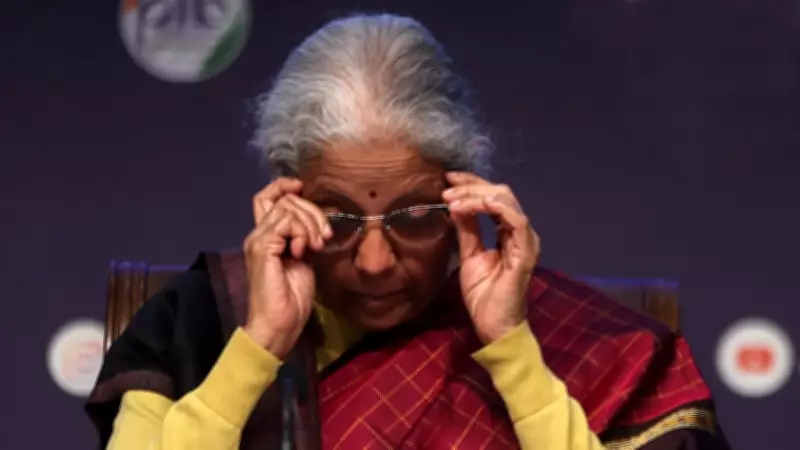
The Union Budget for 2026-27, presented by Finance Minister Nirmala Sitharaman, has sparked significant discontent among traders and business communities in Jammu and Kashmir. Despite proposing an additional allocation of nearly Rs 2,000 crore for the Union Territory, stakeholders argue that the financial provisions fall short of addressing the substantial economic losses incurred following the Pahalgam terror attack and subsequent natural calamities.
Budget Allocation Details and Trader Reactions
In her parliamentary address, Finance Minister Sitharaman outlined a total transfer of Rs 43,290.29 crore to Jammu and Kashmir for the upcoming fiscal year. This represents an increase of Rs 1,959.07 crore over the revised estimate of Rs 41,340.22 crore for the current financial year. The allocation includes specific components such as:
- Rs 279 crore designated as grants for the UT Disaster Response Fund
- Rs 259.25 crore allocated as equity for the Jhelum Tawi Flood Recovery Project
- Rs 101.77 crore to support capital expenditure initiatives
However, business leaders have expressed strong reservations about the adequacy of these provisions. Arun Gupta, President of the Jammu Chamber of Commerce and Industry, emphasized that the budgetary increase remains insufficient when measured against the extensive losses suffered by various sectors. "The allocation to J&K does not match the losses suffered by the general public, including traders, hoteliers, transporters and others," Gupta stated, highlighting the compounded impact of tourism decline post-Pahalgam attack and the destructive effects of incessant rains, cloudbursts, and floods.

Broader Economic Concerns and Regional Expectations
The criticism extends beyond immediate compensation concerns to encompass broader economic policy issues. Rahul Sahai, Chairman of the Indian Chamber of Commerce and Industries in Jammu and Kashmir, acknowledged the budget's progressive and sustainable framework at the national level but noted its failure to meet region-specific expectations. "From a region-specific point of view, it is not as per our expectations in terms of industries, especially considering that Jammu and Kashmir is a conflict zone," Sahai remarked, pointing to the absence of a targeted economic framework for the UT.
Further criticism came from Kabla Singh, General Secretary of the J&K Democratic Conference, who characterized the budget as capital-friendly rather than people-centric. Singh argued that the government's approach prioritizes financial markets and private investors over addressing structural inequalities, unemployment, inflation, and agrarian distress. "The richest sections of society are shielded, while public services remain underfunded," he added, criticizing the lack of progressive taxation measures on wealth and corporate profits.
Contextual Background and Future Implications
The discontent stems from a series of challenging circumstances that have affected Jammu and Kashmir's economy. The Pahalgam terror attack triggered a significant decline in tourist arrivals, dealing a severe blow to hospitality, transportation, and retail sectors. This was exacerbated by Operation Sindoor, which intensified cross-border tensions and further disrupted normalcy. Concurrently, natural disasters inflicted additional damage on infrastructure and livelihoods.
Business representatives had anticipated more substantial funding, particularly to strengthen the MSME sector and implement recovery measures tailored to the region's unique challenges. The perceived shortfall in allocation has raised questions about the government's strategy for conflict-affected areas and its commitment to equitable development across all states and union territories.
As stakeholders continue to voice their concerns, the debate highlights the complex balancing act between national budgetary priorities and regional economic necessities. The response from central authorities to these grievances will be closely watched, as it may influence future policy adjustments and resource distribution mechanisms for Jammu and Kashmir.