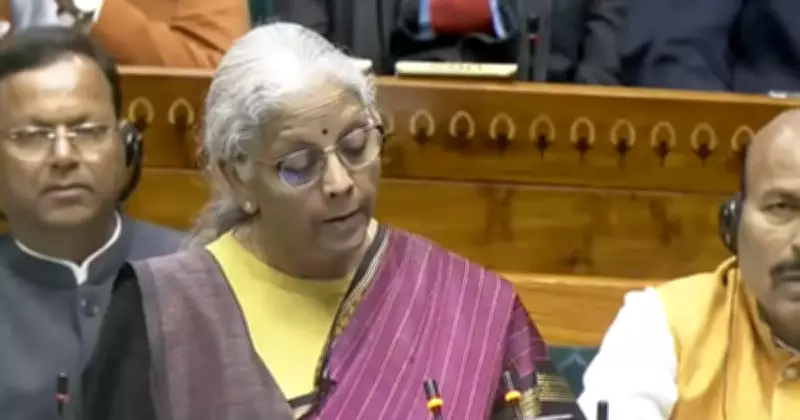
Budget 2026-27 Navigates US Trade Pressure with Selective Concessions
Amid growing concerns over potential Trump tariffs and American complaints about Indian trade levies, the Union Budget 2026-27 presented a nuanced approach. While many anticipated explicit measures to address these tensions, Finance Minister Nirmala Sitharaman opted for targeted adjustments rather than sweeping changes.
Subtle Moves to Aid American Exporters
The Budget introduced minor but strategic duty reductions on specific items where the United States is a leading supplier. Notably, import duties on almonds and walnuts have been lowered, addressing rising domestic demand that outpaces local production. These changes represent a calculated effort to ease market access for US agricultural exports without compromising India's broader trade stance.
Expert Analysis Reveals Strategic Pattern
Trade expert Ajay Srivastava highlighted a deliberate pattern in the duty modifications. "The Budget's tariff exemptions align with US strengths in key sectors such as aerospace, nuclear technology, clean energy equipment, electronics, and medical devices," he explained. "This quietly improves market access for US firms in India while adhering to government priorities."

The adjustments provide policy certainty in critical areas like medical devices and nuclear power, where India seeks technological advancement. Simultaneously, the government has maintained its red lines on sensitive agricultural products, including farm goods, dairy items, and genetically modified (GM) food, protecting domestic interests.
Support for Labor-Intensive Sectors
Recognizing the impact of existing US tariffs, the Budget offers concessions for inputs used by labor-intensive industries such as textiles, footwear, and shrimp farming. These measures aim to bolster sectors vulnerable to international trade disruptions. Additionally, sops have been provided for Special Economic Zones (SEZs) to facilitate domestic market sales, enhancing their operational flexibility.
Finance Minister's Cautious Stance on Global Uncertainty
Despite these calibrated steps, Finance Minister Sitharaman downplayed the direct influence of global trade uncertainties on the Budget. "It is something that occupies the minds of officials when we are preparing the Budget," she stated. "But I will not attribute it to be the cause for any one step. Across the board we kept that in mind." This reflects a balanced approach, acknowledging external pressures while emphasizing domestic economic priorities.
Political Reactions and Public Perception
The Budget has faced criticism from opposition leaders, with West Bengal Chief Minister Mamata Banerjee dismissing it as a "Humpty Dumpty budget" that offers "nothing for the common man." Public attention remains focused on changes in income tax slabs and the cost implications for everyday goods, overshadowing the subtle trade policy adjustments.
In summary, Budget 2026-27 employs a strategic, sector-specific approach to manage US trade relations, offering selective concessions while safeguarding key domestic interests. It reflects India's evolving trade diplomacy in a complex global landscape, balancing external pressures with internal economic goals.