Binance Founder CZ Addresses Trump Pardon Misconceptions at Davos Forum
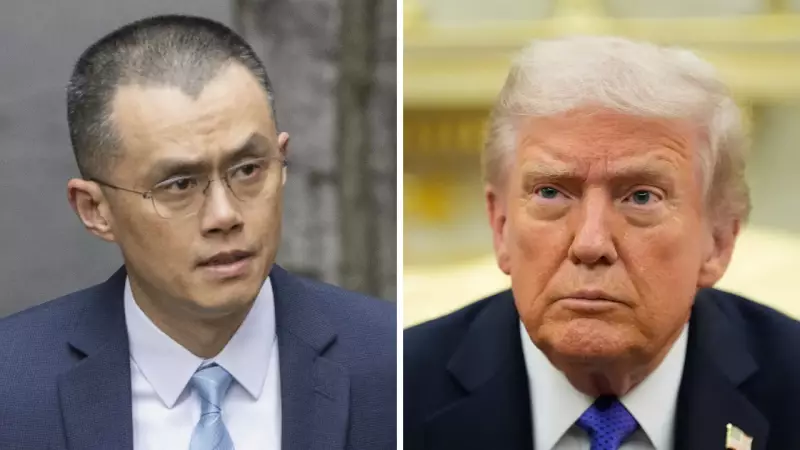
Changpeng "CZ" Zhao, the founder of the world's largest cryptocurrency exchange Binance who recently completed a four-month prison sentence, has revealed that he has still not engaged in direct conversation with former US President Donald Trump, despite receiving a presidential pardon from him. Speaking during an exclusive interview at the prestigious World Economic Forum in Davos, Switzerland, Zhao provided clarification on the nature of his interactions and business connections following the controversial pardon.
No Direct Communication Despite Proximity at Davos
"The closest that I got to him was today when he was doing the Board of Peace session," Zhao explained during his conversation with CNBC's Andrew Ross Sorkin. "I was in the audience, about 30 to 40 feet away from him." This statement underscores the physical distance that remained between the cryptocurrency magnate and the former president, even as they attended the same high-profile international gathering.
Zhao further emphasized that media reports suggesting business relationships between himself and Trump's family have been fundamentally "misconstrued" in the aftermath of the pardon. "There's no business relationships whatsoever," he stated unequivocally, seeking to dispel what he characterized as widespread misinformation circulating in financial and political circles.

Background: Legal Troubles and Presidential Intervention
The context for these revelations stems from Zhao's legal challenges in 2023, when the former CEO of Binance pleaded guilty to charges of enabling money laundering during his tenure leading the cryptocurrency exchange. As part of a comprehensive plea deal that included a substantial $4.3 billion settlement with the US Department of Justice, Zhao stepped down from his leadership position and served four months in prison before being released in September 2024.
In a significant development that captured global attention, Donald Trump issued a presidential pardon to Zhao in October 2025. This executive action immediately sparked intense speculation about potential connections between the cryptocurrency industry and political figures, with particular focus on financial relationships that might have influenced the decision.
Addressing the World Liberty Financial Connection
Much of the controversy surrounding the pardon centered on Binance's financial ties to World Liberty Financial, a cryptocurrency company founded by members of the Trump family. The connection originated from a substantial $2 billion investment made in March 2025 by MGX, a state-owned firm based in Abu Dhabi, United Arab Emirates, into Binance's operations.
Investigative reports revealed that MGX reportedly conducted this transaction using USD1, a stablecoin created and managed by World Liberty Financial. When questioned about this arrangement, Zhao provided detailed clarification: "MGX is the investor. They chose USD1. My request to them was they pay us in crypto. I don't want to deal with banks, really."
The Binance founder expressed frustration with how this transaction had been interpreted, noting that "many people misconstrued that" particular business arrangement. He further explained that his company had systematically converted that investment into USD1 in portions over time, emphasizing the practical nature of the stablecoin usage: "Stablecoin is just a currency for payment. Just because I accepted that, it doesn't mean I invested in the issuer of that."
Additional Controversies and Lobbying Connections
Following the pardon announcement, The Wall Street Journal published a report suggesting that, beyond merely accepting USD1 for the MGX investment, Binance had also contributed to developing the underlying technology supporting the World Liberty Financial stablecoin. This revelation came from sources described as familiar with the matter, adding another layer to the complex relationship narrative.
Simultaneously, during the same week that Trump issued the pardon, NBC News uncovered that Binance had engaged the services of Checkmate Government Relations, a lobbying firm headed by Charles McDowell. McDowell maintains a personal friendship with Donald Trump Jr., the former president's son, according to the report.

Checkmate's official disclosure documents revealed that the firm received $450,000 for services that included lobbying both the White House and Treasury Department. Their work specifically focused on securing "executive relief" and addressing "financial services policy issues relating to digital assets and cryptocurrency."
Zhao's Firm Denial of Quid Pro Quo Arrangements
Addressing the swirling speculation about potential backroom deals, Zhao offered a categorical denial: "There is a lot of media saying that there is some deal in place to get me the pardon. As far as I know, that does not exist at all." His statement represents a direct refutation of theories suggesting that the pardon resulted from undisclosed agreements or financial arrangements between the parties involved.
Despite stepping down from his CEO position as part of the 2023 legal settlement, Zhao remains a significant shareholder in Binance, maintaining substantial influence over the cryptocurrency exchange's strategic direction and operations.
Trump's Public Justification for the Pardon
When questioned about his decision to grant Zhao executive clemency, Donald Trump offered his perspective during public appearances. "A lot of people say that he wasn't guilty of anything," Trump stated. "And so I gave him a pardon at the request of a lot of very good people."
In a November 2025 interview on the "60 Minutes" program, the former president further clarified his position, confirming that he had no personal acquaintance with the Binance founder. "I have no idea who he is," Trump remarked. "I was told that he was a victim, just like I was and just like many other people, of a vicious, horrible group of people in the Biden administration."
This characterization frames the pardon as an act of solidarity against what Trump perceives as unjust prosecution, rather than as a decision influenced by personal connections or financial considerations. The ongoing dialogue between cryptocurrency regulation, political influence, and executive power continues to evolve as these revelations come to light in international forums.