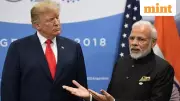
India's Gaza Peace Board Decision: Strategic Autonomy vs US Plan
India faces a complex decision on joining the US-led Board of Peace for Gaza. This analysis examines the strategic implications, UN dynamics, and national interests at stake.

India faces a complex decision on joining the US-led Board of Peace for Gaza. This analysis examines the strategic implications, UN dynamics, and national interests at stake.

Economic sanctions have become routine tools of diplomacy, creating challenges for middle powers like India. This article explores India's pragmatic approach to maintaining strategic autonomy.
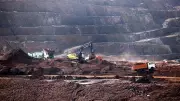
India faces significant challenges in its critical minerals strategy. Despite joining global initiatives, regulatory hurdles and historical baggage hinder progress. Experts suggest reforms to boost exploration and production.

Experts argue that India must pursue faster economic growth and deeper reforms to secure its future, emphasizing policy changes and strategic investments.
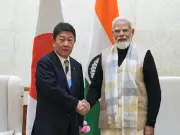
India and Japan emphasized the need to enhance their special strategic and global partnership during Japanese Foreign Minister Toshimitsu Motegi's official visit to New Delhi.
The European Union is increasingly looking to India as a crucial fourth pillar in its foreign policy strategy to navigate global uncertainties, according to foreign affairs expert Robinder Sachdev.
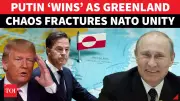
Donald Trump's push to control Greenland divides NATO allies, with Russia poised to benefit from the Arctic crisis without military action, as Moscow calls the situation extraordinary.

India and Japan agreed to enhance cooperation in artificial intelligence and critical minerals during their 18th strategic dialogue in New Delhi, while also discussing regional issues and economic security.

The President of the Baloch American Congress has made a direct appeal to former US President Donald Trump, highlighting Balochistan's strategic importance to American interests and calling for formal recognition.
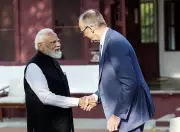
Explore strategic autonomy as India and Europe diversify partnerships to maintain independence amid US-China tensions and shifting global dynamics.

US lawmakers designate India as a key strategic partner while dismissing Pakistan's ally status and identifying China as the primary threat in a significant foreign policy shift.

As Pakistan reemerges as a key intermediary in US-China ties, India must closely monitor this strategic shift to safeguard its national interests.

Pakistan reemerges as a key intermediary in US-China relations, creating new geopolitical dynamics that require India's careful monitoring and strategic response.
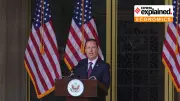
India's belated inclusion in the US-led Pax Silica initiative mirrors its delayed entry into the Minerals Security Partnership, raising questions about its strategic value and technological edge.
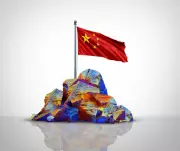
Rare Earth Minerals, a group of 17 metallic elements, are becoming the crucial resource driving modern technology and industry, often called the new oil of our era.
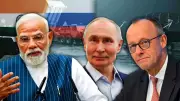
India asserts its defence decisions are based on national interest, not external pressure, as Germany pushes for reduced reliance on Russian equipment amid Ukraine conflict.
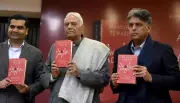
Congress leader Manish Tewari warns of a collapsing global order and urges India to remain steadfast in its foreign policy, emphasizing strategic autonomy.

As Iran faces internal unrest, India must prioritize de-risking its critical strategic assets like the Chabahar Port to safeguard national interests and regional influence.

US President Donald Trump threatens Cuba over its Venezuela ties, highlighting the island nation's strategic importance due to geography, trade routes, and mineral resources.
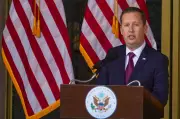
The US has formally invited India to become a full member of the PaxSilica group, a strategic minerals alliance aimed at securing supply chains and countering China's dominance. Explore the implications for India's role and global geopolitics.

Donald Trump reiterates his intent for the US to acquire Greenland, citing national security and rare-earth minerals. He warns NATO's relevance is at stake. Read the full analysis.
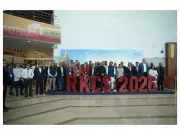
Gujarat hosts a pivotal National Mineral Conclave, focusing on India's Critical Minerals Mission and sustainable mining practices for economic growth. Explore the key outcomes.

As Trump comments on China-Taiwan tensions, we explore the decades-old US-Taiwan relationship, its Cold War origins, and why the island is a critical strategic and economic flashpoint. Read the full analysis.

Former US President Donald Trump declares intent for US control over Greenland, citing strategic necessity to prevent Russian or Chinese dominance. Read the full analysis.

India's muted response to a recent US military offensive signals a potential foreign policy shift, prioritizing national interests over traditional ideals. Read our analysis.

A US foreign policy shift towards China creates strategic uncertainty for India. Retired Brigadier Anil Raman argues India must now prioritise self-reliance in defence and diplomacy. Read his crucial analysis.
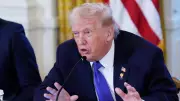
Former US President Donald Trump revives his interest in purchasing Greenland, framing it as a strategic necessity to counter Russian and Chinese influence in the Arctic.
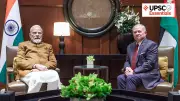
Prime Minister Narendra Modi's December 2025 visit to Jordan underscores India's strategic, economic, and diplomatic outreach beyond the Persian Gulf. Explore the significance of this multi-aligned approach.
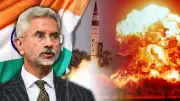
External Affairs Minister S Jaishankar, in Luxembourg, highlighted how India's 1998 nuclear tests forged its resilience against global pressure, shaping a foreign policy of sovereign decision-making. Read more.

Mint Plain Facts: Major central banks tread carefully in 2026 as US intervenes in Venezuela's oil, China tightens export controls, and US growth surprises. Analysis of global ripples and India's impact.