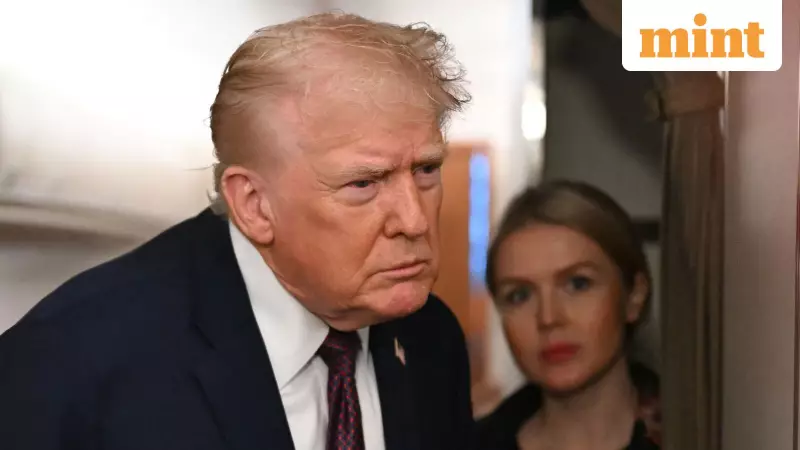
Former US President Donald Trump has once again thrust the autonomous Danish territory of Greenland into the geopolitical spotlight, asserting that the United States must seize control of the island to prevent its occupation by rivals Russia or China. This declaration, made on Monday, underscores the escalating great power competition in the resource-rich Arctic region.
Trump's Rationale: Security and Sovereignty
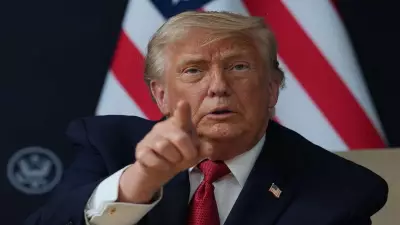
In his characteristic blunt style, Trump framed the potential acquisition as a matter of urgent national security. "If we don't take Greenland, Russia or China will take Greenland. And I am not going to let that happen," he stated. He downplayed Greenland's current defensive capabilities, quipping that its defense comprises "two dog sleds," while highlighting the presence of Russian and Chinese military vessels in the area.
The idea is not new for Trump, who has long mused about the US taking over the island. However, it faces fierce opposition. Danish Prime Minister Mette Frederiksen has warned that such a move could signal the end of NATO. The residents of Greenland, with a population of around 57,000, have also expressed a clear desire not to be incorporated into the United States.

The Underlying Race for Rare-Earth Minerals
Beyond security, the push is deeply tied to the global scramble for rare-earth minerals, critical for everything from smartphones to fighter jets. With over 90% of the world's supply currently sourced from China, the US is aggressively seeking alternatives. Greenland is believed to hold significant deposits of these valuable resources.
As reported by AP, the US government has invested in domestic rare-earth projects, like MP Materials, but building a full supply chain takes time. "Everybody's just been running to get to this endpoint. And if you go to Greenland, it's like you're going back to the beginning," noted Ian Lange, a rare earths economics professor at the Colorado School of Mines. Trump has even suggested he would consider military force if Denmark refused to sell the territory.
Strained NATO Ties and the Ukraine Conflict
Trump's comments also reopened old wounds within the NATO alliance. He claimed credit for strengthening NATO by pushing members to increase defense spending, stating he got them to pay 5.5% of GDP, a figure disputed by fact-checkers. He questioned the alliance's reliability, saying, "I'm not sure they would" be there for the US if needed.
Separately, he labeled the Russia-Ukraine conflict as "Biden's war," claiming it would never have happened under his presidency. "We make money with the war, but I don't even want to talk about that. I want to save lives," he added, reiterating his promise to end the war swiftly.
In response to the growing tensions, European leaders are mobilizing. German Foreign Minister Johann Wadephul, set to meet US Secretary of State Marco Rubio, stated he would discuss how NATO can ensure stability in the Arctic amid "old and new rivalries" from Russia and China. A Bloomberg report indicated Germany may propose a joint NATO mission to safeguard the Arctic.
Analysts like Imran Bayoumi of the Atlantic Council doubt a forced takeover is feasible, citing bipartisan US political opposition and the catastrophic damage it would inflict on alliances. However, the mere suggestion has forced a rapid strategic recalculation in European capitals, highlighting how Trump's pronouncements continue to shape global security dynamics.