Sanctions Shift from Exception to Norm in Global Diplomacy
Economic sanctions have transformed dramatically over the past ten years. What once served as targeted diplomatic tools now function as standard instruments of statecraft. Countries frequently deploy financial restrictions, trade bans, asset freezes, and export controls as initial responses to geopolitical tensions rather than last resorts. This shift reshapes the global economy profoundly.
Trade flows, investment decisions, and supply chains increasingly reflect foreign policy calculations alongside traditional factors like price signals and comparative advantage. The ripple effects extend far beyond intended targets, creating widespread commercial disruptions.
The Expanding Reach of Modern Sanction Regimes
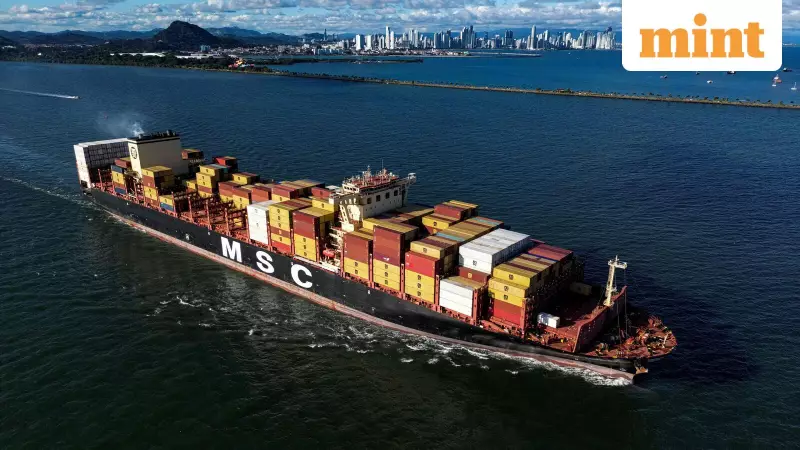
Recent enforcement actions illustrate this expansion vividly. When authorities impounded commercial vessels under tightened sanction rules, consequences spread rapidly across global shipping networks. Ships carrying sanctioned cargo or operating in regulatory grey zones suddenly left circulation.

Freight routes tightened immediately. Insurance premiums spiked dramatically. Delivery schedules required complete overnight revisions. Insurers and brokers who previously priced episodic geopolitical risk now face near-continuous reassessment as sanction lists grow more comprehensive.
These lists no longer target just individual firms. They increasingly include entire fleets, flags, and service providers. Compliance has evolved from a legal checklist into a daily commercial hazard that affects businesses worldwide.
India's Structural Challenge as a Middle Power
For middle powers like India, contemporary sanction regimes present particular structural challenges. Modern sanctions increasingly possess extraterritorial reach through secondary mechanisms. Primary sanctions restrict domestic actors, while secondary sanctions penalize third-country firms for engaging with sanctioned entities.
This effectively exports one nation's foreign policy preferences into the commercial decisions of others. Navigating compliance now requires managing overlapping and often ambiguous external restrictions alongside national laws.
India encounters this reality across multiple sectors including energy, fertilizers, defence supplies, and shipping insurance. Earlier episodes demonstrated how quickly geopolitical disputes translate into direct economic penalties.
India's Pragmatic Response Strategy
India's approach to this challenging environment combines neither confrontation nor compliance. Instead, New Delhi pursues calibrated pragmatism grounded in economic realism. The government adjusts trade volumes strategically. It restructures payment mechanisms carefully. Shipping and insurance arrangements undergo redesign to preserve supply continuity while limiting legal and financial exposure.
Rather than treating sanctions as strategic diktats or escalating politically, India approaches them as commercial constraints requiring management. This recalibration protects core economic interests without drawing the nation into overt alignment or open defiance.
The Real Meaning of Strategic Autonomy
This pragmatic approach sometimes faces misunderstanding. Critics occasionally frame it as ambiguity or even weakness. In reality, it reflects India's longstanding commitment to strategic autonomy based on economic realism rather than ideological posture.
As a major but not dominant power, India cannot absorb the costs of rigid bloc politics. The nation lacks sufficient leverage to rewrite sanction regimes designed elsewhere. India's overriding imperative remains preserving growth, stability, and predictability while retaining decision-making freedom in an increasingly fragmented global order.
Unintended Consequences and Systemic Risks
Sanctions generate consequences their architects rarely anticipate fully. Over time, they encourage alternative trade routes, opaque financial intermediaries, and informal settlement mechanisms. Markets adapt creatively but often in ways that reduce transparency and increase systemic risk.

As sanctions become normalized, so too do the economic distortions they introduce. More frequent use of economic coercion weakens incentives for compliance with the formal global trading system, creating long-term challenges for international commerce.
Building Resilience for the Future
For India, the policy challenge involves limiting vulnerability to sanction spillovers. This requires diversifying suppliers systematically. It demands building redundancy in logistics and finance deliberately. Maintaining flexibility in commercial relationships becomes essential.
Sustained diplomatic engagement proves crucial too—not to seek special exemptions, but to ensure Indian economic interests receive clear understanding even when they aren't prioritized by sanctioning nations.
Sanctions show no signs of fading as geopolitical competition intensifies. Economic coercion remains attractive politically because it appears visible, scalable, and relatively palatable compared to military options. The real danger involves not whether sanctions impose costs, but whether their overuse erodes trust in the global economic system fundamentally.
In this environment, strategic autonomy means something specific. It represents room to manoeuvre rather than isolation. India's measured, interest-driven, and quietly adaptive approach offers a realistic model for how middle powers can function effectively in a world where sanctions have become expected rather than exceptional.
The future belongs not to those who impose sanctions most aggressively, but to those who build economies resilient enough to operate successfully despite them.