Understanding Strategic Autonomy in a Changing World
Strategic autonomy represents a crucial concept for nations navigating today's complex global landscape. It refers to a country's capacity to make independent foreign policy and security decisions without relying heavily on external powers. This idea gains importance as traditional alliances face pressure and new power centers emerge.
The Global Context Driving Strategic Rethinking
Recent years witnessed significant shifts in international relations. The United States under President Donald Trump adopted a more transactional foreign policy approach. This move placed America's national interests above shared commitments, creating uncertainty among allies and adversaries alike. The 2025 US National Security Strategy formalized this shift, prompting nations worldwide to reassess their strategic positions.
Simultaneously, China's growing assertiveness combined with Russia's actions created new geopolitical realities. These developments suggest a potential restructuring of the international order into competing spheres of influence. Middle powers and rising nations now face the challenge of defining their strategic space while avoiding dependency or coercion from larger powers.

India and Europe: Building Partnerships for Independence
Against this backdrop, India and European nations increasingly emphasize strategic autonomy in their foreign policy discussions. Unlike the non-alignment approach of the Cold War era, strategic autonomy involves actively diversifying partnerships rather than maintaining equidistance. This strategy allows countries to manage volatility while preserving their decision-making independence.
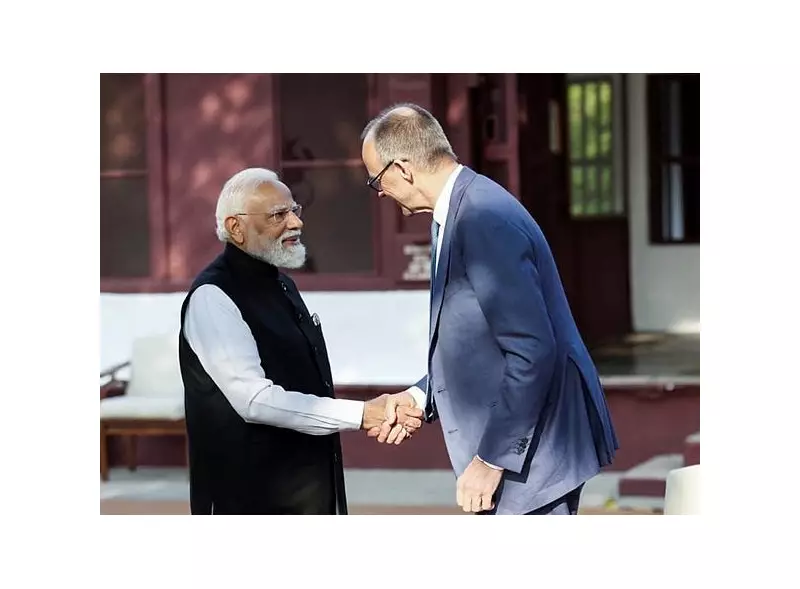
Prime Minister Narendra Modi's recent engagement with German Chancellor Friedrich Merz during their Ahmedabad visit illustrates this approach. Such interactions reflect efforts to strengthen ties between India and Europe as both regions seek to hedge against global uncertainties without surrendering their agency.
Beyond Diplomacy: The Material Foundations of Autonomy
Strategic autonomy extends beyond diplomatic maneuvering. In today's techno-geopolitical environment, true autonomy requires concrete capabilities. These include control over critical resources like minerals, secure supply chains, and advanced manufacturing capacities. The concept encompasses what experts describe as "the institutional, political and material wherewithal" to implement independent decisions.
India's participation in initiatives like the Minerals Security Partnership demonstrates this practical dimension. However, some observers note that delayed entries into such arrangements highlight the challenges nations face in building comprehensive autonomy.
Key Factors Shaping Contemporary Strategic Thinking
Several developments currently influence how nations approach strategic autonomy:
- Russia's invasion of Ukraine highlighted security vulnerabilities and prompted European nations like Germany to assume greater defense responsibilities
- China-Russia alignment creates continental power dynamics that affect global balance
- Technological competition makes control over critical technologies and resources essential for autonomy
- Trade and tariff policies increasingly serve as instruments of geopolitical influence
As C Raja Mohan and other experts observe, these factors collectively shape what some call the "Indo-European idea" – a strategic convergence between India and Europe based on shared interests in maintaining autonomy amid great power competition.
The Path Forward: Balancing Cooperation and Independence
The pursuit of strategic autonomy represents a delicate balancing act. Nations must cultivate diverse partnerships while developing domestic capabilities. They need to cooperate with others when beneficial but retain the capacity to act independently when necessary. This approach differs fundamentally from both alignment with specific blocs and complete isolation.

For India and European countries, strategic autonomy offers a framework for navigating an increasingly multipolar world. It provides a middle path between dependency on any single power and the limitations of going it alone. As global dynamics continue evolving, this concept will likely remain central to foreign policy discussions in New Delhi, Berlin, and other capitals seeking to preserve their sovereign decision-making in uncertain times.