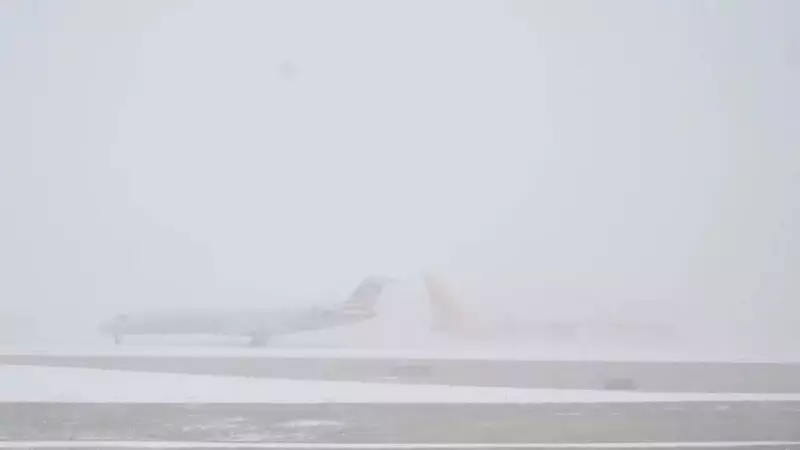
A massive and disruptive winter storm swept across the United States on Sunday, creating chaos for air travelers and triggering widespread flight cancellations and significant delays at some of the nation's busiest aviation hubs. Airlines had warned of a brutal travel day as the severe weather system intensified, setting the stage for one of the most significant travel disruptions of the season.
National Weather Service Issues Warnings
The National Weather Service issued a critical alert late Saturday, indicating that widespread snow, sleet, and freezing rain threatened nearly 180 million people. This staggering figure represents more than half of the entire US population, spanning a vast geographical area from the southern Rocky Mountains all the way to New England. After initially sweeping through the southern United States, forecasters predicted the storm would intensify significantly over the Northeast region.
Heavy Snowfall Forecast for Major Cities
Meteorologists warned that the intensifying storm was expected to dump substantial amounts of snow, with projections of 1 to 2 feet (30 to 60 centimetres) of accumulation from Washington D.C. through New York City and up to Boston. This heavy snowfall, combined with freezing rain and sleet, created extremely hazardous travel conditions both in the air and on the ground.

Aviation Network Faces Massive Disruptions
The severe weather conditions led to massive and widespread disruptions across the entire US aviation network. Airports nationwide struggled to maintain operations as de-icing procedures, reduced visibility, and safety concerns forced airlines to cancel thousands of flights.
Thousands of Flights Cancelled Across the Country
According to data from the flight-tracking site FlightAware, more than 14,000 flights have been cancelled across the United States since Saturday. The Associated Press reported that nearly 10,000 of these cancellations were scheduled for Sunday alone, highlighting the storm's immediate and severe impact on air travel.
Ronald Reagan Washington National Airport issued a stark warning to travelers on its official website, noting widespread cancellations. The airport revealed that nearly all departing flights—approximately 420 flights, or 99% of its schedule—were cancelled for the day. This level of disruption was unprecedented for the busy airport.
Major Airport Hubs Severely Affected
The storm's impact was felt across multiple major airport hubs throughout the country. Key transportation centers including Dallas-Fort Worth International Airport, Charlotte Douglas International Airport, Philadelphia International Airport, and Atlanta's Hartsfield-Jackson International Airport—home to the nation's busiest airport—all experienced significant disruptions. New York's major airports, John F. Kennedy International Airport and LaGuardia Airport, were also severely affected as the storm moved into the Northeast.
Airlines Slash Schedules Drastically
In response to the dangerous weather conditions, major US airlines were forced to slash their schedules dramatically. FlightAware data showed that American Airlines cancelled over 1,400 flights on Sunday, representing approximately 45% of its scheduled operations for the day.
Delta Air Lines and Southwest Airlines each reported more than 1,200 cancellations, while United Airlines cancelled over 860 flights. JetBlue Airways faced particularly severe disruptions, scrapping more than 570 flights which accounted for roughly 71% of its entire schedule for Sunday.
Practical Advice for Affected Travelers
For passengers caught in the travel chaos, airlines and travel experts offered specific guidance to help navigate the difficult situation.
Immediate Steps for Stranded Passengers
If you are already at the airport when your flight is cancelled, airlines strongly advise getting in line immediately to speak with a customer service representative. For travelers who are still at home or at a hotel, the recommended course of action is to call or go online to contact the airline's reservations staff directly. While waiting to speak with an agent, passengers should proactively research alternative flight options to expedite the rebooking process.

Rebooking Policies and Options
Most major airlines will rebook passengers on a later flight at no extra charge, though this is always subject to seat availability on alternative flights. The rebooking process typically prioritizes passengers based on their original booking class and frequent flyer status.
Switching Airlines: Limited Possibilities
Passengers can certainly request to be booked on another airline's flight, but it's important to understand that carriers are not legally required to place travelers on a competing airline's aircraft. Some airlines, including major carriers, may offer rebooking on partner airlines through interline agreements, though availability is never guaranteed. The Associated Press reported that such options are typically limited and depend on specific airline partnerships and available capacity.
Understanding Refund Rights
If a flight is cancelled and a passenger chooses not to travel at all or finds another way to reach their destination, the airline is legally required to issue a full refund. This rule applies even for tickets that were originally purchased as non-refundable. Importantly, this refund requirement applies regardless of the reason for the cancellation—whether due to weather, mechanical issues, or any other factor.
The widespread winter storm has created one of the most challenging travel scenarios in recent memory, affecting millions of Americans and visitors alike. As the storm continues to move through the Northeast, travelers are advised to check with their airlines frequently for updates and exercise patience as airlines work to restore normal operations in the coming days.