

In a significant policy shift that could reshape global nuclear dynamics, the United States has announced its preparedness to resume nuclear weapons testing after more than three decades of voluntary moratorium. The controversial decision comes amid escalating tensions with nuclear-armed adversaries and represents one of the most consequential national security moves in recent years.
The Official Stance: Peace Through Strength
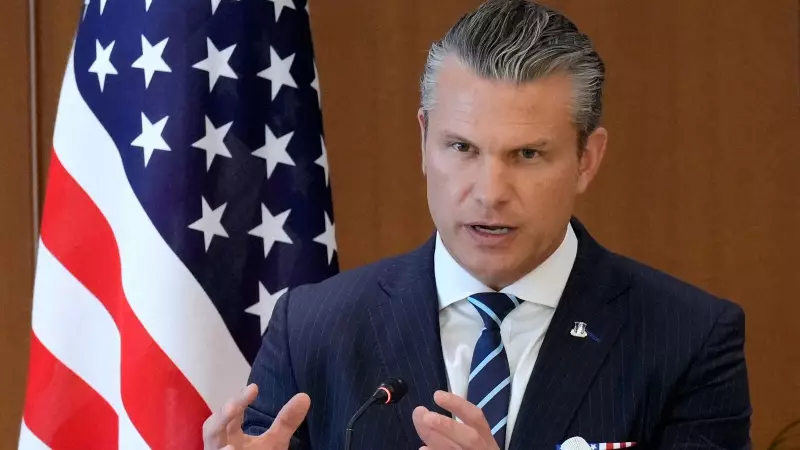
Pete Hegseth, a prominent Pentagon official and Fox News contributor, has emerged as the public face defending this strategic pivot. During recent media appearances, Hegseth articulated the administration's position with unwavering conviction, emphasizing that renewed testing capability forms the cornerstone of America's "peace through strength" doctrine.
"When we talk about peace through strength, it's not just a slogan—it's a proven strategy that requires maintaining credible deterrence," Hegseth stated during a televised discussion. "Our adversaries must never doubt our capability or willingness to ensure national security."

Global Context: Rising Nuclear Threats
The decision unfolds against a backdrop of concerning international developments:
- Russia's continued nuclear posturing and treaty withdrawals
- China's rapid nuclear arsenal expansion
- North Korea's persistent ballistic missile testing
- Iran's advancing nuclear capabilities
Hegseth pointed specifically to Russia's nuclear rhetoric and activities as primary justification for the policy shift. "We cannot afford complacency when facing regimes that openly discuss nuclear deployment," he argued.
Technical Readiness and Strategic Implications
While the administration emphasizes this as a preparedness measure rather than an immediate testing plan, the technical infrastructure for rapid resumption is being actively developed. This includes:
- Modernizing testing facilities at historic sites like the Nevada National Security Site
- Developing new diagnostic capabilities for weapons assessment
- Training personnel in contemporary testing protocols
- Ensuring regulatory and safety frameworks are current
The critical question remains: Will actual detonations follow, or will the threat of testing capability suffice as diplomatic leverage?
International Reaction and Diplomatic Fallout
Global response has been predictably divided. Traditional allies express private concerns about renewed nuclear escalation, while adversaries condemn what they characterize as provocative posturing. The move potentially undermines decades of non-proliferation efforts and could trigger a new arms race.
Hegseth addressed these concerns directly: "Some will call this provocative. We call it necessary. When the security environment changes, our preparedness must adapt accordingly."
The Historical Perspective
The United States last conducted underground nuclear tests in 1992, after which it observed the Comprehensive Nuclear-Test-Ban Treaty moratorium despite never ratifying the treaty. The current administration argues that technological advancements and evolving threats necessitate revisiting this long-standing position.
This development represents perhaps the most dramatic shift in US nuclear policy since the Cold War's conclusion, signaling a new era of great power competition where nuclear capabilities return to center stage in global security calculations.
As the debate intensifies, the world watches whether this assertion of strength will indeed foster peace or accelerate the very conflicts it seeks to prevent.






