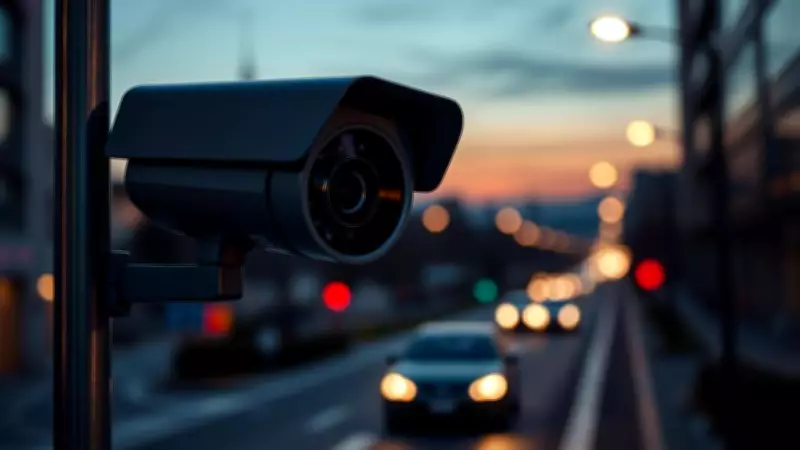
Growing Backlash Against AI-Powered License Plate Surveillance in US Cities
An escalating number of municipalities across the United States are actively pushing back against the deployment of artificial intelligence-driven license plate reader technology. According to a detailed report from the Financial Times, at least 53 cities spanning 20 different states have initiated processes to deactivate or outright reject these surveillance systems. This movement is primarily fueled by mounting apprehensions regarding mass surveillance and the potential misuse of collected data.
The Spark: Flock Safety Camera Network
The controversy appears to have been ignited by the rapid expansion of the Flock Safety camera network. This specific system has become the central point in nationwide discussions concerning modern policing tactics, immigration enforcement, and the boundaries of public surveillance. Local government authorities, alongside privacy advocacy groups, contend that this technology, which utilizes license plates and other visual vehicle identifiers, has inadvertently fostered the creation of an extensive and interconnected surveillance web.
The issue has gained significant political and social traction due to specific fears about how agencies like U.S. Immigration and Customs Enforcement (ICE) might utilize the data. There are concerns that this information could be leveraged to conduct raids targeting undocumented immigrants, adding a layer of immigration policy to the surveillance debate.

Rapid Rejection and Expanding Debate
The resistance has intensified markedly in recent months. The Financial Times notes that in the past six months alone, 38 cities have chosen to opt out of Flock's surveillance systems. The discourse extends far beyond municipal chambers, engaging civil liberties organizations and activist networks who are fundamentally questioning the permissible limits of AI-driven law enforcement.
How Flock's AI Surveillance Systems Operate
Flock's cameras employ sophisticated artificial intelligence algorithms to capture and analyze comprehensive vehicle data. This includes not only license plate numbers but also distinguishing features such as bumper stickers, dents, or roof racks. The captured information is instantly cross-referenced against law enforcement databases to generate real-time alerts for officers.
The system's power lies in its cloud-based infrastructure and its network of both publicly and privately owned cameras. This architecture allows authorities to access and share data seamlessly across different jurisdictions, creating a potentially nationwide tracking capability.
The company reports having over 12,000 corporate customers, which includes nearly 6,000 law enforcement agencies. Flock has stated it holds no direct contracts with ICE and asserts that its customers maintain control over who can access their specific data streams. In response to earlier criticism, the company implemented restrictions last year, barring immigration-related searches and preventing federal agencies from using its primary lookup tools.
Critics Raise Alarm Over Mass Surveillance
Opponents argue that the sheer scale and connectivity of the Flock network raise profound concerns about the establishment of a mass surveillance state. Jay Stanley, a senior policy analyst with the American Civil Liberties Union, explained to the FT, "The company's machines are placed all across a nation and all the reads are sent to centralized servers operated by the company, and that makes it a much more powerful technology than it was before."
Privacy groups and local campaigners have increasingly lobbied city councils to reconsider or terminate their contracts. Dave Maass from the Electronic Frontier Foundation characterized this local action as an "opportunity to affect change on a local level as a form of resistance against Border Patrol, ICE and the Department of Homeland Security."
Public concern has been further amplified by reported incidents of alleged misuse and vibrant online discussions. The cameras themselves, often mounted on poles with prominent solar panels, have become a visible and contentious symbol of this broader societal debate.

Flock's Defense and Law Enforcement Support
Flock has vigorously defended its technology, maintaining that it is designed exclusively to bolster public safety while providing customers with granular control over data access. "It is a frustrating thing to have so much attention directed at us, specifically when the underlying issues have nothing to do with our technology or our company," Dan Haley, Flock's chief legal officer, told the Financial Times.
The company highlights built-in safeguards, including restrictions on specific search types and tools allowing local agencies to manage data-sharing permissions autonomously. This defense finds support among some in law enforcement. Billy Grogan, a former police chief in Dunwoody, Georgia, attested, "It's been a game-changer for us. We've been able to solve hundreds, if not thousands, of crimes that otherwise would remain unsolved if it wasn't for the LPR technology."
Investment Climbs Amidst Controversy
This growing pushback is occurring even as financial investment in law enforcement technology continues its upward trajectory. Funding for U.S. public safety startups reportedly reached $1.79 billion last year, a significant increase from $552 million in 2024, according to data from Crunchbase. Flock itself claims over $300 million in annual recurring revenue and is expanding into adjacent markets like drones and gunshot detection.
The competitive landscape includes major players like Motorola Solutions and Axon Enterprise, indicating robust and growing commercial interest in AI-based policing solutions. The controversy surrounding Flock is merely one facet of a larger national conversation attempting to balance individual privacy rights against the perceived need for enhanced public safety tools.
While law enforcement officials frequently cite the effectiveness of these systems in solving crimes, critics point out there is scant empirical evidence to support claims that automated license plate readers actually lead to lower overall crime rates. Flock's chief legal officer, Dan Haley, suggested the current heated debate may be temporary. "We believe when this present political moment passes, the attention will return to the very rational trade-off between public safety and government authority and surveillance," he added.
As an increasing number of American cities reevaluate their contracts for AI surveillance tools, the collective outcome of these local decisions is poised to critically influence how such powerful technologies are deployed, regulated, and governed across the United States for years to come.