

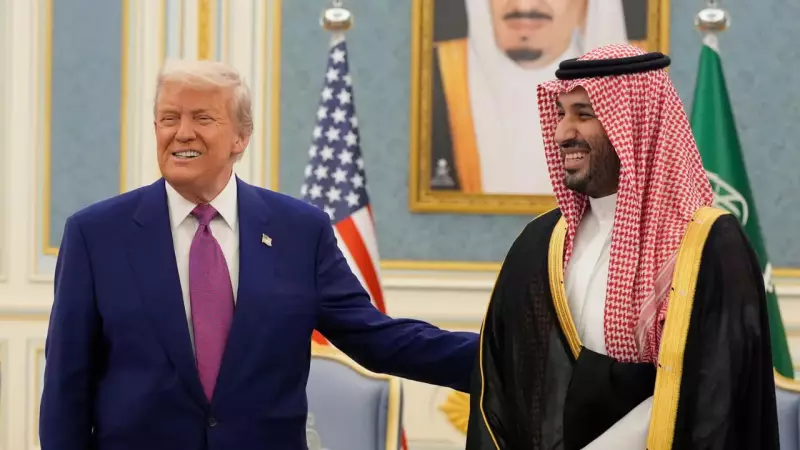
US President Donald Trump is set to host Saudi Arabia's Crown Prince Mohammed bin Salman in Washington on Tuesday for a crucial diplomatic meeting that carries significant political and economic implications. The high-profile engagement is expected to advance major defense contracts and substantial investments while drawing attention to the Trump family's extensive business interests in the kingdom.
Major Defense Deals on the Table
During their formal discussions, the potential sale of advanced US F-35 fighter jets to Saudi Arabia will take center stage. President Trump confirmed his intention to approve the sale during a Monday announcement in the Oval Office, stating clearly: "I will say that we will be doing that, we'll be selling the F-35s."
The F-35, manufactured primarily by American defense contractor Lockheed Martin, represents the world's most advanced fighter aircraft with stealth technology that enables it to evade enemy radar detection. Each unit carries a price tag between $80 million and $110 million, making this potential deal exceptionally valuable for US defense manufacturers.

A senior White House official emphasized the economic benefits, telling Reuters that "The Saudis will be spending a lot of money tomorrow on the US." Currently, Israel remains the only Middle Eastern nation operating the F-35, having established several squadrons over the past decade.
Substantial AI and Infrastructure Investments
Beyond military hardware, the bilateral relationship is expanding into cutting-edge technology sectors. According to a White House statement cited by Al Jazeera, Saudi Arabia will invest $20 billion in artificial intelligence and AI data centers within the United States, signaling a strategic pivot toward emerging technologies.
Additionally, several American companies have secured lucrative contracts for developing major infrastructure projects in Saudi Arabia. Hill International, Jacobs, and Parsons have been awarded contracts worth approximately $2 billion for projects including the King Salman International Airport and other large-scale developments.
President Trump has actively cultivated his relationship with the Saudi leadership, aiming to encourage Riyadh to normalize diplomatic relations with Israel. Such a move would represent a significant achievement for the president's signature Abraham Accords initiative.
Trump Family Business Interests Under Scrutiny
The visit has renewed examination of the Trump family's substantial business dealings with Saudi investors. According to Forbes reporting, Trump and his family have secured at least nine deals with Saudi partners, channeling millions into golf properties, tens of millions into licensing businesses, and billions into private-equity funds.
In 2024 alone, the Trump family reportedly earned approximately $50 million from Saudi-linked transactions. The business relationships continue to expand, with the Trump Organization announcing a new Trump International Hotel in the Maldives in partnership with Saudi-linked Dar Global, scheduled to open in 2028.
This project, billed as the world's first "tokenized" hotel venture, will allow investors to use digital currencies to finance their stakes in the 80-villa resort. Last month also saw unveiling of plans for a Trump Plaza in Saudi Arabia, featuring gleaming glass towers bearing the Trump name in Jeddah.
The Khashoggi Legacy and Diplomatic Context
This visit marks Crown Prince Mohammed bin Salman's first trip to Washington since 2018, just months before the killing of dissident journalist Jamal Khashoggi at a Saudi consulate in Turkey. A subsequent CIA assessment concluded the prince had likely ordered the assassination, though he has consistently denied involvement.
Hanan Elatr Khashoggi, the journalist's widow, expressed her pain about the warm reception, telling CNN: "It's very painful for me. It will be better if Jamal was here and receiving the crown prince by himself and meet with him and share with him his vision and mission."

The Biden administration had previously considered supplying F-35 jets to Saudi Arabia as part of a broader agreement that included potential normalization of relations with Israel, though those negotiations ultimately stalled. President Trump's approach appears more direct, focusing on bilateral economic and defense cooperation while continuing to pursue diplomatic breakthroughs in the region.
The day of diplomacy will conclude with a White House dinner hosted by First Lady Melania Trump, cementing what President Trump described as "honoring Saudi Arabia" through this high-stakes engagement.





