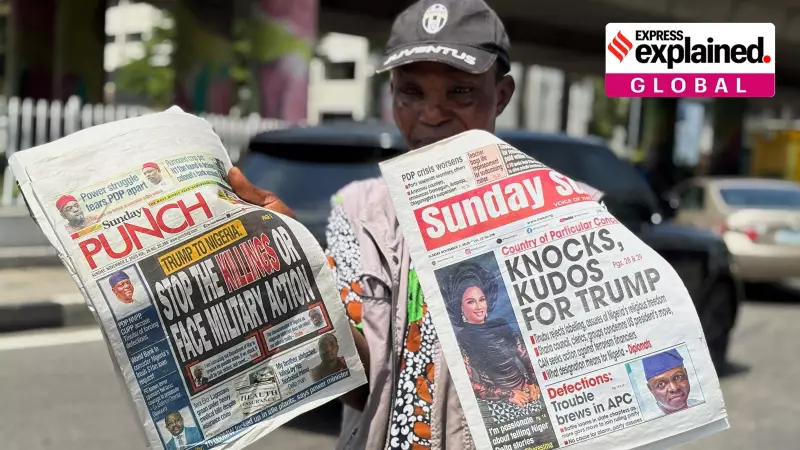
In a striking declaration that has captured international attention, former US President Donald Trump has asserted that the persistent persecution of Christians in Nigeria would cease immediately if he were in the White House. The controversial statement comes amid ongoing violence by extremist groups like Boko Haram that has devastated religious communities across West Africa.
The Core Controversy
During a recent public appearance, Trump painted a grim picture of the current situation in Nigeria, suggesting that the Biden administration has failed to protect Christian communities from terrorist organizations. "If I were President, the persecution of Christians in Nigeria would have ended yesterday," Trump declared, positioning himself as the solution to a complex international crisis that has persisted for over a decade.
Nigeria's Religious Violence Reality
The statistics behind Trump's claims reveal a troubling reality. Nigeria has witnessed thousands of Christians killed in religiously-motivated violence, particularly in the northern regions where Boko Haram maintains strong influence. The terrorist organization has repeatedly targeted churches, Christian communities, and religious leaders in their campaign to establish an Islamic state.

Recent reports indicate that the violence has expanded beyond Boko Haram to include attacks by Fulani herdsmen, creating a multi-faceted security crisis that has displaced millions and claimed countless lives across religious lines.
International Response and Political Implications
Trump's comments arrive at a sensitive political moment, both in the United States and Nigeria. The statement appears designed to resonate with evangelical Christian voters in America while simultaneously putting pressure on the current Nigerian government and the Biden administration.
Security experts note that the situation in Nigeria represents one of Africa's most complex humanitarian crises, with religious violence intertwined with ethnic conflicts, economic competition, and political instability. Solving such a deeply rooted problem would require more than presidential declarations, involving intricate diplomacy, intelligence cooperation, and sustainable development initiatives.
The Bigger Picture: Global Religious Freedom
This incident highlights the ongoing debate about America's role in protecting religious minorities worldwide. During his presidency, Trump appointed the first-ever Special Envoy for International Religious Freedom and frequently highlighted Christian persecution in his foreign policy agenda.
The Nigerian government has consistently maintained that it treats all religious groups equally and that the violence stems from terrorism rather than state-sanctioned persecution. However, international human rights organizations continue to document systematic attacks on religious minorities that demand global attention.
As the 2024 election cycle approaches, statements like Trump's ensure that international religious freedom will remain a contentious and emotionally charged issue in American politics, with real implications for US-Africa relations and global security policy.