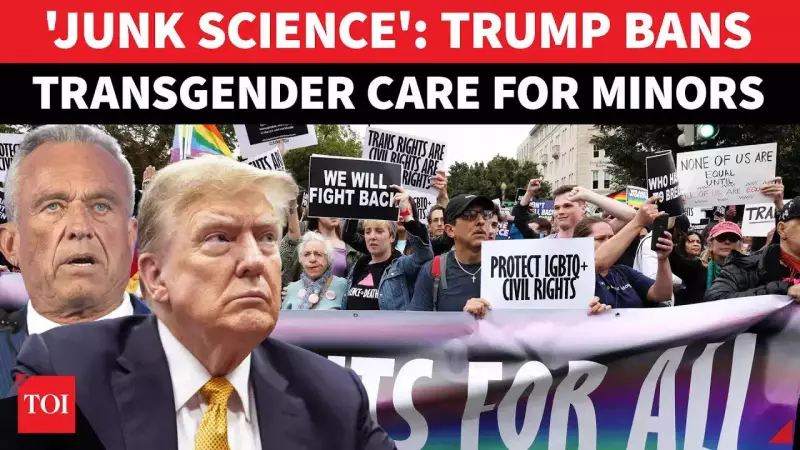
In a major policy shift, the administration of former US President Donald Trump has announced its most extensive federal effort to date to limit gender-affirming medical treatments for individuals under the age of 18. The proposed regulations, unveiled on December 19, 2025, aim to fundamentally alter how transgender healthcare is accessed and funded across the United States.
Key Officials Announce Sweeping Regulatory Actions
The landmark announcement was made by two key figures in the Trump administration: Health and Human Services Secretary Robert F. Kennedy Jr. and Centers for Medicare & Medicaid Services (CMS) Administrator Dr. Mehmet Oz. They detailed a series of proposed rules designed to prohibit the use of federal healthcare programs from covering treatments for minors that are intended to align physical characteristics with gender identity.
The targeted medical interventions include:

- Puberty-blocking medications
- Cross-sex hormone therapy
- Surgical procedures for gender transition
The central mechanism of the policy is to sever financial support. The proposals would cut off Medicaid and Medicare funding for any hospitals or healthcare providers that offer these specific treatments to children and adolescents. Officials justified the move by asserting that these treatments do not meet recognised medical standards and potentially endanger vulnerable young people.
Rationale and Expected Impact on American Taxpayers
A core argument presented by the administration frames the decision as a fiscal safeguard. The message, encapsulated in the statement 'American taxpayers won't foot the bill...', positions the policy as a measure to prevent public funds from being used for what they deem unproven or risky medical care for minors. This stance is expected to resonate with a segment of the population concerned about government healthcare spending.
If finalised, these regulations would dramatically reshape the landscape of transgender healthcare access in the US. Many families rely on public insurance programs to afford these often costly treatments. The withdrawal of federal funding could force clinics to stop offering services or place them out of financial reach for a significant number of people.
Road Ahead: Public Scrutiny and Legal Challenges
It is crucial to note that these proposals are not yet final. The announced rules will now enter a period of public comment, where medical associations, advocacy groups, legal experts, and citizens can submit their opinions and critiques. This process is mandated by law and often influences the final version of a regulation.
Furthermore, the move is anticipated to face significant legal challenges. Opponents are likely to argue that the rules infringe upon medical autonomy, discriminate against transgender youth, and contradict the positions of major medical organisations like the American Academy of Pediatrics, which supports evidence-based gender-affirming care. The ensuing legal battles could delay or even prevent the implementation of the policies.
This development marks a pivotal moment in the ongoing national debate in the United States over transgender rights, the role of government in medical decisions, and the boundaries of care for minors. The outcome of the public comment period and subsequent court cases will determine the real-world impact of this proposed federal crackdown.