Comprehensive UPSC Key Analysis for February 6, 2026: Key Topics and Exam Relevance
For aspirants of the Union Public Service Commission (UPSC) Civil Services Examination, staying updated with current affairs is paramount. The Indian Express UPSC Key for February 6, 2026, curated by Khushboo Kumari, highlights several critical topics that are highly relevant for both the Preliminary and Main examinations. This expanded analysis delves into the significance of these issues, providing a deeper understanding for effective exam preparation.
Frontier Nagaland Territorial Authority: A Landmark Agreement
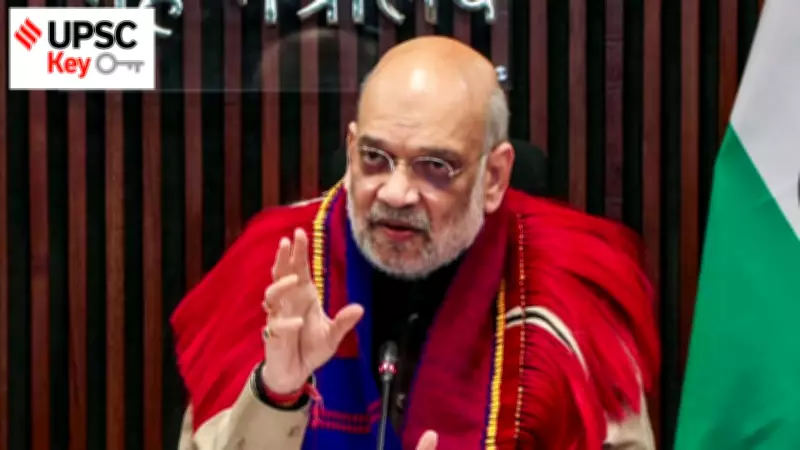
In a significant development, the Government of India, the Nagaland government, and the Eastern Nagaland Peoples' Organisation (ENPO) signed an agreement to establish the Frontier Nagaland Territorial Authority (FNTA). This accord, witnessed by Union Home Minister Amit Shah and Nagaland Chief Minister Neiphiu Rio, aims to foster development in six eastern districts of Nagaland: Tuensang, Mon, Kiphire, Longleng, Noklak, and Shamator.
Key Points for UPSC Aspirants:

- Constitutional Context: The agreement operates within the framework of Article 371(A) of the Indian Constitution, which grants special provisions to Nagaland, safeguarding Naga customary laws and land rights. It is crucial to understand that this new arrangement does not alter these constitutional protections.
- Devolution of Powers: The FNTA will have authority over 46 subjects, promoting financial autonomy and enhanced decision-making to accelerate infrastructure and economic growth in the region.
- Historical Background: Articles 369 to 392 under Part XXI of the Constitution outline temporary and special provisions. Article 371(A) was introduced via the 13th Amendment Act of 1962, following the 16-point agreement that led to Nagaland's statehood in 1963.
This topic is vital for the Prelims under Indian Polity and for Mains under GS-II, focusing on constitutional provisions and public policy. Previous year questions, such as those on the Fifth Schedule and Article 371A, underscore its importance.
Budget 2026: Sustaining Growth Through High Public Capex
Finance Minister Nirmala Sitharaman emphasized the government's commitment to sustaining economic growth through substantial public capital expenditure (capex) in Budget 2026-27. With an allocation of Rs 12.22 lakh crore, marking an 11.5% increase from the previous year, this strategy aims to bolster infrastructure and stimulate private investment.
Exam-Relevant Insights:
- Capex Significance: Capital expenditure involves government spending on assets like infrastructure, machinery, and healthcare, which drives long-term economic growth. Understanding the distinction between capital and revenue expenditure is essential for Prelims.
- Private Sector Role: While the government leads in capex, Sitharaman noted that private investment is emerging from a passive phase, with global interest from pension and sovereign funds.
- Controversial Measures: The Budget introduced a tax on capital gains from Sovereign Gold Bonds (SGBs) in secondary markets, a move criticized as retrospective. This highlights issues in budget transparency and economic policy, relevant for Mains under GS-III on government budgeting and resource mobilization.
Key initiatives include Real Estate Investment Trusts (REITs) for CPSE asset monetization, an Infrastructure Risk Guarantee Fund, and new Dedicated Freight Corridors. These align with sustainable development goals and infrastructure financing, crucial for comprehensive answer writing.
Road Safety: Declining Accidents on National Highways
Data from the Ministry of Road Transport and Highways reveals an 11% reduction in road accidents and fatalities on National Highways in 2025, with Uttar Pradesh and Madhya Pradesh leading the improvement. This positive trend results from enhanced road safety initiatives and technological advancements.
Critical Analysis for UPSC:

- Global Context: India tops global road accident fatalities, with National Highways accounting for over 36% of deaths despite comprising only 2.3% of the road network. Comparative data with China and the US underscores the urgency of road safety measures.
- Technological Interventions: The introduction of Vehicle-to-Vehicle (V2V) communication technology, part of the Intelligent Transport System, aims to reduce crashes by enabling real-time information sharing between vehicles. This innovation is pivotal for questions on government policies and technological applications in governance.
- Policy Implications: The Electronic Detailed Accident Report (eDAR) portal facilitates data management, supporting evidence-based policymaking. Topics like the Brasilia Declaration and Sustainable Development Goals related to road safety are frequently tested in Prelims.
This subject intersects with GS-II on government interventions and GS-III on disaster management, making it a multifaceted area for exam preparation.
India-Russia Relations: Navigating Diplomatic Challenges
Amidst US President Donald Trump's claims that India agreed to halt Russian oil imports, India faces a delicate balancing act in maintaining its longstanding ties with Russia while engaging with the US. This scenario highlights the complexities of India's foreign policy and energy security.
Key Dimensions for UPSC:
- Historical Ties: Russia has been a key ally since the Cold War, particularly during the 1971 India-Pakistan war. Defence cooperation remains robust, with Russia supplying over 80% of India's weapons historically, though dependence has decreased to below 40% recently.
- Energy Trade Dynamics: Post-Russia's invasion of Ukraine in 2022, India increased oil imports from Russia to 32% of total imports, benefiting from discounts. However, US pressure and tariffs have prompted India to diversify sourcing, emphasizing energy security as a national priority.
- Strategic Considerations: With Russia's proximity to China and ongoing border tensions, India must carefully manage its relations to avoid strategic vulnerabilities. This topic is crucial for Mains under GS-II on bilateral relations and global groupings.
Previous year questions on Indo-Russian nuclear agreements and defence deals illustrate the exam's focus on this bilateral relationship.
Healthcare System Reforms: Towards Quality and Universal Coverage
The Lancet Commission on Reimagining India's Health System advocates for a shift from a fragmented, hospital-centric model to a comprehensive, people-centred approach. Despite the success of Ayushman Bharat in reducing out-of-pocket expenditures, challenges in primary care and quality persist.
UPSC Relevance:
- Ayushman Bharat Achievements: The scheme has provided over 10 crore hospital treatments and saved households nearly Rs 2 lakh crore, demonstrating progress in health assurance. However, gaps in preventive and promotive care remain.
- Decentralization and Private Sector: The Commission recommends empowering states with financial flexibility and integrating private providers through managed care principles. This aligns with topics on health governance and universal health coverage in GS-II.
- Investment Needs: Stagnant public health spending at around 1-2% of GDP necessitates increased investment and efficient resource utilization. Questions on primary health structure and sustainable development are common in Mains.
Understanding these healthcare issues is essential for answering questions on social sector management and public policy.
Additional Key Topics for UPSC Preparation
The UPSC Key also covers other significant areas:
- Retrospective Tax Controversy: The Budget's tax on SGB capital gains raises concerns about policy consistency and investor confidence, relevant for economic growth discussions.
- Disaster Victim Identification (DVI): New NDMA guidelines aim to ensure dignified handling of remains in mass fatalities, linking to disaster management in GS-III.
- International Agreements: India's FTA negotiations with the Gulf Cooperation Council (GCC) and the expiration of the START treaty between the US and Russia highlight global economic and security dynamics.
By integrating these topics into their study plan, aspirants can enhance their comprehension of current affairs and improve their performance in the UPSC examinations. Regular review of such analyses, coupled with practice of previous year questions, is instrumental in achieving success.