Delhi Experiences Cleaner Air Following Overnight Drizzle and Dense Fog Episode
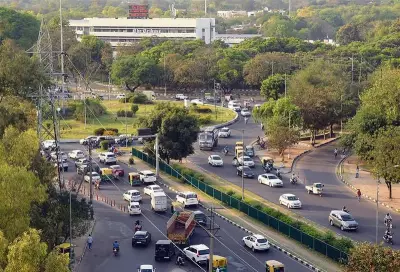
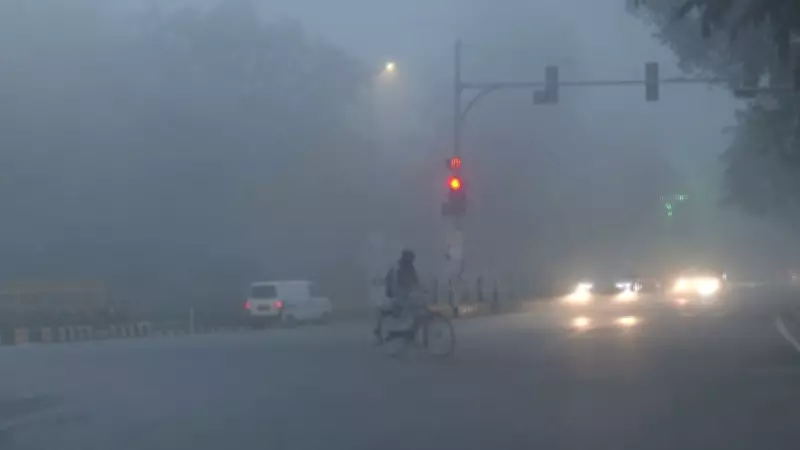
Residents of Delhi and the National Capital Region (NCR) woke up to noticeably cleaner air on Monday morning after an overnight drizzle helped clear the atmosphere. This improvement came following a night where dense fog shrouded several regions, significantly reducing visibility and prompting weather alerts from the India Meteorological Department (IMD).
From Red Alert to Yellow: IMD's Response to Dense Fog Conditions
The IMD initially issued a red alert in the early hours of Monday as light rain in various parts of NCR, combined with calm winds, triggered the formation of dense fog across Delhi. This alert was later scaled down to a yellow alert, which remained in place for the forenoon hours. The dense fog persisted late into the morning, causing visibility to plummet to as low as 100 meters at key locations including Safdarjung and Palam for several hours.
The meteorological conditions, however, had a silver lining for Delhi's notorious air pollution. The city's air quality index (AQI) improved significantly, dropping to the 'Moderate' category with a reading of 181 by Monday morning. This marked a substantial improvement from Sunday's daily average AQI of 265, which had fallen in the 'Poor' range.

Scientific Explanation Behind the Dense Fog Formation
Senior meteorologists have provided detailed explanations for the dense fog that enveloped the capital region. According to experts, the fog formation resulted from stable atmospheric conditions created after the overnight rain spill. High moisture levels combined with very weak winds allowed cool air to become trapped near the ground, leading to condensation that manifested as thick fog.
R K Jenamani, senior scientist and head of weather forecast services at IMD, elaborated on this phenomenon: "After the overnight rain, there were only very light winds which didn't allow the moisture to disperse. This is why, earlier when rainfall was heavier on January 23 and 27, no such fog was seen because stronger winds had prevented it."
Weather data revealed that moisture-laden easterly winds of up to 15 kmph were recorded on Sunday, increasing humidity across the region. The IMD Meteorological Centre in Lucknow reported overnight rain in several NCR areas including Gautam Buddha Nagar (1 mm), Meerut (5 mm), Muzaffarnagar (6 mm), and Agra (2.2 mm), though no rainfall was recorded specifically in Delhi.
February Weather Outlook: Warmer and Drier Conditions Expected
Looking ahead, February is predicted to bring warmer and relatively dry weather to the region. This forecast comes as meteorologists note the impact of what they term 'feeble western disturbances' on the weather patterns.
The IMD has indicated that a fresh feeble western disturbance is likely to affect the higher reaches of the Himalayan region from Monday night, with another expected to impact northwest India from the night of February 5. Dr Mrutyunjaya Mohapatra, Director General of IMD, explained on Saturday that Northwest India, including Delhi, would experience higher day and night temperatures due to these weaker western disturbances.
Dr Mohapatra clarified the expected impact: "The cloud cover will lead to increase in night temperatures, but a lack of rain would result in warmer days."
Weekly Forecast and Air Quality Predictions
For the remainder of the week, the IMD has forecasted shallow to moderate fog conditions along with partly cloudy skies, with no additional alerts expected. Temperatures are predicted to rise by the weekend, ranging between 9-11 degrees Celsius at night to 22-24 degrees Celsius during the day.
However, meteorologists caution that cold, dry northwesterly winds blowing below 10 kmph, which are insufficient for dispersing pollutants, will likely lead to an increase in the pollutant profile. According to the Indian Institute of Tropical Meteorology, air quality is forecast to return to the 'Poor' range, with AQI values expected between 201-300 in the coming days.
This weather episode highlights the complex interplay between precipitation, wind patterns, and air quality in Delhi's urban environment, with residents experiencing both the challenges of reduced visibility and the benefits of temporarily improved air conditions.