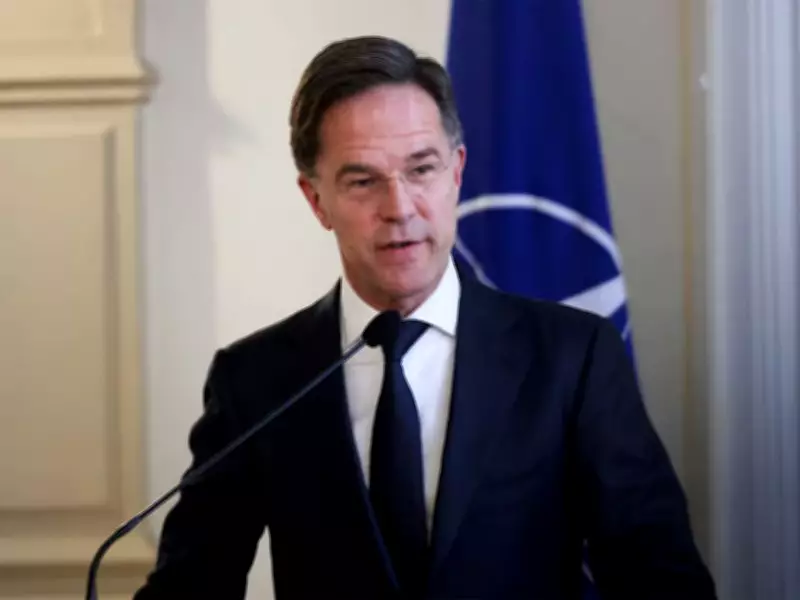
Dutch Leader Rejects NATO Exit Speculation Amid Trump Criticism
In a robust defense of the transatlantic alliance, Dutch Prime Minister Mark Rutte has categorically dismissed mounting fears about a potential United States withdrawal from NATO. His comments come directly in response to former US President Donald Trump's recent characterization of the alliance as a "paper tiger." Rutte's statements aim to reinforce confidence in NATO's enduring strength and strategic unity amidst a turbulent geopolitical climate.
Rutte's Firm Rebuttal to Withdrawal Concerns
Prime Minister Rutte, speaking with clarity and conviction, addressed the speculation head-on. "I don't see the US leaving NATO," he asserted, pushing back against anxieties fueled by political rhetoric. He emphasized that the foundational bonds and shared security interests between the United States and its European allies remain unshakable, regardless of shifting political winds in Washington.
This dismissal is particularly significant given the historical context of US commitment to the alliance. Rutte highlighted the deep-rooted cooperation and mutual defense guarantees that have defined NATO for decades, suggesting that these institutional and strategic realities outweigh any temporary political posturing.

Countering the 'Paper Tiger' Allegation
The Dutch leader also took aim at Donald Trump's recent derogatory remarks, where the former president labeled NATO a "paper tiger"—a term implying an entity that appears strong but is actually weak or ineffective. Rutte rejected this characterization outright, pointing to NATO's concrete actions and collective resolve.
"Our alliance is far from a paper tiger," Rutte stated, underscoring NATO's active role in addressing global security challenges, from supporting Ukraine against Russian aggression to conducting joint military exercises and enhancing deterrence measures across Eastern Europe.
Emphasizing NATO's Cohesion and Future
Beyond rebutting criticism, Rutte's message served to reaffirm NATO's internal unity and forward-looking agenda. He stressed that the alliance is not only resilient but also actively adapting to new threats, including cyber warfare, hybrid tactics, and strategic competition from state actors like Russia and China.
- Enhanced Defense Spending: Rutte noted the progress among European allies in meeting the NATO target of dedicating 2% of GDP to defense, a point often highlighted by US critics.
- Strategic Adaptation: He pointed to NATO's ongoing modernization efforts, including the development of new defense plans and capabilities to counter emerging threats.
- Diplomatic Solidarity: The Prime Minister emphasized the unwavering diplomatic and military support for member states, reinforcing the principle of collective defense enshrined in Article 5 of the NATO treaty.
Rutte's intervention is seen as a crucial effort to stabilize alliance perceptions and preempt any potential erosion of trust. By publicly dismissing withdrawal fears and countering the "paper tiger" jibe, he aims to bolster morale among NATO members and signal to adversaries that the alliance remains a formidable and united force.
In conclusion, Mark Rutte's firm stance serves as a reminder of NATO's enduring relevance and the critical importance of transatlantic solidarity in an increasingly unpredictable world. His words are a call for continued commitment and confidence in the alliance's ability to safeguard peace and security for all its members.