A major political and cultural controversy has erupted in the United States following a contentious decision to rename one of the nation's most prestigious performing arts venues. The move has drawn sharp condemnation from top Democratic leaders and ignited a fierce debate about legacy, political influence, and institutional authority.
Board's Surprise Vote Ignites Firestorm
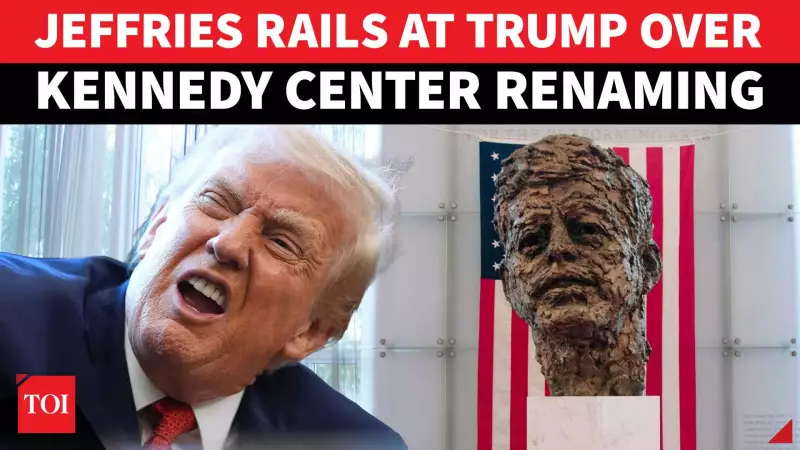
On December 19, 2025, a board handpicked by former President Donald Trump voted to change the name of the iconic John F. Kennedy Center for the Performing Arts. The institution is now set to be known as the Trump-Kennedy Center. The decision was met with immediate and fierce backlash from board member and House Minority Leader Hakeem Jeffries, who did not mince words in his criticism.
Expressing his outrage, Jeffries reportedly exclaimed, "Are you kidding me?" He condemned the renaming as a "disgrace" and challenged the very authority of the board to make such a monumental change. Jeffries argued that the board lacks the legal power to rename a federally funded building without proper legislation from Congress, setting the stage for a potential legal and political battle.
Contrasting Reactions from Trump and Critics
While Jeffries and other critics fumed, former President Trump offered a截然不同的 reaction. He stated that he was both "surprised and honoured" by the board's decision. In his comments, Trump praised the status and judgement of the board members who voted in favour of the change, framing it as a positive recognition.
This stark contrast in responses highlights the deep political divisions the issue has uncovered. The controversy transcends a simple name change, touching on broader themes of political legacy and the influence of a former president on non-partisan cultural institutions. Supporters view it as an honour, while opponents see it as an inappropriate politicisation of a national landmark dedicated to a former president from the opposing party.
Broader Implications and a Nation Divided
The renaming row has quickly become a flashpoint in America's ongoing culture wars. It raises critical questions about the processes that govern national institutions and who holds the ultimate authority over their identity. Jeffries' strong stance, labelling Trump supporters on the board as "sycophants," signals that this issue will fuel political discourse for the foreseeable future.
The debate now centres on several key issues:
- The legal authority of presidential-appointed boards to rename federal properties.
- The preservation of historical legacies versus contemporary political recognition.
- The increasing intersection of partisan politics with arts and culture in the United States.
As the story develops, all eyes will be on whether legislative or legal challenges emerge to reverse the board's decision. The Trump-Kennedy Center name, for now, stands as a potent symbol of the nation's deep political schisms.