Federal Reserve Expected to Maintain Interest Rates Unchanged Amid Political Pressure
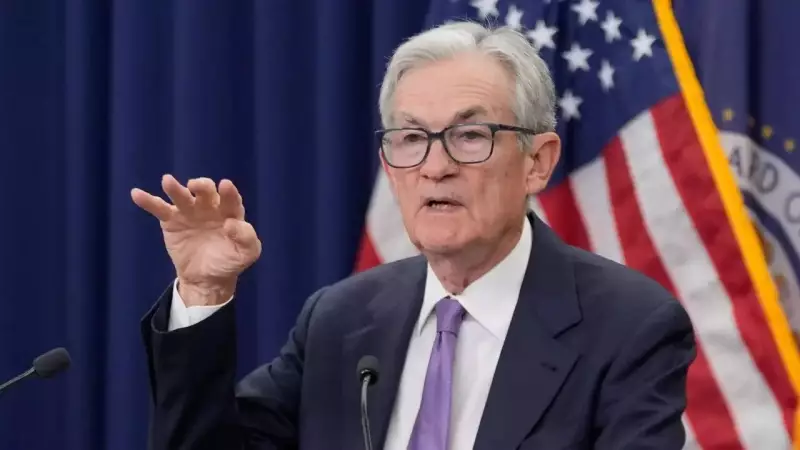
The United States Federal Reserve is widely anticipated to keep interest rates unchanged during its upcoming meeting this week, holding firm despite ongoing pressure from President Donald Trump to implement significant cuts. This decision underscores the central bank's commitment to guarding its independence against external political influences.
Recent Rate Cuts and Current Economic Indicators
Since September, the Federal Reserve has implemented three consecutive rate reductions, bringing the benchmark interest rate to a range between 3.50 percent and 3.75 percent. These moves were primarily in response to a weakening jobs market. However, Fed Chair Jerome Powell has recently indicated that the threshold for any further reductions in January would be considerably higher.
Analysts at ING bank have pointed out that several strong economic factors support a pause in rate adjustments. "The fact that growth is robust, unemployment remains low, equity markets are hovering near all-time highs, and inflation persists above the target level all argue for maintaining the current stance," they noted. Powell's steadfast defense of the Fed's autonomy in the face of Trump's persistent calls for lower rates further reinforces this position.

Investigations and Legal Challenges Impacting the Fed
In a rare and solemn statement released on January 11, Chair Powell disclosed that the Department of Justice is investigating him concerning a $2.5 billion renovation project at the Fed's headquarters. Powell strongly criticized the potential for criminal charges, framing them as a consequence of policymakers making decisions in the public interest rather than yielding to presidential demands.
President Trump has frequently expressed his dissatisfaction with Powell, openly questioning the Fed chair's competence and integrity while asserting that inflation is not a concern. Contrary to these claims, former Cleveland Fed president Loretta Mester highlighted that US inflation has consistently exceeded the bank's two-percent target for over five years. "I believe the Fed must maintain a vigilant watch on the trajectory of inflation," she advised in an interview with AFP.
Economic Disparities and Inflationary Pressures
KPMG chief economist Diane Swonk observed that existing price increases have created a "significant divide" in how affluent versus lower-income households perceive the economic landscape. She cautioned that while fiscal stimulus measures in early 2026, including expanded tax cuts leading to higher refunds, might temporarily narrow this gap, they could also "trigger a more persistent and entrenched phase of inflation."
Another layer of complexity arises from stagnating employment figures, which compel policymakers to carefully balance the need to lower rates to stimulate economic growth against the imperative to keep rates elevated to control inflation.
External Pressures and Legal Battles Over Fed Leadership
Michael Pearce of Oxford Economics remarked that the Fed's dilemma has somewhat eased, as recent data suggest that labor market risks are less urgent than a few months ago, and the probability of escalating inflation has moderated. Nonetheless, he warned that developments outside the rate-setting committee "possess the potential to disrupt the course of monetary policy."
Beyond the investigation into Powell, President Trump has attempted to dismiss Fed Governor Lisa Cook, initiating a legal conflict that could redefine the extent of presidential authority in altering the Fed's leadership. Traditionally, a president can only remove Fed board members "for cause," typically interpreted as misconduct or neglect of duty. However, the Trump administration is advocating for a broader interpretation, seeking Cook's removal over allegations of mortgage fraud, which she vehemently denies.
The Supreme Court heard arguments on this matter recently, and Cook emphasized in a subsequent statement the critical importance of shielding the Fed from political threats. "This case fundamentally concerns whether the Fed will base its rate decisions on evidence and independent analysis or capitulate to political pressures," she asserted.

Pearce identified a "minor risk" that the government might succeed in ousting Cook, which could "gradually facilitate a significant shift toward a more dovish orientation within the committee over time." In monetary policy terminology, "hawkish" policymakers advocate for higher rates to combat inflation, whereas a "dovish" stance favors lower rates to encourage economic expansion.
Outlook and Divisions Within the Fed
As the two-day Federal Reserve meeting concludes on Wednesday, analysts anticipate that Chair Powell will refrain from addressing political issues during his press briefing. However, internal divisions regarding the future direction of monetary policy are expected to persist, reflecting the ongoing challenges of navigating economic uncertainties while upholding institutional independence.