

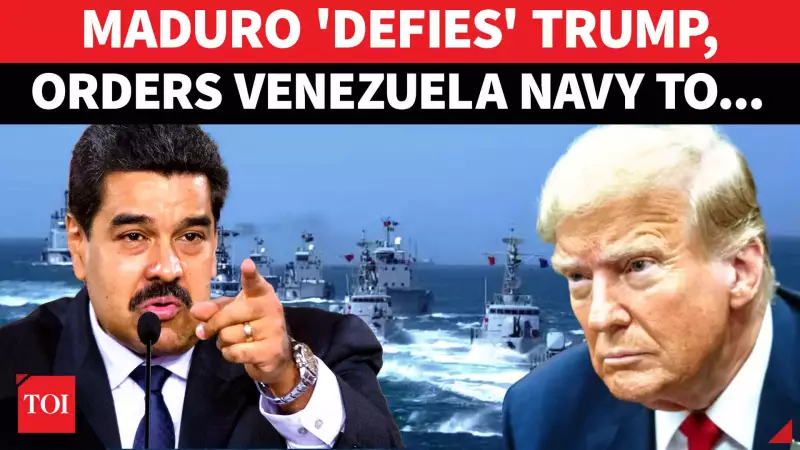
Caribbean waters have become the stage for a tense international standoff. In a bold act of defiance, the Venezuelan government of President Nicolás Maduro has ordered its navy to escort ships carrying petroleum products out of the country's ports. This move directly challenges a partial blockade declared by US President Donald Trump, aimed at crippling Venezuela's crucial oil revenues.
Naval Escorts Deployed Amid US Pressure
The situation escalated on December 18, 2025, as reports confirmed that several vessels, now under Venezuelan naval protection, have already set sail. Their destination is reported to be markets in Asia. This action significantly increases the risk of a direct military confrontation with United States forces on the high seas.
The core of the crisis is Washington's intense pressure campaign designed to sever the financial lifeline of the Venezuelan economy. By targeting oil exports, the US aims to exert maximum economic pressure on the Maduro administration. However, Venezuela's decision to provide armed naval escorts transforms an economic sanction into a potential military flashpoint.

A Dangerous Game of Brinkmanship
This development marks one of the most perilous moments in US-Venezuela relations in recent years. The situation is evolving rapidly, with Washington reportedly still debating the specifics of how to enforce its declared blockade and which agency or military command would take the lead.
The Venezuelan counter-move puts the United States in a difficult position. Intercepting or attempting to stop a sovereign nation's naval-escorted vessels could be interpreted as an act of war, raising the stakes immensely. The world now watches to see if the US will back its declaration with physical force.
Global Reactions and Regional Implications
The standoff has sent ripples across the global geopolitical landscape. Key players like Russia and China are closely monitoring the situation, given their strategic interests in Venezuela's oil resources and their broader opposition to US-led sanctions. The crisis also threatens the stability of the entire Caribbean region, a vital corridor for international shipping.
As tankers continue their journey under guard, the window for diplomatic de-escalation is narrowing. The coming days will be critical in determining whether this tense standoff can be resolved without incident or if it will erupt into an open confrontation with unpredictable consequences for global oil markets and international security.






