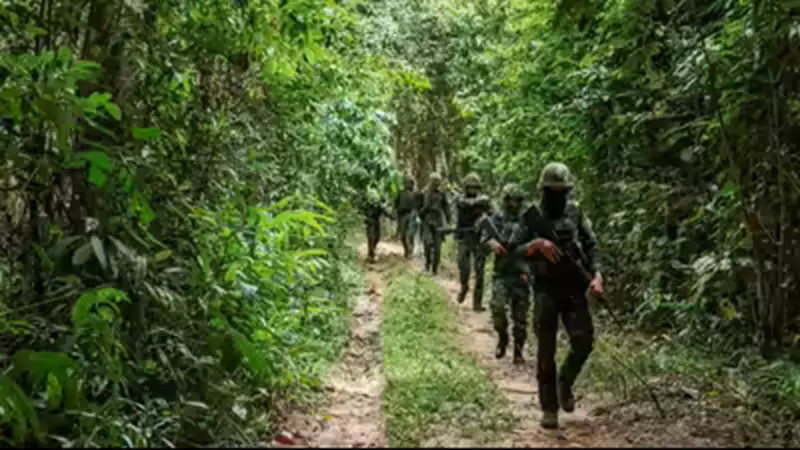
In a dramatic escalation of a long-simmering regional conflict, the Royal Thai Armed Forces have launched targeted military strikes in the vicinity of its disputed border with Cambodia. The action, confirmed on Monday, December 8, 2025, directly imperils a fragile ceasefire brokered just days earlier by former US President Donald Trump.
Ceasefire Collapses Amid Renewed Hostilities
The Thai military's operation marks a swift and violent end to the temporary peace. The ceasefire, announced on December 5, 2025, was a significant diplomatic achievement spearheaded by Donald Trump during his recent visit to the region. It aimed to halt clashes that had erupted around the ancient Preah Vihear temple, a UNESCO World Heritage site and the focal point of decades of territorial disagreement.
According to statements from Thai authorities, the strikes were a "necessary and proportionate response" to alleged provocations and movements by Cambodian forces within the contested zone. They emphasized that the operations were limited to specific areas near the border and were intended to neutralize immediate threats. However, this justification has been met with swift condemnation from Phnom Penh and has sent shockwaves through the international community.

Historical Context of the Border Tension
The roots of this conflict stretch back to the early 20th century. The core of the dispute lies in the interpretation of maps drawn during the French colonial administration of Indochina. While the International Court of Justice (ICJ) awarded the temple itself to Cambodia in 1962, the surrounding land has remained a contentious subject. Sporadic outbreaks of violence, including significant clashes in 2008 and 2011, have claimed lives on both sides and repeatedly drawn in regional powers.
The involvement of Donald Trump added a new, high-profile dimension to the crisis. His personal mediation effort was seen as an unexpected foray into complex Southeast Asian geopolitics. The now-jeopardized ceasefire was his primary deliverable, touted as a demonstration of his continued influence on the world stage. Its rapid unraveling poses a serious blow to that narrative and raises questions about the sustainability of external interventions in deep-rooted bilateral disputes.
Regional Repercussions and International Response
The immediate consequences are severe. The region now faces:
- Heightened Risk of Full-Scale Conflict: The targeted strikes significantly increase the likelihood of a broader military confrontation between the two ASEAN member states.
- Humanitarian Concerns: Civilians in the border regions are once again at risk, with potential for displacement and casualties.
- Diplomatic Fallout: The Association of Southeast Asian Nations (ASEAN), which prioritizes consensus and non-interference, is under pressure to mediate but faces challenges due to its principles.
- Global Power Reactions: Major powers, including the US, China, and others with interests in the region, are now compelled to recalibrate their responses.
Cambodia has denounced the Thai action as a "flagrant violation of sovereignty and the agreed-upon peace terms." The international community, including the United Nations, has issued urgent calls for maximum restraint and an immediate return to dialogue. All eyes are now on whether any diplomatic channels can be reopened to pull both nations back from the brink, or if the situation will descend into a more protracted and dangerous phase of conflict.
The unfolding crisis at the Thailand-Cambodia border serves as a stark reminder of how quickly diplomatic gains can evaporate in the face of historical grievances and national security imperatives. The coming hours and days will be critical in determining whether the region slides into war or steps back towards a negotiated solution.