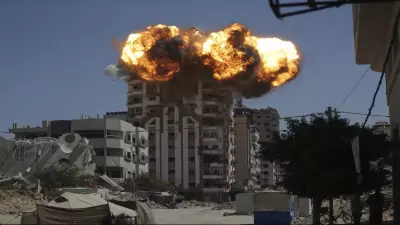
In a significant development amid the ongoing war, Russia's defence ministry has firmly rejected claims that its forces launched a missile attack on the Ukrainian city of Kharkiv. The denial comes in response to widespread media reports alleging a Russian strike on the northeastern Ukrainian region.
Official Statement from Moscow
The Russian defence ministry issued a clear statement, categorically labelling the reports as "a provocation". They asserted that Russian armed forces did not carry out any such strike on targets within the city of Kharkiv. This official rebuttal aims to counter the narrative being established by Ukrainian sources and several international media outlets.
Kharkiv, Ukraine's second-largest city, has been a focal point of intense fighting since the beginning of the Russian invasion. Its proximity to the border makes it strategically significant and frequently vulnerable to military engagements. The recent reports of a strike had raised alarms about a potential escalation in the intensity of attacks on urban centres.

Context of the Denial and Ongoing Conflict
This denial is set against a backdrop of continuous and fierce battles along the extensive front line in eastern and southern Ukraine. Both sides regularly exchange accusations regarding strikes on civilian infrastructure and residential areas, leading to a complex information war where facts are often contested.
The Russian statement is part of a pattern where Moscow frequently disputes Ukrainian and Western accounts of battlefield events. Independent verification of such incidents in active war zones remains challenging, with both parties utilising information as a key tool of warfare.
Implications for the War and Regional Stability
Such incidents and the subsequent denials highlight the volatile and precarious nature of the conflict. Attacks on major cities like Kharkiv result in severe humanitarian consequences, including civilian casualties and widespread destruction of essential infrastructure like power grids, water supplies, and housing.
The international community continues to monitor the situation closely, with many nations providing military and humanitarian aid to Ukraine. Incidents like the reported Kharkiv strike often lead to renewed calls for diplomatic interventions and peace talks, though a lasting resolution appears distant.
The war, now in its third year, has caused one of Europe's largest refugee crises and triggered global economic disruptions, particularly in food and energy security. Denials and accusations over specific strikes further complicate the geopolitical landscape, making accountability and the path to peace increasingly difficult.