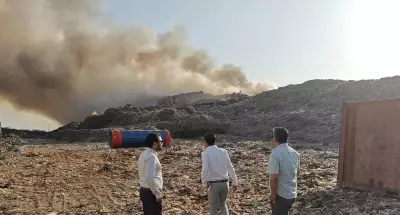
Pakistan's Deputy Prime Minister, Ishaq Dar, has made a startling revelation about a significant security breach that occurred earlier this year. He confirmed that the country's Nur Khan Airbase was attacked in the month of May. This disclosure brings to light a serious incident that had not been widely reported until now, raising critical questions about national security and the ongoing militant threat.
Official Confirmation and Details of the Attack
While addressing the Senate, the upper house of Pakistan's parliament, Ishaq Dar provided official confirmation of the assault. The attack targeted the strategically important Nur Khan Airbase, located in the Chaklala area of Rawalpindi. This facility is a critical component of the Pakistan Air Force's (PAF) infrastructure and is situated near the capital, Islamabad.
Dar stated that the attack was successfully repelled by the country's security forces. He emphasized the bravery and prompt response of the personnel who defended the base. The incident took place in May 2024, though the exact date was not specified in his statement. The Deputy Prime Minister's admission came during a discussion on the country's security challenges, highlighting the persistent dangers posed by militant groups operating within and across Pakistan's borders.

Context and Security Implications
This revelation is particularly significant given the timing and location. Rawalpindi is a garrison city and houses the army's general headquarters. An attack on a major airbase in such a sensitive zone points to a bold attempt by militants to strike at the heart of Pakistan's military establishment.
The confirmation follows a period of heightened militant activity in Pakistan. Groups like the Tehreek-e-Taliban Pakistan (TTP) and others have intensified their operations after the Taliban's return to power in neighboring Afghanistan in 2021. Security experts note that such attacks aim to undermine public confidence in the state's ability to protect its key assets and create an atmosphere of fear.
The fact that the attack was not publicly acknowledged for weeks also sparks a debate on transparency regarding security matters. Dar's statement appears to be an effort to present a narrative of resilience and control, assuring the parliament and the public that the situation was handled effectively.
Response and Future Challenges
In his address, Deputy PM Dar lauded the security forces for their role in thwarting the attack. He framed the incident as evidence of the continuous threats faced by Pakistan and the need for unwavering vigilance. The government's stance is to project strength and a successful defense, rather than vulnerability.
However, this incident underscores several ongoing challenges for Pakistan:
- Persistent Militant Threat: The ability of militants to plan and execute an attack on a high-security airbase indicates a sophisticated operational capability.
- Security of Critical Infrastructure: It raises concerns about the protection of other sensitive military and strategic installations across the country.
- Intelligence and Prevention: Questions will be asked about whether intelligence agencies had prior warning and if more could have been done to prevent the assault.
The attack on Nur Khan Airbase serves as a stark reminder of the complex security environment in the region. For India, which shares a tense and often hostile relationship with Pakistan, developments related to cross-border militancy and the stability of its neighbor are closely monitored. Incidents like these have implications for regional security dynamics and counter-terrorism efforts.
As Pakistan grapples with this revelation, the focus will be on its strategy to counter such threats in the future and the measures it will take to fortify its defenses against similar bold strikes on its core military assets.