

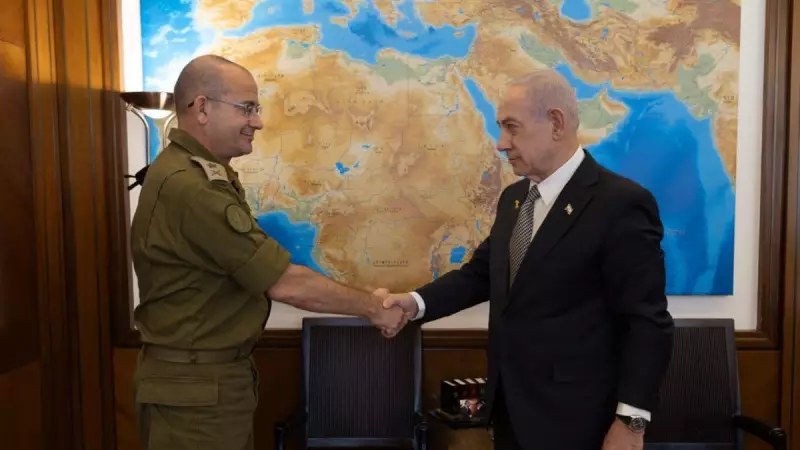
In a historic and unexpected move, the Israeli government has appointed a military commander with no formal intelligence background to lead its renowned foreign intelligence agency, Mossad. Prime Minister Benjamin Netanyahu and Defense Minister Yoav Gallant announced the selection of Major General Roman Gofman as the next director of the Institute for Intelligence and Special Operations on December 5, 2024.
A Surprising Choice for a Legendary Agency
The appointment marks a significant departure from tradition for Mossad, one of the world's most secretive and respected intelligence organizations. Historically, its directors have risen through the agency's own ranks or possessed deep backgrounds in intelligence work. Major General Gofman's career, in contrast, has been exclusively within the Israel Defense Forces (IDF), specifically in combat and command roles.
Gofman, 54, is a decorated officer who has served as the head of the IDF's Depth Corps, a strategic command responsible for operations far beyond Israel's borders. His military journey includes commanding the elite Paratroopers Brigade and the Gaza Division during periods of intense conflict. His operational experience is vast, but it exists outside the clandestine world of espionage and covert intelligence gathering that defines Mossad's core mission.

The Career of Major General Roman Gofman
Born in 1970 in the Soviet Union, Roman Gofman immigrated to Israel with his family as a child. He was drafted into the IDF in 1988 and quickly ascended through the ranks of the infantry and special forces. His leadership was tested in numerous military engagements, earning him a reputation for tactical brilliance and calm under pressure.
Before his appointment as Mossad chief, his most prominent role was commanding the IDF Depth Corps. This position involved planning and executing long-range strategic operations, a scope that some analysts suggest provides a form of relevant experience, albeit in a military rather than an intelligence context. Proponents of his appointment argue that his understanding of deep-strike operations and regional threats brings a fresh, action-oriented perspective to Mossad.
Reactions and Implications of the Appointment
The decision has sparked considerable debate within Israeli security and political circles. Supporters believe that in an era of complex, multi-front threats, a seasoned operational commander like Gofman can streamline Mossad's activities and enhance its direct action capabilities. They see it as a potential fusion of military precision with intelligence prowess.
However, critics express deep concern. They worry that leading an agency like Mossad, which relies on human intelligence (HUMINT), cyber operations, and intricate international liaison relationships, requires a specific skillset honed over decades. The lack of an intelligence pedigree, they argue, could lead to a steep learning curve and potential operational missteps. The move is seen by some as a politicization of a traditionally professional appointment.
The appointment comes at a critically sensitive time for Israel's security apparatus. The agency is expected to navigate ongoing threats from Iran and its proxies, manage complex relations with Arab nations post-Abraham Accords, and address emerging global challenges in cyberspace. All eyes will now be on Major General Gofman as he transitions from the overt battlefield to the shadowy world of global intelligence.
As he prepares to take the helm, the fundamental question remains: will his distinguished military command experience translate into effective leadership of one of the world's most sophisticated intelligence agencies, or will the absence of a traditional spycraft background become a liability? Only time will tell how this bold gamble by the Netanyahu government will reshape the future of Israeli intelligence.






