

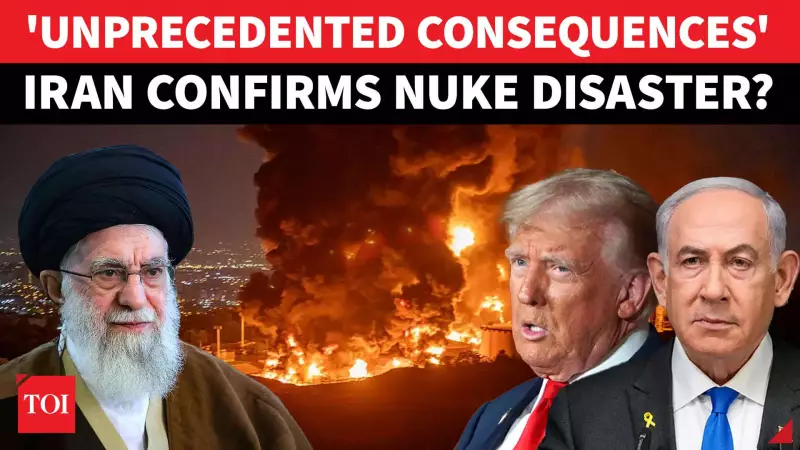
Iran has taken a dramatic step that significantly escalates global nuclear tensions. The country has officially blocked United Nations inspectors from accessing key nuclear facilities, citing serious safety concerns over potential radiation leaks.
Radiation Threats Justify Inspection Ban
The move was announced on Monday, with Iranian officials stating that "nuclear radiation threats" are the primary reason for barring access. The facilities in question were damaged during a series of U.S.-Israeli strikes in June, which occurred over a 12-day period of conflict.
Esmail Baghaei, the spokesman for Iran's Foreign Ministry, presented Tehran's position. He argued that the International Atomic Energy Agency (IAEA) "cannot accuse Iran" of any violations while the sites remain potentially hazardous. According to Baghaei, the condition of the facilities poses a risk of radiation leaks, making them unsafe for inspectors to enter.

IAEA Loses Critical Oversight
The blocking of access has created a major intelligence gap for the global nuclear watchdog. The IAEA has reported a critical loss of "continuity of knowledge" regarding Iran's stockpile of uranium. This material is enriched to a level considered near-weapons-grade, making its monitoring paramount for international security.
Since the war in June, the agency has been unable to verify the status or quantity of this uranium. Despite expressing urgent need for access to restore monitoring, Tehran has not provided any to the UN inspectors, deepening the crisis.
War of Words Intensifies Global Standoff
The diplomatic confrontation is being fueled by sharp rhetoric from all sides. Last week, Iran's Supreme Leader, Ali Khamenei, mocked the United States and Israel. He claimed both nations "came, caused trouble, and left empty-handed" following the strikes.
Meanwhile, former U.S. President Donald Trump has reiterated a hardline stance. He insisted that the United States would destroy any renewed nuclear activity in Iran, signaling a readiness for further military action.
In a separate but related incident highlighting regional tensions, Iran's Revolutionary Guard Corps (IRGC) seized an Eswatini-flagged vessel in the Gulf. The ship was allegedly smuggling 350,000 litres of fuel, and its crew was detained. This action underscores the ongoing volatility in the strategic waterways near Iran's coast.
The situation presents a dangerous stalemate. Iran uses safety concerns to justify blocking verification, while the international community loses its ability to confirm the peaceful nature of Iran's nuclear program. This deadlock increases the risk of miscalculation and further escalation in an already unstable region.






