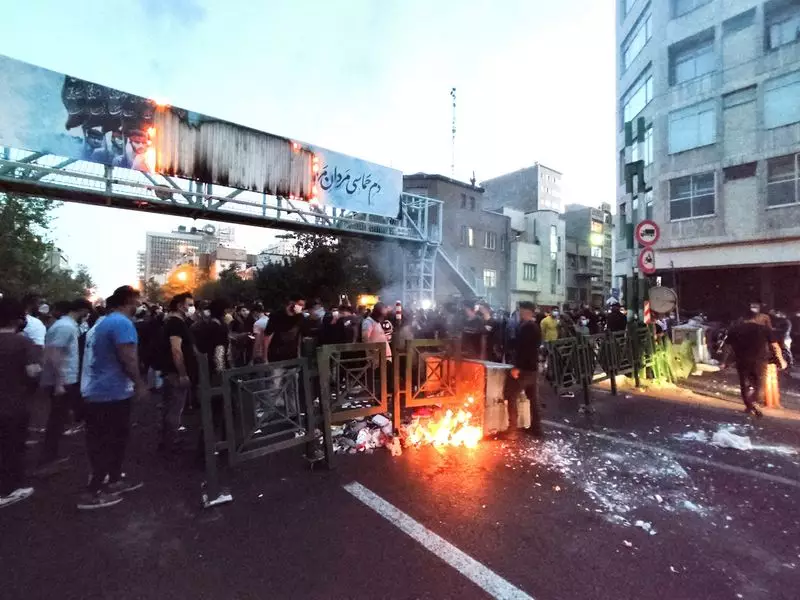
Iran's powerful military has issued a strong statement, vowing to protect the nation's interests as widespread protests continue to escalate across the country. The declaration comes amid a backdrop of rising public dissent and a harsh crackdown by security forces.
Army's Stern Warning Against 'Enemy Plots'
The official statement from the Iranian army was released on a Sunday, directly addressing the ongoing unrest. The military command framed the protests not as domestic discontent but as part of a broader scheme orchestrated by the country's adversaries. The army pledged to 'confront the enemies' various plots in order to protect the nation's security and interests'. This language underscores the establishment's view of the protests as a national security threat fueled by foreign interference, rather than a grassroots movement for change.
The statement was unequivocal in its support for the government's actions. It praised the efforts of the security apparatus, including the police and the Islamic Revolutionary Guard Corps (IRGC), in managing the volatile situation on the streets. This show of unity among the armed forces signals a consolidated front against the demonstrators.

Protests Ignited by Mahsa Amini's Death
The current wave of protests, which has now stretched for several weeks, was triggered by the tragic death of Mahsa Amini, a 22-year-old Kurdish woman. She died on September 16, 2022, after being detained by the country's morality police for allegedly violating Iran's strict dress code. Her death in custody sparked immediate outrage, with many Iranians accusing the authorities of brutality and demanding an end to oppressive laws, particularly those targeting women.
What began as localized demonstrations has since snowballed into one of the most significant challenges to Iran's clerical leadership in years. Protests have erupted in dozens of cities, from the capital Tehran to Kurdish regions in the northwest. The chants have evolved from calls for justice for Mahsa Amini to direct slogans against Supreme Leader Ayatollah Ali Khamenei and the entire system of governance.
A Harsh Crackdown and Rising Casualties
The government's response to the protests has been severe. Security forces, including the IRGC's Basij militia, have deployed in large numbers, using tear gas, batons, and live ammunition to disperse crowds. Internet access has been heavily restricted or completely shut down in many areas, a tactic used to stifle communication and prevent the world from seeing the scale of the unrest.
Human rights groups outside Iran have reported a grim and escalating toll. At least 41 protesters and security personnel have been killed since the demonstrations began, according to state television. However, international organizations like Amnesty International suggest the actual number is significantly higher, potentially exceeding 100. The government has not provided an official comprehensive casualty figure, and information remains difficult to verify independently due to the media blackout.
The army's statement serves as a clear warning that the establishment has no intention of backing down. By labeling the protesters as tools of foreign enemies, it justifies the use of overwhelming force to restore order. This stance suggests that the confrontation between the people and the state is likely to intensify further, with the military firmly aligning itself with the hardline approach of the ruling clerics. The world watches as Iran faces a pivotal moment, with its army now publicly committed to defending the status quo against an unprecedented wave of popular anger.