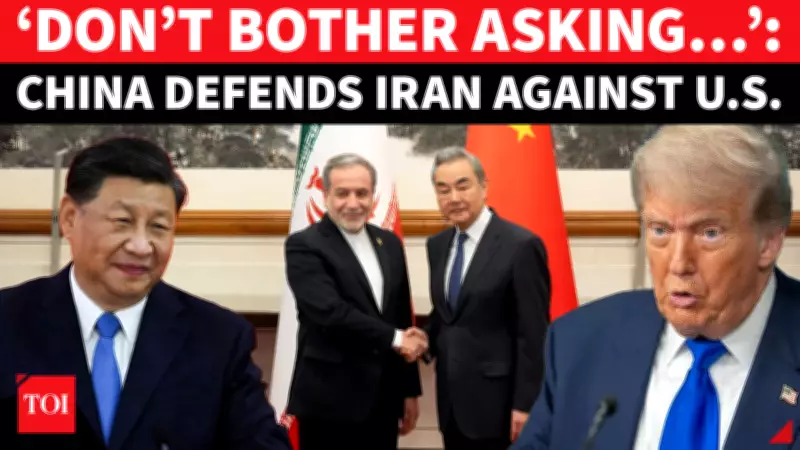
China has officially drawn its own line in the sand regarding the Strait of Hormuz crisis. Despite urgent calls from the Trump administration for Beijing to use its influence to reopen the strategic waterway, China is refusing to budge. In a pointed statement, the Chinese Foreign Ministry made it clear that they will not join a U.S.-led pressure campaign against Iran.
China's Stance on the Strait of Hormuz
Instead of supporting Washington's demands, Beijing is calling for an immediate ceasefire and the protection of what it terms 'coastal sovereignty.' This effectively sides with Iran's argument that the U.S. Navy is the intruder in the region. As the global energy crisis deepens due to the blockade, China is proving that it won't serve as Washington’s middleman in this escalating conflict.
Global Implications
The Strait of Hormuz is a critical chokepoint for global oil supplies, and the ongoing tensions have sent energy prices soaring. China's refusal to pressure Iran highlights the growing rift between Beijing and Washington on international issues. The Chinese government emphasizes the need for diplomatic solutions and opposes any unilateral actions that could further destabilize the region.

Related developments include Iranian naval maneuvers that have successfully slipped through American blockades, Hezbollah attacks on Israeli forces, and Saudi Arabia's opposition to U.S. military operations in the area. Russia has also urged foreign diplomats to leave Kyiv amid fears of Ukrainian attacks on Moscow's Victory Day parade.