UN Chief Antonio Guterres Issues Stark Warning on West Asia Conflict Impact
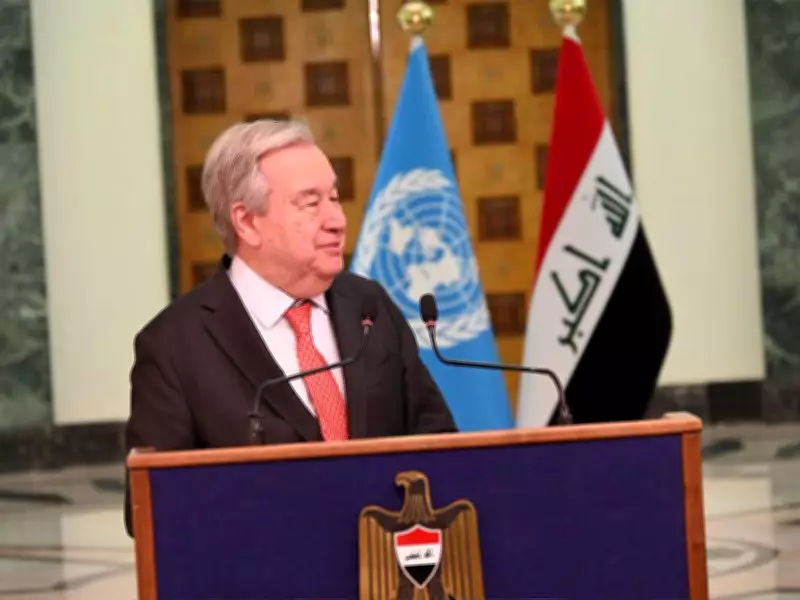
United Nations Secretary-General Antonio Guterres has delivered a powerful statement, highlighting that the ongoing conflict in West Asia is creating severe shock waves that are falling hardest on the poorest and most vulnerable populations. In a series of posts on social media platform X, Guterres emphasized the urgent need for an immediate end to the war and a renewed push for diplomatic solutions to address the escalating humanitarian and economic crises.
Humanitarian Consequences Borne by Innocent Civilians
Guterres pointed out that the humanitarian consequences of the conflict are disproportionately affecting civilians who have no role in the hostilities. "The shock waves of the conflict in the Middle East are falling hardest on those who bear no responsibility: the poorest & the most vulnerable," he stated. He further stressed that war is not the answer, calling for a way out of what he described as a disaster. The UN chief underscored that diplomacy, full respect for international law, and peace are the only viable paths forward to resolve the crisis and protect those most at risk.
Economic Impact and Regional Insecurity
In a separate post, Guterres detailed the economic repercussions of the conflict, particularly focusing on the prolonged disruption of shipping through the strategic Strait of Hormuz. He warned that "the prolonged closure of the Strait of Hormuz is choking the movement of oil, gas & fertilizer at a critical moment in the global planting season." This disruption threatens global food security and economic stability, exacerbating the challenges faced by vulnerable communities worldwide.

Additionally, Guterres highlighted the widespread insecurity affecting civilians across the region and beyond. "Across the region & beyond, civilians are enduring serious harm & living under profound insecurity," he said, painting a grim picture of the daily realities for millions caught in the crossfire of the conflict.
UN Efforts and Call for Immediate Action
The Secretary-General acknowledged that the United Nations is actively working to minimize the consequences of the war, providing aid and support where possible. However, he made it clear that the most effective solution is to end the conflict without delay. "The UN is working to minimise the consequences of the war. And the best way to minimise those consequences is clear. End the war - immediately," Guterres asserted, reinforcing his call for swift diplomatic intervention.
Iran's Stance on Strait of Hormuz Passage
Meanwhile, in a related development, Iranian official Araghchi commented on the situation in a televised interview, as reported by Press TV. He stated that Iran has restricted passage through the Strait of Hormuz for its adversaries while allowing friendly nations to transit. "For some countries that we identified as our friends, we allowed passage through the Strait of Hormuz. We allowed China, Russia, India, Iraq, and Pakistan to pass," Araghchi said. He added, "There is no reason for us to allow our enemy to pass through the Strait of Hormuz," highlighting the geopolitical complexities that further complicate the regional crisis and its global implications.