

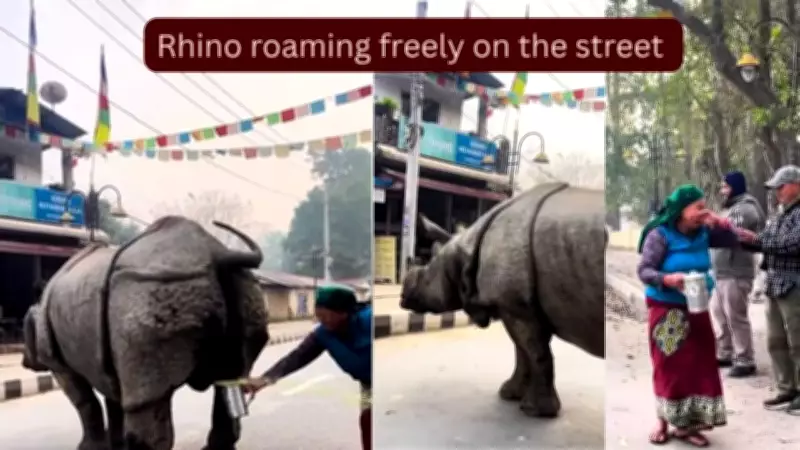
Viral Video Captures Extraordinary Moment of Human-Rhino Interaction in Nepal
At first glance, the footage appears almost too surreal to be real, as if crafted by artificial intelligence. Yet, in Nepal, particularly around the famed Chitwan National Park, such encounters with the majestic Greater One-Horned Rhino are not just possible but part of the local fabric. While many worldwide would tremble at the thought of an unexpected rhino meeting outside a zoo or safari, here, these creatures roam freely, occasionally crossing village roads and even wandering into unexpected places like ATM booths.
The Unbelievable Scene That Has Taken Social Media by Storm
A recent Instagram video has captivated global audiences with its bizarre and humorous content. The clip features a one-horned rhinoceros strolling calmly along a public street in Nepal. The animal pauses in the middle of the road and begins to urinate. What happens next is the true highlight: a local woman, holding a jug, approaches without hesitation and positions it perfectly to collect the rhino's urine. Surrounded by curious onlookers, she later bursts into laughter, showcasing a moment of pure, unfiltered human-animal interaction.
The behavior of the people in the video is particularly striking. There are no barriers, no signs of panic, and no authorities rushing to intervene. Instead, the scene unfolds as a quiet, surreal testament to the possibility of peaceful coexistence between humans and wild animals. For outsiders, the act of collecting urine might seem shocking or unusual, but it reflects a deep-seated, longstanding relationship between the community and the wildlife in this region.

Medicinal Uses and Cultural Significance of Rhino Urine
Rhino urine is traditionally associated with various medicinal applications in local practices, adding a layer of cultural context to this viral moment. The video, reportedly filmed in the Chitwan National Park area, offers a raw, unscripted glimpse into a world where nature and daily life intersect seamlessly. This is increasingly rare in modern times, where urbanization often creates a stark divide between human habitats and the natural environment.
Once teetering on the brink of extinction, the Greater One-Horned Rhino has found a sanctuary in Nepal, thanks to decades of dedicated conservation efforts and community involvement. This video serves as a powerful reminder of those successes, showcasing a creature that now thrives in its native habitat.
Chitwan National Park: A UNESCO World Heritage Site and Wildlife Haven
Established in 1973, Chitwan National Park is a UNESCO World Heritage Site and one of Asia's premier wildlife destinations. Spanning the Terai region and extending into districts like Nawalpur, Parsa, and Makwanpur, the park is home to iconic species such as the Greater One-Horned Rhino, royal Bengal tigers, and Asian elephants. It also boasts a rich diversity of birds and gharials, making it a biodiversity hotspot.
For travelers from urban centers in India, the United States, the United Kingdom, or Europe, such scenes might feel almost unreal—untouched by modern advancements. One moment, you could be driving along a serene forest road; the next, you might come face-to-face with a creature that seems to belong to another planet entirely.
Planning Your Visit to Chitwan National Park
Best Time to Visit: The ideal period to explore Chitwan National Park is from October to March, when the weather is cool and comfortable, perfect for wildlife spotting and outdoor activities.
How to Reach:

- By Air: The quickest route is a domestic flight from Kathmandu to Bharatpur Airport, taking about 20–25 minutes. From Bharatpur, a short 30–45 minute drive will get you to the main tourist area.
- By Road: Chitwan is well-connected by road, with a scenic drive from Kathmandu lasting approximately 5–6 hours. Comfortable tourist buses are readily available for this journey.
Beyond the Viral Video: A Deeper Narrative
This viral rhino video is more than just a humorous or unbelievable spectacle. It follows similar incidents, such as a rhino recorded inside an ATM booth near Sauraha in Chitwan a few years ago. These clips spark curiosity and encourage travelers to look beyond glossy brochures and curated itineraries, inviting them to experience the raw, authentic interactions that define Nepal's unique relationship with its wildlife.
In a world where nature is often compartmentalized, Nepal offers a refreshing perspective—one where humans and animals share spaces in harmony, creating moments that are as educational as they are extraordinary.





