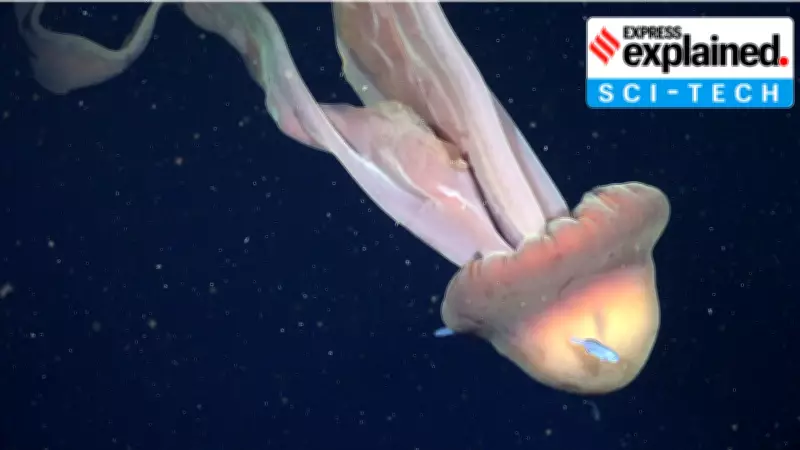
Rare Giant Phantom Jellyfish Filmed Off Argentina, Size of a School Bus
In a groundbreaking discovery, scientists off the coast of Argentina have filmed a rare giant phantom jellyfish, a deep-sea species that is seldom observed in the world's oceans. This remarkable sighting occurred in late December during a research expedition in the Atlantic Ocean, at a depth of approximately 800 feet.
Excitement and Disbelief Among Researchers
María Emilia Bravo, a marine biologist at the University of Buenos Aires who led the dive, described the moment as a mix of excitement and disbelief. "Its ethereal and delicate presence in such an extreme environment was deeply surprising," she said. The expedition was conducted aboard the R/V Falkor (too), a research ship operated by the Schmidt Ocean Institute, which released its findings on February 3.
The giant phantom jellyfish, scientifically known as stygiomedusa gigantea, presented a challenge for the remotely operated vehicle's operators due to its long arms, which made maneuvering safely difficult. "We were curious about getting to know it better and documenting it well," Bravo added.

Historical Context and Rarity of the Species
First collected in 1899, giant phantom jellies were not officially recognized as a species until 60 years later. For much of the last century, specimens were typically found dead in trawling nets, with very few documented alive. The advent of remote-operated vehicles has made sightings of these elusive creatures possible.
Steve Haddock, a marine biologist at the Monterey Bay Aquarium Research Institute in California, noted, "Up until recently, nobody was able to actually see it in its natural habitat and in its full glory." During the past century, phantom jellies have been documented only about 100 times, highlighting their rarity.
Size and Unique Characteristics
These jellyfish are among the largest in the world, with bells that can grow over 3 feet in diameter and arms reaching up to 30 feet in length. Haddock emphasized that people often assume undescribed deep-sea species are small and hidden, but "it's these giant things, the size of a giant squid practically, that have gone largely unnoticed."
Phantom jellies have a unique hunting method, relying on their long, curtain-like arms to catch plankton and small fish, which they then reel into their mouths. Additionally, they maintain a symbiotic relationship with certain fish species, which often swim or hover around the jelly's bell or arms for protection and to feed on parasites.
Significance of the Argentine Discovery
The jellyfish observed off Argentina was accompanied by a genus of medusafish called Centrolophus, a different group from the pelagic brotula often seen in the Northern Hemisphere. This finding is particularly important for the Argentine deep sea, as such interactions had never been documented before in the deep waters around Patagonia.
Bravo highlighted the significance, stating that although historical records exist of associations between jellyfish and fish, this specific interaction is a first for the region. The expedition also documented dozens of new species, including corals and sea urchins, along Argentina's continental shelf.
Expedition Goals and Additional Findings
Scientists traveled from Buenos Aires in the north to waters off Tierra del Fuego in the south, with the main goal of finding cold seeps—seafloor areas where methane and other chemicals serve as energy for microbes, sustaining animals like clams and mussels. They successfully discovered an active seep measuring about half a square mile.
This discovery underscores the vast, unexplored mysteries of the deep ocean and the importance of continued marine research. The giant phantom jellyfish serves as a reminder of the incredible biodiversity that remains hidden beneath the waves, waiting to be uncovered by dedicated scientists.